Learn AI digital marketing step by step: tools, SEO, ads, email, a 6-step strategy, mistakes to avoid and FAQs for beginners and pros in 2026.
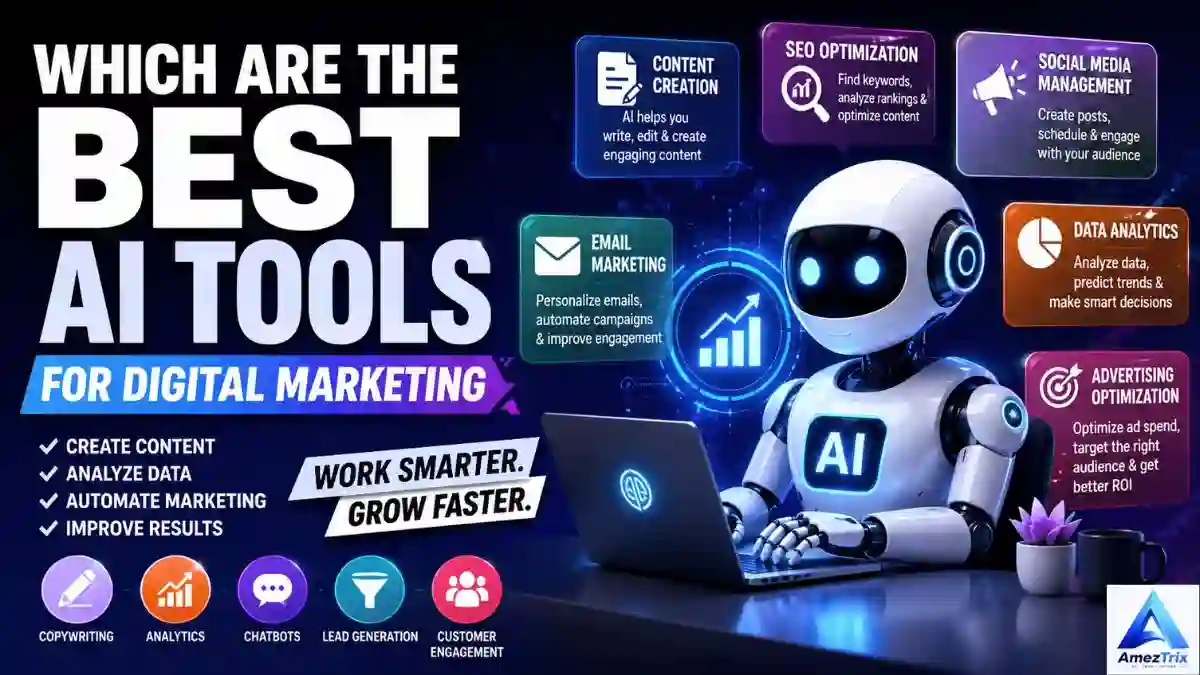
AI Digital Marketing: Tools, Strategy & Steps
AI digital marketing is the use of machine learning tools to research audiences, create content, personalize campaigns, automate repetitive tasks and analyze results. It helps marketers work faster and decide with better data, while humans still own strategy, brand voice, creativity and final quality checks.
Good marketing has always meant reaching the right person, at the right time, with something that matters to them. What has changed is the “how.” Search engines now handle longer, more conversational questions. Customers expect brands to understand them before they explain themselves. And every click, scroll and abandoned cart leaves a data trail that nobody has time to read by hand.
That gap is exactly where AI digital marketing has settled in. It is no longer a buzzword from conference slides. For many teams it has become a practical way to sharpen targeting, speed up production and get more from every rupee, dollar or euro spent on a campaign.
This guide covers what AI digital marketing really means, how it works day to day, where it helps most, which tool types are worth your time, the mistakes to avoid, and how to build a strategy that outlasts the next algorithm update.
Key takeaways: Start with a problem, not a tool. Use AI for research, drafts and pattern-spotting. Keep humans in charge of strategy, facts and brand voice. Measure business results, not output volume.
What Does AI Digital Marketing Really Mean?
Strip away the jargon and the idea is simple. AI digital marketing means using machine learning and generative AI to plan, produce, personalize and improve marketing work, instead of relying only on gut instinct and spreadsheets.
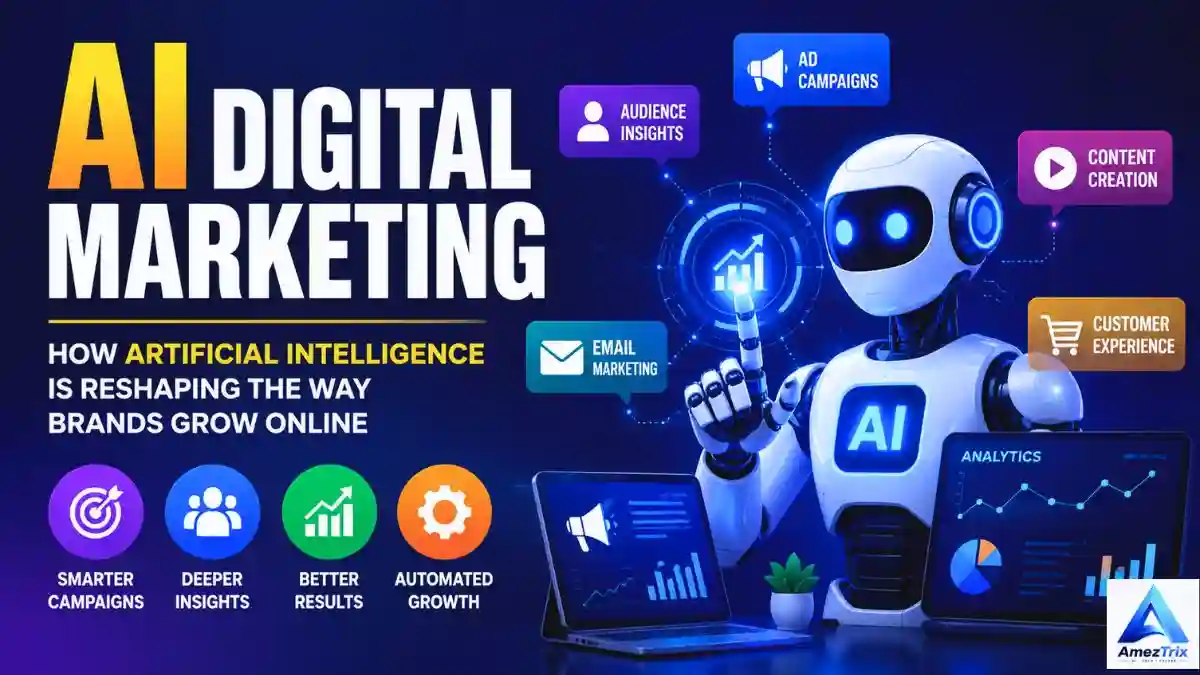
A person might spend a week combing through campaign data to find a trend. AI can flag a similar pattern in minutes. Writing fifty ad variations from scratch used to take a full day. Now a marketer can generate a starting batch and spend their energy polishing the few that matter.
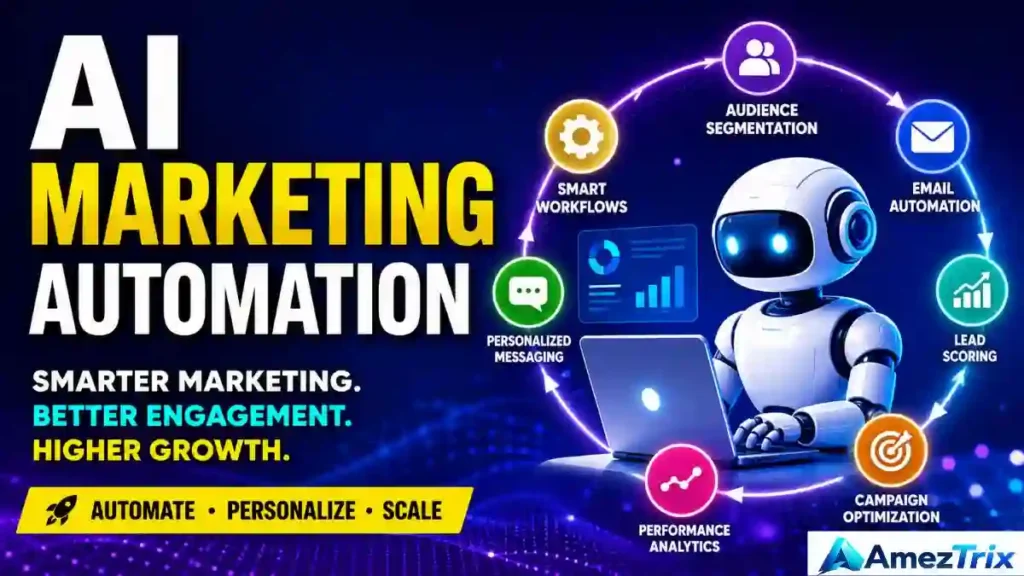
Across a typical funnel, AI now shows up in:
- Audience and keyword research
- SEO and content strategy
- Paid advertising
- Social media planning
- Email and lifecycle campaigns
- Lead scoring and customer segmentation
- On-site personalization and conversion optimization
- Reporting and analytics
- Customer support
Here is the nuance people often miss. AI is not a replacement for the marketing team. Think of it as a fast, tireless research assistant. It handles the repetitive, data-heavy work so people can focus on strategy, brand voice and the judgment calls a machine still can’t make well.
Traditional Marketing vs. AI Digital Marketing

| Area | Traditional Approach | AI-Powered Approach |
|---|---|---|
| Data analysis | Manual, spreadsheet-based | AI-assisted pattern detection |
| Targeting | Broad audiences | Granular segments |
| Messaging | One message for everyone | Personalized by behavior and stage |
| Reporting | Built by hand each week | Dashboards that update automatically |
| Automation | Fixed “if this, then that” rules | Predictive, adaptive workflows |
| Decisions | Mostly reactive | More forward-looking |
AI doesn’t replace the fundamentals. It adds speed and pattern recognition to approaches that already worked.
Why AI Digital Marketing Is Hard to Ignore in 2026
Ask any marketing team what eats their week and you will hear the same list: pulling reports, researching keywords, drafting content, checking numbers and answering the same customer questions again and again. AI doesn’t erase that work, but it can compress it. A task that took an afternoon may take an hour, which frees time for work that needs a human brain.
Search is changing too. People type, and increasingly speak, longer and more specific questions instead of two-word fragments. Search results also include AI-generated summaries. So marketers can’t only chase isolated keywords. They need to understand what someone is actually trying to get done.
- Keyword matching is giving way to intent understanding
- Blanket messaging is giving way to personalization
- Backward-looking reports are giving way to forecasts
- Manual busywork is giving way to automation
- Basic dashboards are giving way to insights you can act on
How AI Digital Marketing Works: The 5-Step Loop
Most AI marketing setups follow the same basic loop, whatever tools sit underneath.
1. Collect the Data
AI is only as sharp as what you feed it. Useful inputs include website traffic, search behavior, purchase history, email engagement, ad performance, social activity, CRM records and conversion events.
2. Spot Behavior Patterns
Once data flows in, AI looks for patterns people overlook. An online store, for example, might find that shoppers who read comparison pages before checkout convert more often. That is a signal to build more comparison content.
3. Predict What Happens Next
From there, AI starts forecasting. Which leads are likely to close? Which customers may churn? Which ad creative will probably win? Treat these as informed estimates, not guarantees.
4. Automate the Routine
Once the rules are set, AI can act without waiting for someone to click “send.” Follow-up emails go out, leads get qualified, bids adjust, content gets recommended and audiences are segmented automatically.
5. Review and Improve
None of this is set-and-forget. Targeting, messaging, budgets and creative should shift based on what is working now, not what worked last quarter.
Where AI Helps Most: Channel by Channel
SEO: Research Faster, Publish Smarter
SEO is often where AI earns its keep fastest: keyword research, competitor analysis, content outlines, internal linking ideas, technical audits and SERP breakdowns. The trap is using AI to churn out hundreds of thin pages just to game rankings. Google has said that content created mainly to manipulate rankings goes against its spam policies, however it is produced, while helpful, original, people-first content is welcome whether or not AI helped create it.
A workflow that tends to hold up:
- Pin down the primary keyword
- Work out what the searcher actually wants
- Collect related questions people ask
- Study what already ranks, and why
- Build a solid outline
- Add original examples, data or firsthand experience
- Draft, then edit properly
- Tighten the title and headings
- Add internal and external links that make sense
- Improve images and media
- Fix technical SEO issues
- Monitor rankings and conversions over time
For tool ideas, see our guide to the best AI SEO tools.
Content Marketing
AI is handy for brainstorming topics, drafting briefs, suggesting headlines, sketching FAQs and repurposing one article into several formats. It is much weaker at original insight. Flat, generic text neither engages readers nor stands out in search. What performs is content with something real in it: original research, hands-on experience or a take nobody else has written.
A sensible order is research, then AI assistance, then human expertise, fact-checking and editing, then your own insight layered on top before publishing. You can browse more AI tools to support that workflow.
Personalization
Not every visitor should see the same page. A first-timer might land on a beginner’s guide, a returning visitor might see more advanced material, and an existing customer might get an upgrade prompt. Small, consistent changes like these tend to add up over months. It is rarely one big change. It is dozens of small ones.
Social Media
AI can help with post ideas, captions, content calendars, hashtag research, social listening and turning one long article into several platform-specific posts. Human review still matters, because brand voice and platform culture are exactly what AI tends to miss.
Email Marketing
Sending one email to your whole list wastes opportunity. AI helps segment audiences so each group gets something relevant:
- New visitors get educational content
- Warm prospects get comparisons and product details
- Customers get cross-sell or retention offers
- Inactive subscribers get a gentle win-back message
It also supports subject-line testing, send-time optimization and automated sequences such as abandoned-cart reminders.
Paid Advertising
Ad platforms have built AI deep into targeting, bidding and creative generation. Instead of building thirty ad variants by hand, a marketer can generate a batch quickly and let real performance data pick winners, while still owning strategy, brand guidelines and the final call.
Lead Generation and Scoring
AI can spot buying signals such as repeat product-page visits, pricing-page views, downloads and email engagement, then rank leads by likelihood to convert. Sales teams spend their time on leads worth chasing.
Chatbots and Conversational AI
Modern chatbots understand natural language, so they can handle product questions, order status, bookings and basic support. The important part is a clean handoff to a human when a request becomes complex or sensitive.
Analytics That Explain Something
A report saying “traffic grew 20%” isn’t very useful alone. AI-assisted analytics can help explain why: which channel drove growth, which pages converted, where people dropped off and which segment is most valuable. That is the difference between reporting the past and shaping what happens next. Still, check any AI-generated insight against the raw data before acting on it.
Which AI Digital Marketing Tools Should You Use?
Different problems call for different tools, and most working stacks combine a few categories rather than betting on one platform. Always check current features, limits and pricing on each vendor’s own site before buying.
| Tool Category | Best For | Examples (not endorsements) | Watch Out For |
|---|---|---|---|
| AI writing and research assistants | Brainstorming, outlines, summaries, first drafts | ChatGPT, Claude, Gemini | Factual errors, generic tone |
| SEO platforms | Keywords, competitor gaps, audits, rank tracking | Semrush, Ahrefs, Google Search Console | Tool scores treated as ranking guarantees |
| Ad platforms | Targeting, bidding, creative testing | Google Ads, Meta Ads Manager | Automation spending budget without oversight |
| Email and CRM automation | Segmentation, lifecycle emails, lead scoring | HubSpot, Mailchimp, Klaviyo | Poor data quality, over-emailing |
| Analytics | Behavior analysis, forecasting, reporting | Google Analytics, Looker Studio | Vanity metrics, misread trends |
| Chatbots and support AI | FAQs, lead capture, basic support | Platform-native chat tools | No human handoff, privacy gaps |
If you are new to this, our guides on digital marketing tools and AI agents for businesses are good next reads.
Red Flags When Choosing a Tool
- Promises of guaranteed rankings, traffic or revenue
- No clear explanation of where your data goes
- No way to export your data or cancel easily
- Output you can’t review or edit before it goes live
- Pricing that is hidden or only shown after a sales call, when you need a quick comparison
Build an AI Digital Marketing Strategy in 6 Steps
A common mistake is starting with “where can we use AI?” The better question is “what problem are we trying to solve?”
Step 1: Set a specific goal. More organic traffic, more qualified leads, lower acquisition cost or better retention. Pick one measurable target.
Step 2: Find the repetitive work. Reporting, lead sorting, basic formatting and FAQ replies are easy first candidates.
Step 3: Clean up your data. AI can only work with what you give it. Messy CRM records or scattered analytics will hold results back, however good the tool is.
Step 4: Choose AI tools by the problem, not the hype. Popular doesn’t automatically mean it fits your situation.
Step 5: Keep a person in the loop. This matters most for ad spend, financial decisions, brand-sensitive content and anything touching customer data.
Step 6: Pilot, measure, then scale. Test one workflow for a few weeks. Judge it honestly, even if the results aren’t flattering. Expand only what has proven itself.
A Simple Example (Illustrative)
Imagine a small online store that wants more repeat purchases. It exports six months of order data, uses AI to group customers by purchase frequency and product type, and drafts three email sequences: a welcome series, a restock reminder and a win-back message. A marketer edits every email for tone and accuracy, launches to one segment first, and compares results against the old generic newsletter. Only after a clear improvement does the team roll the approach out to other segments. This is a hypothetical scenario to show the process, not a promised result.
Using AI for SEO Without Hurting Your Rankings
There is a persistent myth that more AI content means better rankings. It can work against you. Based on reports of Google’s updated guidance on generative AI content, reviewing for accuracy and adding real value remain central. Here is how to stay on the right side of that line:
- Use AI for research and structure, not blind publishing
- Add real experience, data or your own analysis
- Fact-check every claim before it goes live
- Show honest author information, with real names and credentials
- Skip keyword stuffing
- Never mass-publish near-identical pages
- Refresh old content because readers need better information, not just to change the date
- Build topical authority gradually
- Link internally only where it genuinely helps, such as to our guides on ranking a website on Google and web hosting
- Keep technical SEO clean and watch Search Console regularly
AI-generated summaries in search draw on the same web content that search engines have always favored, so the underlying logic hasn’t changed: be helpful, original and trustworthy.
Optimizing for Conversational and AI Search
People increasingly ask full questions, such as “Which web hosting works best for a beginner WordPress site with low traffic and a tight budget?” Content that answers the whole question clearly performs better than content that repeats a keyword. Practical habits that help:
- Put a short, direct answer near the top of each section
- Use descriptive headings that mirror real questions
- Define terms and name related entities clearly
- Use tables and lists for comparisons and steps
- Cite reliable sources and show who wrote the article
AI for Small Businesses, Ecommerce and B2B
Small Businesses
Small teams wear five hats before lunch, which is why AI can help them disproportionately. A lean business might start with SEO research, content planning, email automation and basic analytics, then grow once a workflow proves itself.
Ecommerce
- Before purchase: product recommendations, personalized content, smarter site search, better-targeted ads
- During purchase: comparisons, cross-sells and checkout support
- After purchase: support, review requests, retention and re-engagement campaigns
B2B
B2B deals have longer sales cycles and more decision-makers. AI is useful for account research, lead scoring, prospect segmentation, personalized outreach and spotting accounts that show buying signals now, not six months ago.
Pros and Cons of AI Digital Marketing
| Pros | Cons and Limitations |
|---|---|
| Saves time on repetitive work | Can produce confident but wrong information |
| Makes personalization possible at scale | Needs clean, well-organized data |
| Surfaces patterns people may miss | Can flatten your brand voice if unedited |
| Speeds up testing of ideas and creative | Raises data privacy and consent responsibilities |
| Helps lean teams do more | Tool costs and learning curves are real |
| Improves response speed for customers | Over-automation can feel cold or impersonal |
Common Mistakes That Quietly Undermine Results
- Publishing AI drafts untouched. Errors and generic phrasing slip through more often than you’d expect.
- Writing for algorithms instead of people. Content built for humans tends to win long term.
- Tool overload. More software rarely means better results. A simple workflow beats a cluttered one.
- Losing your brand voice. Unedited AI content often sounds like everyone else’s.
- Automating everything. Some conversations need a human on the other end.
- Ignoring data privacy. Follow the privacy laws that apply where your customers live, and be transparent about data use.
- Chasing vanity metrics. Traffic and impressions look good on slides. Revenue, qualified leads and retention pay the bills.
Quick Checklist Before You Publish or Launch
- Is the goal specific and measurable?
- Has a human fact-checked every claim, number and name?
- Does the content add something original, such as experience, data or a clear opinion?
- Does it sound like our brand?
- Have we checked privacy, consent and platform rules?
- Is there a human handoff for complex or sensitive cases?
- Do we know which metric will tell us if it worked?
Trends Worth Watching
- Search experiences becoming more conversational
- AI agents handling multi-step tasks, not just single answers
- Predictive marketing getting better at forecasting behavior
- Personalization built around individual context
- Multimodal content mixing text, video, audio and voice
- Ad platforms automating more optimization work themselves
- Connected journeys from first discovery through retention
These are directional trends, not predictions with dates. Re-check them as platforms change.
How to Measure Whether It’s Working
Don’t judge AI adoption by how much content or how many ads it produced. Judge it by business outcomes.
| Channel | Metrics to Track |
|---|---|
| SEO | Organic clicks, impressions, rankings, conversions |
| Advertising | CTR, CPC, conversion rate, CPA, ROAS |
| Content | Traffic, engagement, scroll depth, returning visitors |
| Open rate, click-through rate, conversions, unsubscribes | |
| Lead generation | Qualified leads, cost per lead, lead-to-customer rate |
| Business overall | Revenue, customer lifetime value, retention, profitability |
Compare results with a baseline from before you introduced AI. Without that comparison, it is hard to know what actually changed.
Where This Is All Heading
AI digital marketing will likely keep getting more predictive, conversational and automated across search, ads, content, support and ecommerce. The fundamentals aren’t going anywhere. The formula that keeps working is SEO plus AI plus original content plus real data plus brand authority plus a genuinely good user experience.
AI Digital Marketing: Frequently Asked Questions
What is AI digital marketing?
It is the use of artificial intelligence to improve marketing research, content, SEO, advertising, personalization, automation, analytics and customer experience across the marketing funnel.
Is AI digital marketing worth it for beginners?
Yes, if you start small. Pick one painful task, such as keyword research or email segmentation, test an AI tool on it, measure the result and expand only if it helps.
Will AI replace digital marketers?
Unlikely. AI handles execution-heavy tasks well, but strategy, creativity, brand judgment and ethical decisions still need people. Marketers who learn to use AI well will likely have an advantage.
Can AI-written content rank on Google?
It can, if it is genuinely helpful, original, accurate and edited by a person. Google’s guidance focuses on quality and purpose, not on whether AI was involved. Mass-producing low-value pages to manipulate rankings is the risk.
Is AI SEO different from regular SEO?
The principles are the same: understand the user, publish something useful, keep the site technically sound and build authority. AI mainly speeds up research, outlining and analysis.
Which parts of marketing should I automate first?
Start with repetitive, low-risk work such as reporting, lead sorting, subject-line testing and FAQ replies. Keep humans in charge of budgets, brand messaging and sensitive customer communication.
Is it safe to put customer data into AI tools?
Only if the tool’s privacy terms, security and your local data laws allow it. Avoid pasting personal or confidential data into tools you haven’t vetted, and read each vendor’s data policy.
How do I measure AI marketing success?
Track business outcomes such as qualified leads, conversions, revenue, retention and cost per acquisition, and compare them with a baseline from before AI. Output volume alone proves nothing.
Final Verdict
AI digital marketing isn’t about producing more content faster. It is about making marketing smarter, more relevant and easier to measure across SEO, content, ads, email, support and analytics. The strategy that wins isn’t “automate everything and hope for the best.” It combines AI’s speed and pattern-spotting with human judgment, originality and empathy.
For most beginners and professionals alike, the best path is to pick one problem, run a small pilot, review everything before it goes public and scale only what proves itself.
TL;DR
- AI digital marketing uses machine learning to research, create, personalize, automate and analyze.
- Start with one goal and one workflow, then scale.
- Use AI for drafts and patterns. Use humans for strategy, facts and voice.
- Google rewards helpful, original content, not volume.
- Measure revenue, leads and retention, not output.
About Author
Rajendra Parmar is the Founder and Editor of AmezTrix, where he covers Artificial Intelligence, Technology, WordPress, Web Hosting, Digital Marketing, Gadgets and Software. His mission is to simplify complex technology through practical tutorials, honest reviews and well-researched guides that help readers make smarter digital decisions.

Rajendra Parmar
Founder & Editor • AmezTrix
Rajendra Parmar is the Founder and Editor of AmezTrix, a platform covering Artificial Intelligence, Technology, WordPress, Web Hosting, Digital Marketing, Gadgets, Software Reviews, and emerging innovations. His mission is to simplify complex technology through practical tutorials, honest reviews, and well-researched guides that help readers make smarter digital decisions.