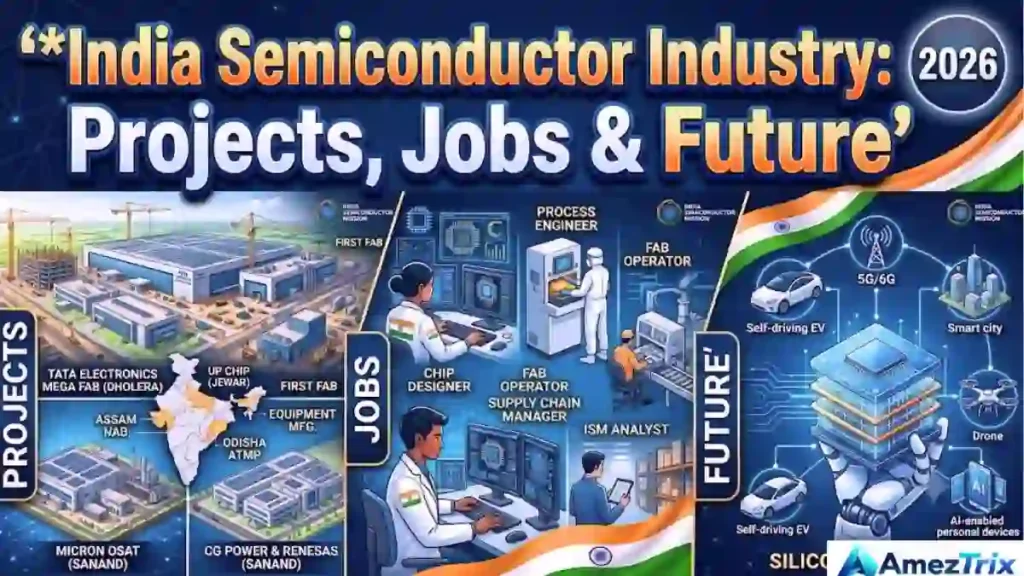
Stay updated with the latest technology news, AI innovations, gadgets, robotics, cybersecurity, and future tech trends on AmezTrix.

Latest Technology News 2026: Top Innovations, AI Future Tech Trends You Need to Know
Whether you’re hunting for the newest AI tools, the latest phone releases, cybersecurity news, or just want to understand where digital trends are headed, this guide breaks down the innovations defining 2026 — and why paying attention to them is worth your time.
What Do We Mean by “Latest Technology News”?
Simply put, Latest Technology News covers the newest developments, discoveries, launches, updates, and breakthroughs happening across the tech world. That spans everything from AI and robotics to cybersecurity, cloud infrastructure, consumer gadgets, electric vehicles, and even space exploration.
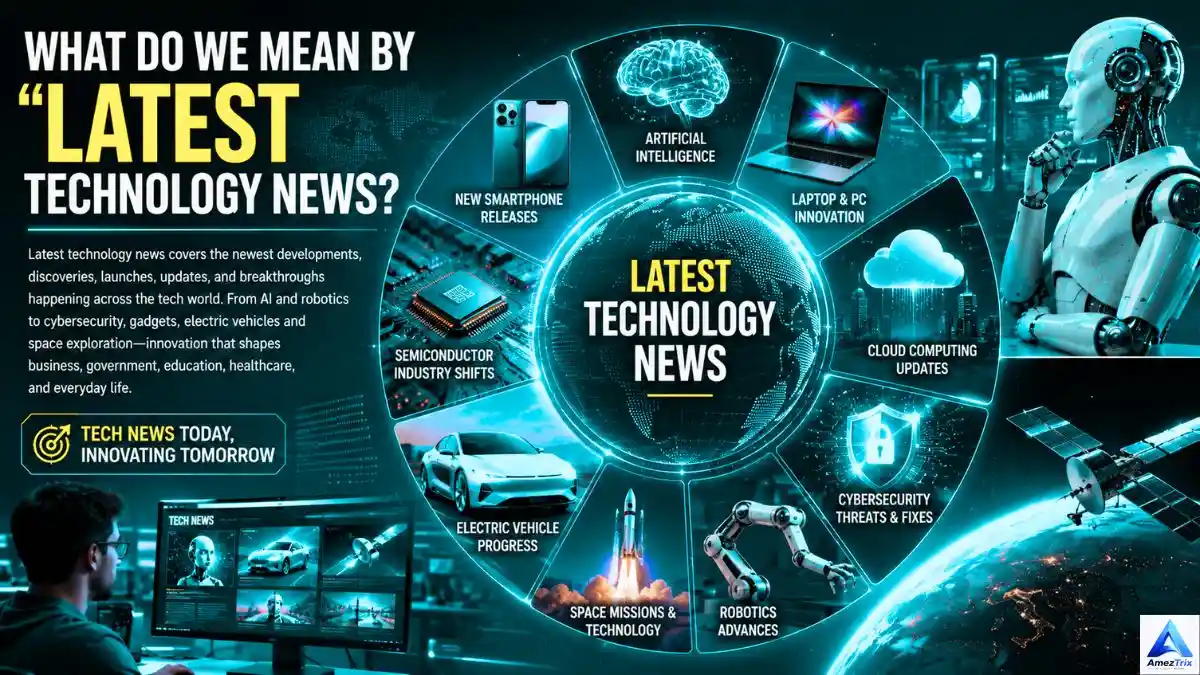
Unlike general news, tech coverage zeroes in on innovations that ripple outward into business, government, education, healthcare, and daily life.
You’ll typically find tech news covering things like:
- Artificial intelligence breakthroughs
- New smartphone releases
- Laptop and PC innovation
- Cloud computing updates
- Cybersecurity threats and fixes
- Robotics advances
- Space missions and technology
- Electric vehicle progress
- Semiconductor industry shifts
- Smart home gadgets
Following credible tech sources helps people and organizations spot trends early, understand what’s coming, and adapt before they’re left behind.
Why Keeping Up With Tech Actually Matters
Technology touches almost every part of modern life at this point. Businesses depend on digital tools to get work done, students use AI-driven learning apps, doctors rely on smart diagnostic systems, and everyday consumers benefit from gadgets that just work better than they used to.

Here’s why staying in the loop on tech news is genuinely worth it.
1. Stronger Career Prospects
Tech skills remain some of the most sought-after in the global job market. People who understand AI, cloud platforms, cybersecurity, or data analytics tend to land better roles — and better pay.
Following industry news lets you spot rising Latest Technology News before everyone else catches on.
2. Sharper Business Decisions
Companies that jump on Latest Technology News early often pull ahead of competitors. Whether it’s AI-driven customer support or automation software, businesses can boost output while cutting costs.
Tech news gives decision-makers the context they need to evaluate new tools and platforms wisely.
3. Better Digital Security
Cyber threats keep getting smarter. Attackers are constantly cooking up new ways to target individuals, companies, and even governments.
Staying current on cybersecurity news helps you:
- Protect your personal data
- Spot phishing attempts before you fall for them
- Lock down your accounts properly
- Adopt stronger authentication habits
- Stay ahead of newly discovered vulnerabilities
4. Smarter Purchases
People spend real money on phones, laptops, smartwatches, gaming gear, and other electronics every year.
Tech news typically offers:
- Honest product reviews
- Side-by-side feature comparisons
- Real performance benchmarks
- Practical buying guides
- Expert recommendations
That kind of information helps shoppers avoid buyer’s remorse and get real value for their money.
5. A Head Start on Future Trends
A lot of what feels futuristic right now will be completely ordinary within ten years.
Think about things like:
- AI-powered assistants
- Self-driving transportation
- Quantum computing
- Smart cities
- Digital healthcare
- Sustainable tech
- Advanced robotics
Learning about these now means you won’t be caught flat-footed later.
The Big Technology Trends Defining 2026
The tech landscape keeps shifting, with a handful of innovations leading the charge toward the next wave of digital change. Here’s a closer look at what’s shaping industries worldwide right now.
Artificial Intelligence: Still the Driving Force
AI remains the engine behind most Latest Technology News. From smarter chatbots to increasingly autonomous systems, it’s helping organizations automate grunt work, crunch data, and make better calls faster.

Today, AI shows up in:
- Virtual assistants
- Image generation tools
- Voice recognition
- Personalized recommendations
- Fraud detection
- Medical diagnostics
- Customer support
- Software development
- Content creation
Industries from finance to healthcare, retail to manufacturing, are pouring money into AI to run leaner and smarter.
Key AI trends to watch: generative AI, AI agents, AI coding assistants, AI-powered search, AI video generation, productivity tools, workflow automation, and AI-driven robotics.
Real benefits: faster decisions, higher productivity, lower operating costs, better customer experiences, sharper data analysis, and more personalized products.
Real challenges: data privacy, algorithmic bias, ethical gray areas, shifting job markets, and regulatory catch-up.
As AI keeps advancing, responsible governance will matter just as much as the technology itself.
Quantum Computing: The Next Leap in Processing Power
Quantum computing is one of the more genuinely exciting frontiers in tech right now. While regular computers rely on binary bits (0s and 1s), quantum machines use qubits — letting them tackle certain calculations at speeds classical computers simply can’t match.
It’s still early days, but quantum computing could eventually transform:
- Pharmaceutical research
- Financial modeling
- Climate forecasting
- Logistics planning
- Artificial intelligence
- Cryptography
- Materials science
Traditional computers hit a wall with extremely complex problems — the kind that could take thousands of years to solve. Quantum systems promise to change that math entirely, with potential applications in drug discovery, weather prediction, supply chain planning, and large-scale scientific modeling.
That said, hardware stability, error correction, and scaling remain real hurdles. Research labs and tech giants alike are still pushing hard to clear them.
Robotics: Machines Getting Genuinely Smarter
Robotics has come a long way, thanks to advances in AI, machine learning, and computer vision. Today’s robots are more autonomous, more adaptable, and capable of handling far more complex tasks than a decade ago.
You’ll now find robots working across:
- Manufacturing
- Healthcare
- Warehousing
- Agriculture
- Logistics
- Hospitality
- Defense
- Space exploration
Trends worth watching: AI-driven industrial robots, autonomous delivery bots, surgical robotics, warehouse automation, farming robots, humanoid machines, and disaster-response units.
Why it matters: higher productivity, greater precision, fewer human errors, safer workplaces, and lower long-term costs.
As robotics keeps improving, expect these machines to become a bigger part of both business operations and everyday life.
Internet of Things: Wiring the World Together
The Internet of Things (IoT) is essentially a massive network of connected physical devices that gather, share, and process data in real time. From smart homes to industrial systems, IoT is quietly making everything around us more efficient and responsive.
Billions of IoT devices are already in use worldwide, including:
- Smart thermostats
- Fitness trackers
- Security cameras
- Smart TVs
- Connected cars
- Industrial sensors
- Wearable health monitors
- Smart lighting
Key benefits: real-time monitoring, predictive maintenance, energy savings, better customer experiences, smarter resource management, and deeper automation.
Challenges to watch: device security gaps, privacy concerns, interoperability headaches, and network reliability.
As 5G expands and edge computing matures, expect IoT to grow even faster across healthcare, manufacturing, farming, transportation, and smart-city projects.
Cloud Computing: The Backbone of the Digital Economy
Cloud computing has become the foundation modern digital infrastructure sits on. Rather than maintaining physical servers, businesses and individuals now store, manage, and process data through cloud platforms — making tech more scalable, affordable, and accessible than ever.
Organizations of every size rely on cloud services to run websites, host applications, collaborate remotely, crunch data, and deploy AI tools.
The three main flavors:
- Public cloud — managed by third-party providers, shared across users, flexible and cost-effective.
- Private cloud — dedicated to one organization, offering tighter control and compliance for sensitive workloads.
- Hybrid cloud — a mix of both, balancing performance, security, and cost.
Cloud adoption keeps climbing because organizations need faster rollouts, dependable infrastructure, and lower overhead. Benefits include reduced infrastructure costs, automatic updates, high uptime, remote access, easy scaling, better collaboration, disaster recovery, and AI-enhanced cloud services.
What’s next for cloud tech: AI-powered platforms, multi-cloud strategies, edge computing, serverless architecture, cloud-native apps, greener data centers, and GPU cloud services built for AI training.
Cybersecurity: Guarding the Digital Frontier
As tech advances, so do the threats. Ransomware, phishing scams, identity theft, and data breaches are growing more sophisticated by the year — and everyone from individuals to entire governments is a potential target.
Cybersecurity is about protecting networks, apps, devices, and sensitive data from unauthorized access and malicious attacks.
Common threats today: phishing, malware, ransomware, spyware, data breaches, password attacks, social engineering, zero-day exploits, and insider threats.
Every connected device is essentially a potential entry point for attackers, which is why strong security practices matter for protecting personal information, financial transactions, business operations, customer data, and critical infrastructure.
Emerging security tech: AI-based threat detection, Zero Trust architecture, multi-factor authentication, passwordless login, endpoint detection and response (EDR), cloud security platforms, SIEM systems, and behavioral analytics.
Simple habits that go a long way:
- Use strong, unique passwords
- Turn on multi-factor authentication
- Keep software up to date
- Avoid sketchy links and attachments
- Back up important data regularly
- Run trusted antivirus software
- Watch your financial accounts closely
As threats evolve, basic cybersecurity awareness is turning into an essential life skill, not just an IT concern.
5G Today, 6G Tomorrow
Fast, reliable connectivity is reshaping how people work, communicate, and use technology day to day. Widespread 5G adoption has already boosted mobile speeds, slashed latency, and made things like autonomous vehicles and smart-city infrastructure practical.
Researchers are already laying groundwork for 6G, which promises to push wireless communication further still.
5G’s real advantages: faster downloads, ultra-low latency, more reliable networks, smoother video streaming, better gaming, and support for massive IoT deployments.
What 6G might bring: terabit-level speeds, AI-native networks, real-time holographic calls, more advanced AR, smarter transportation systems, and deeply connected smart cities. Commercial 6G is still years out, but the research race is very much on.
Smart Devices: Living in a Connected World
Smart devices are now a fixture of modern life — from voice-activated speakers to wearable health trackers, connected tech is making everyday routines more convenient and efficient.
Today’s smart ecosystem includes smartphones, smart TVs, smartwatches, speakers, security cameras, lighting, refrigerators, thermostats, and home automation hubs — all talking to each other via IoT, controllable through an app or a voice command.
Why people love them: more convenience, lower energy bills, remote monitoring, tighter home security, personalized experiences, better health tracking, and real time savings.
What’s coming next: AI-powered personal assistants, context-aware smart homes, wearable medical devices, smart glasses, brain-computer interfaces, and household robots.
Electric Vehicles: Reshaping Transportation
EVs are transforming the global auto industry as governments, manufacturers, and drivers push toward lower emissions, cheaper fuel costs, and more sustainable transportation overall.
Better batteries and expanding charging networks are making EVs more practical than they’ve ever been.
Why adoption keeps climbing: lower running costs, reduced environmental impact, government incentives, improved battery life, wider charging access, and growing consumer interest.
Emerging EV tech: solid-state batteries, ultra-fast charging, vehicle-to-grid (V2G) systems, AI-assisted driving, autonomous features, smarter battery management, and wireless charging — all aimed at improving performance, safety, and sustainability.
Space Technology: Pushing Human Boundaries
Space exploration has entered a genuinely new era, with both government agencies and private companies driving progress. Modern space tech is advancing scientific research, satellite communication, Earth observation, and long-term human exploration goals.
Reusable rockets, next-gen satellites, lunar missions, and deep-space research are all part of the current wave.
Where the focus is: satellite internet, moon exploration, Mars research, space tourism, reusable launch systems, Earth-observation satellites, deep-space telescopes, and space robotics — technology that also supports weather forecasting, disaster response, navigation, farming, and global communications.
Looking ahead: lunar habitats, asteroid mining, commercial space stations, in-space manufacturing, and next-gen propulsion systems could all open entirely new industries.
Green Technology: Building a Sustainable Future
Environmental sustainability has climbed to the top of the priority list worldwide, and green tech is central to reducing pollution, conserving resources, and developing cleaner energy.
Common examples: solar power, wind energy, hydrogen fuel, electric vehicles, smart energy grids, carbon capture, green building design, renewable storage, and sustainable manufacturing.
Long-term payoffs: fewer carbon emissions, cleaner air, lower energy bills, better efficiency, smarter resource use, and improved public health. As climate pressures mount, sustainable tech will stay one of the world’s top investment priorities.
Blockchain: Life Beyond Cryptocurrency
Blockchain first became a household name through crypto, but its real potential runs much deeper. It offers a decentralized, tamper-resistant way to record and share data securely — and industries from finance to healthcare are taking notice.
Where it’s being used: digital identity verification, secure payments, supply chain transparency, smart contracts, healthcare records, IP protection, voting systems, and cross-border transactions.
Obstacles it still faces: scalability limits, unclear regulation, high energy use on some networks, integration complexity, and slow user adoption. Ongoing research aims to make blockchain more efficient and mainstream-friendly over time.
Technology in Healthcare: A Real Transformation
Healthcare is going through one of its biggest digital shifts ever. AI, IoT, cloud computing, robotics, and wearables are all improving patient care, sharpening diagnostic accuracy, and making healthcare more accessible.
Hospitals and clinics increasingly lean on smart systems to streamline workflows, cut down on medical errors, and personalize treatment.
How tech is helping: AI-assisted diagnosis, robotic surgery, telemedicine, electronic health records, wearable monitoring, remote patient tracking, predictive analytics, and AI-driven drug discovery. A smartwatch, for instance, can now track heart rate, blood oxygen, sleep, and activity — putting real-time health data in people’s own hands.
Payoffs include: faster diagnoses, better outcomes, lower costs, wider access to care, personalized treatment, and more efficient operations — though data privacy, interoperability, and regulation remain ongoing concerns.
Technology in Education: Learning Reimagined
Education has become far more interactive and accessible thanks to digital tools. Students can now learn from virtually anywhere through online platforms, virtual classrooms, and AI-powered study tools — often progressing at their own pace with instant feedback.
Popular tools include: AI tutors, learning management systems, virtual classrooms, education apps, interactive whiteboards, VR and AR, digital libraries, and cloud collaboration tools.
What students and teachers gain: flexible schedules, better collaboration, personalized learning, improved accessibility, faster assessments, stronger digital skills, and broader connections. As AI matures further, adaptive tutoring systems are only going to get more effective.
Latest Technology News in Business: Fueling Digital Transformation
Businesses across every sector are leaning into digital tools to cut costs, run leaner, and serve customers better. Digital transformation has become a genuine strategic priority for companies trying to stay competitive.
From scrappy startups to global corporations, tech is helping automate routine work, understand customer behavior, and make decisions backed by real data.
Core business technologies: AI, cloud computing, big data analytics, CRM software, ERP systems, robotic process automation, IoT, and blockchain solutions.
The payoff: better efficiency, happier customers, less manual work, tighter cybersecurity, easier remote work, faster innovation, and real-time insights. Companies that lean into this shift tend to adapt faster when customer expectations change.
What’s Next: Future Technology Predictions
Innovation shows zero signs of slowing down. Experts expect the coming decade to bring even bigger breakthroughs across multiple fields.
- Artificial General Intelligence (AGI) — AI systems capable of handling a much broader range of intellectual tasks, assisting with research, engineering, and complex decisions.
- Quantum Internet — Ultra-secure quantum communication networks that could reshape cybersecurity and enable new scientific discovery.
- Autonomous Transportation — Self-driving cars, delivery robots, and drones becoming far more common as sensors and AI improve.
- Smart Cities — Connected infrastructure optimizing traffic, energy use, public safety, and waste management.
- Extended Reality (XR) — VR, AR, and mixed reality blending to create immersive experiences in education, entertainment, healthcare, and remote work.
- Advanced Robotics — Humanoid and collaborative robots (cobots) assisting across manufacturing, healthcare, hospitality, and homes.
- Sustainable Innovation — Continued progress in renewable energy, carbon reduction, and eco-friendly manufacturing.
The Real Benefits of Rapid Tech Innovation
Technology has genuinely improved quality of life and opened doors for individuals and organizations alike.
- Higher productivity — Automation frees people from repetitive tasks so they can focus on more meaningful work.
- Better communication — High-speed internet and collaboration tools connect people across the globe instantly.
- Economic growth — New tech drives new industries and job creation.
- Improved healthcare — Advanced tools mean earlier diagnoses and better treatment outcomes.
- Stronger education — Digital resources make learning more flexible and accessible.
- Smarter decisions — AI and analytics help businesses and governments act on real-time information.
The Challenges That Come With It
Progress isn’t without trade-offs, and Latest Technology News brings its own set of challenges to manage.
- Cybersecurity risks — More connected systems mean more to protect.
- Privacy concerns — Data collection raises real questions about consent and transparency.
- Workforce shifts — Automation is changing job roles and demanding new skills.
- The digital divide — Not everyone has equal access to technology or fast internet.
- Ethical AI — Fairness, transparency, and accountability in AI systems remain works in progress.
Tackling these issues will take real collaboration between governments, tech companies, educators, and everyday citizens.
How to Stay on Top of Latest Technology News
Latest Technology News moves fast, so relying on trustworthy sources and continuously learning matters more than ever.
- Follow reputable tech websites and publications
- Subscribe to newsletters and podcasts
- Attend webinars and industry events
- Try out new Google AI tools and software yourself
- Join tech communities and forums
- Take online courses to build new skills
- Cross-check big claims across multiple sources
- Stay current on cybersecurity best practices
- Watch official announcements from major tech companies
- Make lifelong learning a habit.
Frequently Asked Questions
1. What counts as “latest technology news”?
It covers recent updates on AI, smartphones, cloud computing, cybersecurity, robotics, software, gadgets, electric vehicles, and other emerging tech.
2. Why should I bother following tech news?
It keeps you informed about innovations, security updates, product launches, and trends that can affect your daily life and future opportunities.
3. Which tech sector is growing fastest right now?
AI, cloud computing, cybersecurity, robotics, quantum computing, and green tech are among the fastest-moving areas today.
4. How is AI reshaping the tech industry?
It’s automating tasks, sharpening data analysis, improving customer experiences, supporting healthcare, and speeding up software development and innovation broadly.
5. What exactly are “emerging technologies”?
These are innovations still taking shape but with real potential to impact industries and society — quantum computing and advanced robotics are good examples.
6. How does cloud computing help businesses?
It cuts infrastructure costs, improves scalability, strengthens collaboration, supports disaster recovery, and speeds up application deployment.
7. What is the Internet of Things, in plain terms?
A network of connected devices that gather and share data over the internet, powering smarter homes, industries, hospitals, and cities.
8. Why does cybersecurity keep becoming more important?
As digital systems interconnect further, the risks grow too — cybersecurity protects sensitive data, systems, and networks from unauthorized access.
9. What technologies will shape the next decade?
AI, quantum computing, robotics, biotech, blockchain, smart cities, renewable energy, and advanced connectivity are all expected to play major roles.
10. What’s the best way to stay updated on tech news?
Follow trusted tech sites, read expert blogs, subscribe to newsletters and podcasts, and get involved in online tech communities.
Final Thoughts
Technology continues to shape humanity’s future at a pace few could have predicted a decade ago. From AI and cloud computing to robotics, cybersecurity, electric vehicles, blockchain, and smart devices, today’s innovations are transforming industries and everyday life alike.
Latest Technology News helps individuals make smarter choices, businesses stay competitive, and professionals prepare for opportunities that don’t even exist yet. As tech keeps evolving, adaptability and continuous learning will only grow more valuable.
Cybersecurity, privacy, and ethical AI still need careful attention — but the road ahead is full of genuinely exciting possibilities. By staying curious and informed, we can navigate this fast-changing digital landscape and make the most of what’s coming next.
About Author
Rajendra Parmar is the Founder and Editor of AmezTrix, where he covers Artificial Intelligence, Technology, WordPress, Web Hosting, Digital Marketing, Gadgets, and Software. His mission is to simplify complex technology through practical tutorials, honest reviews, and well-researched guides that help readers make smarter digital decisions.

Rajendra Parmar
Founder & Editor • AmezTrix
Rajendra Parmar is the Founder and Editor of AmezTrix, a platform covering Artificial Intelligence, Technology, WordPress, Web Hosting, Digital Marketing, Gadgets, Software Reviews, and emerging innovations. His mission is to simplify complex technology through practical tutorials, honest reviews, and well-researched guides that help readers make smarter digital decisions.