Compare the top 10 best web hosting providers in 2026 — pricing, speed, uptime, security, WordPress performance, and honest, hands-on reviews of each one.
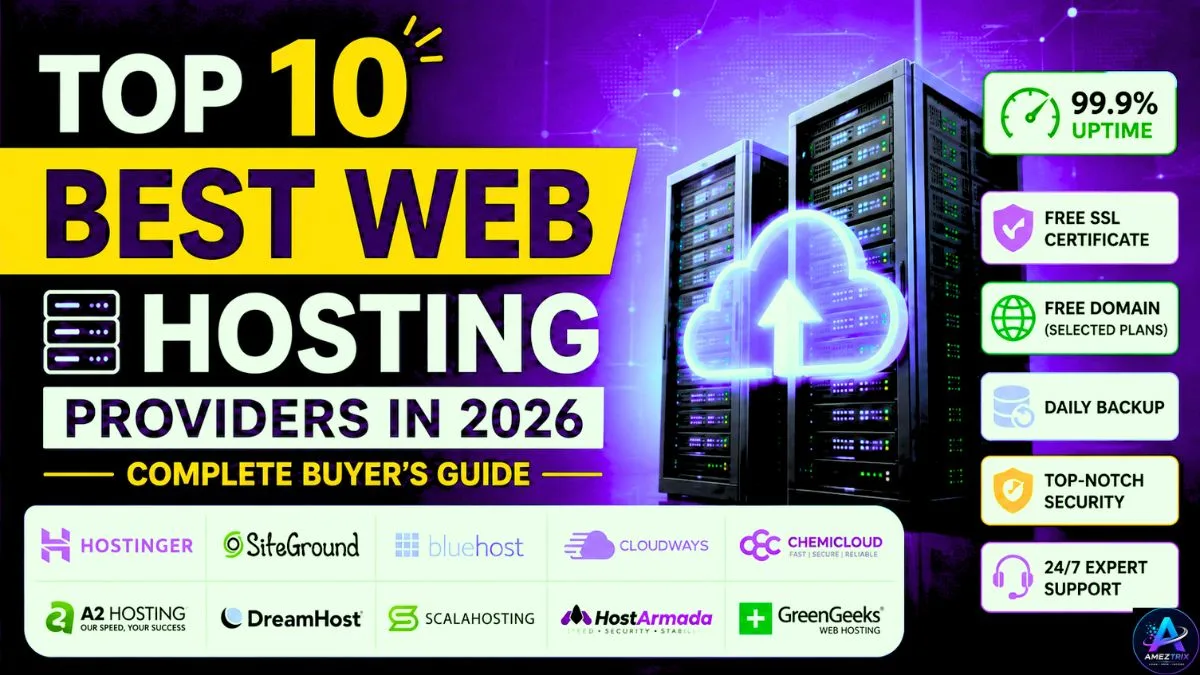
Top 10 Best Web Hosting Providers in 2026 (Complete Buyer’s Guide)
Choosing a web host feels like a small decision when you’re launching a site — it rarely is. Almost everything else about how your website performs traces back to this one choice.
Page speed, uptime, security, how smoothly a visitor’s experience unfolds — all of it starts at the server level. Choose well, and hosting fades into the background of things you never have to think about again. Choose poorly, and you’ll spend months chasing down slow load times and downtime you can’t quite explain.
The top 10 best web hosting providers landscape in 2026 barely resembles what it looked like a few years ago. AI-assisted performance tuning, built-in CDNs, automated daily backups, malware scanning — features that used to cost extra are now baseline expectations.
That’s good news for buyers. The catch is choice overload: with hundreds of hosting companies all competing for the same click, narrowing things down has gotten genuinely harder, not easier.
[Read more about Top 25 Best AI Tools for Students in 2026 (Free & Paid)]
Which is exactly the gap this guide fills. We’ve broken down the Top 10 Best Web Hosting Providers of 2026 across the things that actually matter day-to-day: real-world performance, reliability, honest pricing, support quality, security, ease of use, and how well each host holds up as your traffic grows.
Whether this is your first-ever website or you’re managing a dozen client projects at once, there’s something here that’ll point you in the right direction.

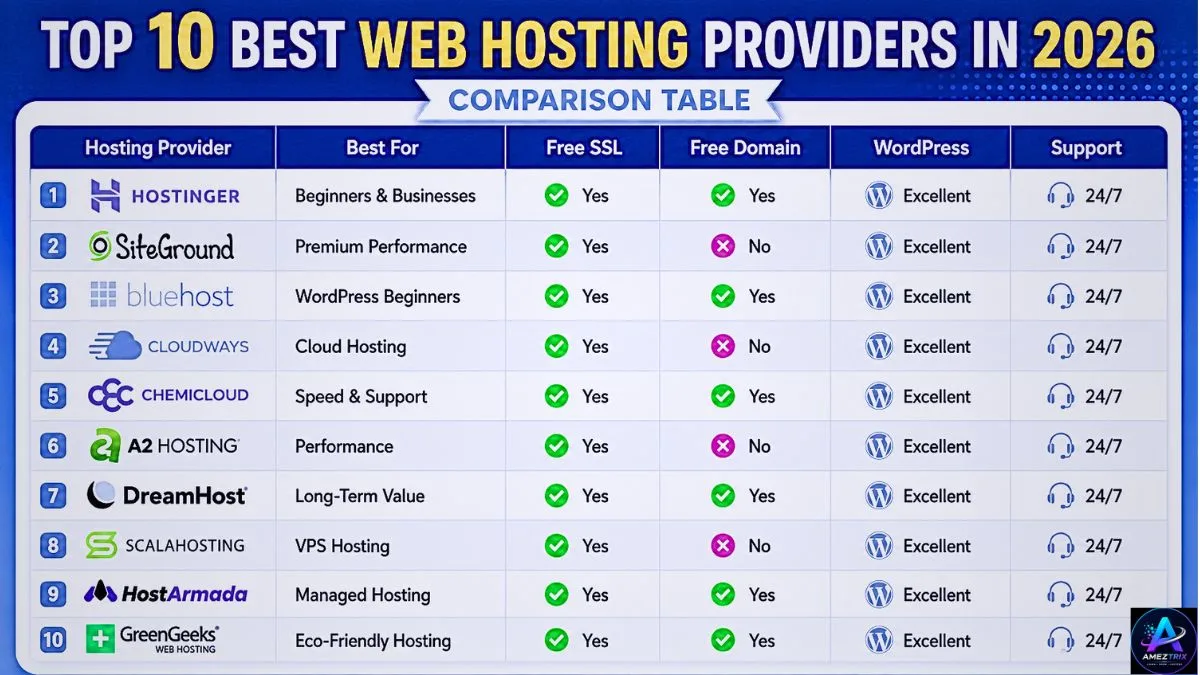
Top 10 Web Hosting Providers – Quick Comparison Table
| Hosting Provider | Best For | Free SSL | Free Domain | WordPress | Support |
|---|---|---|---|---|---|
| Hostinger | Beginners & Businesses | Yes | Yes | Excellent | 24/7 |
| SiteGround | Premium Performance | Yes | No | Excellent | 24/7 |
| Bluehost | WordPress Beginners | Yes | Yes | Excellent | 24/7 |
| Cloudways | Cloud Hosting | Yes | No | Excellent | 24/7 |
| ChemiCloud | Speed & Support | Yes | Yes | Excellent | 24/7 |
| A2 Hosting | Performance | Yes | No | Excellent | 24/7 |
| DreamHost | Long-Term Value | Yes | Yes | Excellent | 24/7 |
| ScalaHosting | VPS Hosting | Yes | No | Excellent | 24/7 |
| HostArmada | Managed Hosting | Yes | Yes | Excellent | 24/7 |
| GreenGeeks | Eco-Friendly Hosting | Yes | Yes | Excellent | 24/7 |
How We Picked These Hosts
We didn’t just skim feature lists and call it research. Every provider here was measured against the same set of criteria:
- Raw server performance
- Actual page-load speed
- Uptime consistency across regions
- Built-in security features
- How intuitive the platform feels
- WordPress-specific optimization
- Support quality when things go wrong
- Whether pricing is transparent or hides surprises
- Room to scale as traffic grows
- Overall value for the money
Instead of picking a winner off one flashy feature, we looked at the complete picture — because that’s what you actually live with once the hosting plan is running your site every day.
Why Your Choice of Host Actually Matters
It’s tempting to sort by price and grab whatever’s cheapest. Plenty of site owners do exactly that, and plenty end up regretting it. A weak hosting choice tends to show up as sluggish load times, sudden outages, security gaps, softer search rankings, and eventually, visitors and revenue you never get back.
The right pick from our Top 10 Best Web Hosting Providers list, on the other hand, quietly does a lot of work behind the scenes:
- Faster page loads
- Better standing in Google search results
- Lower bounce rates
- A smoother visitor experience
- Stronger baseline security
- Room to absorb sudden traffic spikes
- Confidence to grow without hitting a wall
What a Good Hosting Provider Should Offer
Run through this checklist before committing to any plan:
Fast SSD or NVMe Storage
Most modern hosts have moved past traditional hard drives entirely. The performance gap with SSD or NVMe is noticeable, especially under real traffic load.
Free SSL Certificate
SSL encrypts the connection between your visitors and your server. It also unlocks HTTPS, which search engines weigh into their rankings.
Daily Backups
Automated backups are the safety net you don’t think about — until the day you desperately need one, after an accidental deletion or a malware scare.
High Uptime
Look for a host willing to guarantee 99.9% uptime or better. Anything less, and visitors will notice.
Global CDN
A Content Delivery Network mirrors your site across regions, so a visitor on the other side of the world isn’t stuck waiting on a distant server.
Malware Protection
Built-in scanning, firewalls, and DDoS mitigation go a long way toward keeping both your site and your visitors safe.
One-Click WordPress Installation
Most hosts today let you spin up WordPress in a handful of clicks — no manual setup required.
24/7 Customer Support
When something breaks at 2 AM, fast, competent support is the difference between a quick fix and a genuinely bad night.
The Different Types of Web Hosting
1. Shared Hosting
Where most new site owners start. Several websites share the same server resources, which keeps the price low.
Best for: personal blogs, portfolios, small businesses, brand-new sites
2. VPS Hosting
A Virtual Private Server carves out dedicated resources from a shared physical machine — more power, more control.
Best for: growing businesses, developers, sites with steady moderate traffic
3. Cloud Hosting
Your site runs across multiple servers instead of just one, which boosts both reliability and scalability.
Best for: business sites, high-traffic projects, SaaS products, ecommerce stores
4. Dedicated Hosting
An entire physical server, reserved just for you.
Best for: large enterprises, government sites, high-traffic applications, mission-critical projects
5. Managed WordPress Hosting
Automatic updates, performance tuning, security monitoring, and backups — all handled for you.
Best for: bloggers, agencies, WooCommerce stores, business sites
Which Hosting Fits Which Type of User?
Beginners — Hostinger and Bluehost keep it simple with friendly dashboards, fair pricing, and painless WordPress setup.
Bloggers — SiteGround and DreamHost pair strong WordPress performance with dependable uptime.
Ecommerce Stores — Cloudways and ScalaHosting bring the scalability, security, and speed online stores actually need.
Agencies — Cloudways and HostArmada handle multi-client workloads without breaking a sweat.
Developers — Cloudways and ScalaHosting give you the server-level control that development work demands.
[Read more about Best AI Tools for Content Creators in 2026.]
Detailed Reviews: The Top 10 Hosting Companies, One by One
Now let’s get into each provider individually — features, real-world performance, pricing, pros, cons, and exactly who each one suits best.
1. Hostinger – Best Overall Web Hosting Provider in 2026
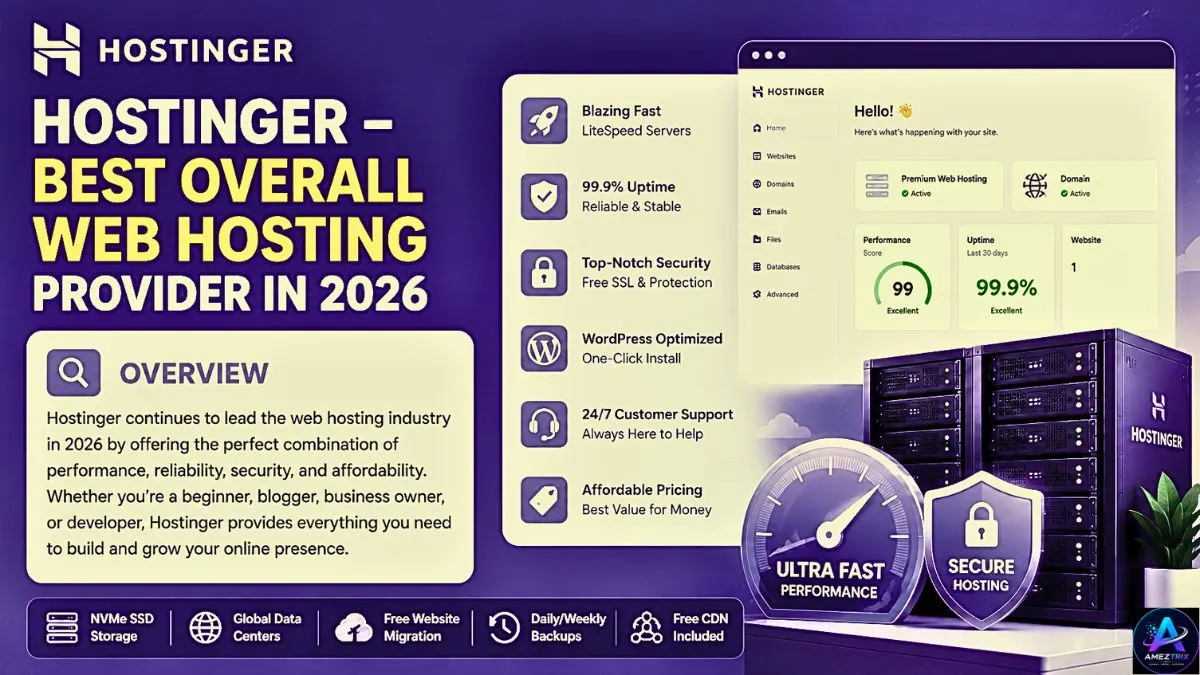
Hostinger has held its ground as one of the strongest all-around hosts going into 2026 — affordable, quick, and dependable without piling complexity onto beginners. Blog, business site, or online store, it scales without demanding a premium budget to get started.
Its custom hPanel dashboard keeps day-to-day management simple, while LiteSpeed servers, NVMe SSD storage, and built-in caching work together behind the scenes to keep load times low no matter where your visitors are browsing from.
Key Features
- LiteSpeed Web Server
- NVMe SSD Storage
- Free SSL Certificate
- Free Domain (on select plans)
- Free Website Migration
- AI Website Builder
- One-Click WordPress Installation
- Automatic Backups (frequency depends on plan)
- Global Data Centers
- 24/7 Live Chat Support
Performance
Consistently fast page loads and solid uptime — reliable enough for sites expecting a steady daily audience.
Best For
Beginners, bloggers, small businesses, portfolio sites, WordPress users
Pros
- Genuinely strong value for the price
- A dashboard that doesn’t intimidate newcomers
- Fast load times
- Free SSL and CDN bundled in
- Strong WordPress optimization
- Servers spread across multiple regions
Cons
- Daily backups locked behind higher-tier plans
- No phone support option
2. SiteGround – Best Premium Managed Hosting
SiteGround has built its reputation the hard way — consistently premium performance, excellent support, and managed WordPress hosting that simply works. A favorite among professionals, agencies, and anyone who can’t afford flaky uptime.
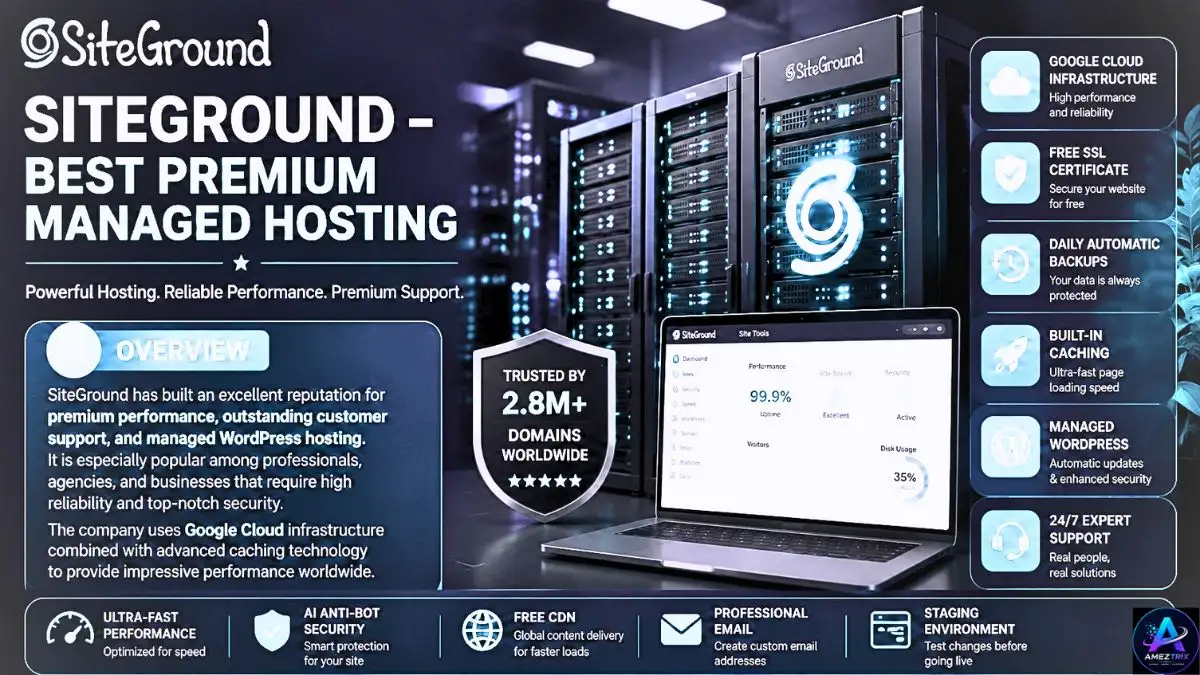
Running on Google Cloud infrastructure with advanced caching layered on top, SiteGround holds its performance steady no matter where your traffic is coming from.
Key Features
- Google Cloud Infrastructure
- Ultra-Fast SSD Storage
- Free SSL
- Daily Automatic Backups
- AI-Powered Anti-Bot Security
- Built-in Caching
- Free CDN
- Email Hosting
- Managed WordPress Updates
- Staging Environment
Performance
Fast, stable, and reliably up — rarely gives you a reason to worry.
Best For
Agencies, business websites, WooCommerce stores, professional bloggers
Pros
- Support that actually resolves issues
- Excellent uptime track record
- Strong built-in security
- Fast managed WordPress hosting
- Free daily backups included
Cons
- Renewal pricing jumps noticeably
- No free domain registration
3. Bluehost – Best Hosting for WordPress Beginners
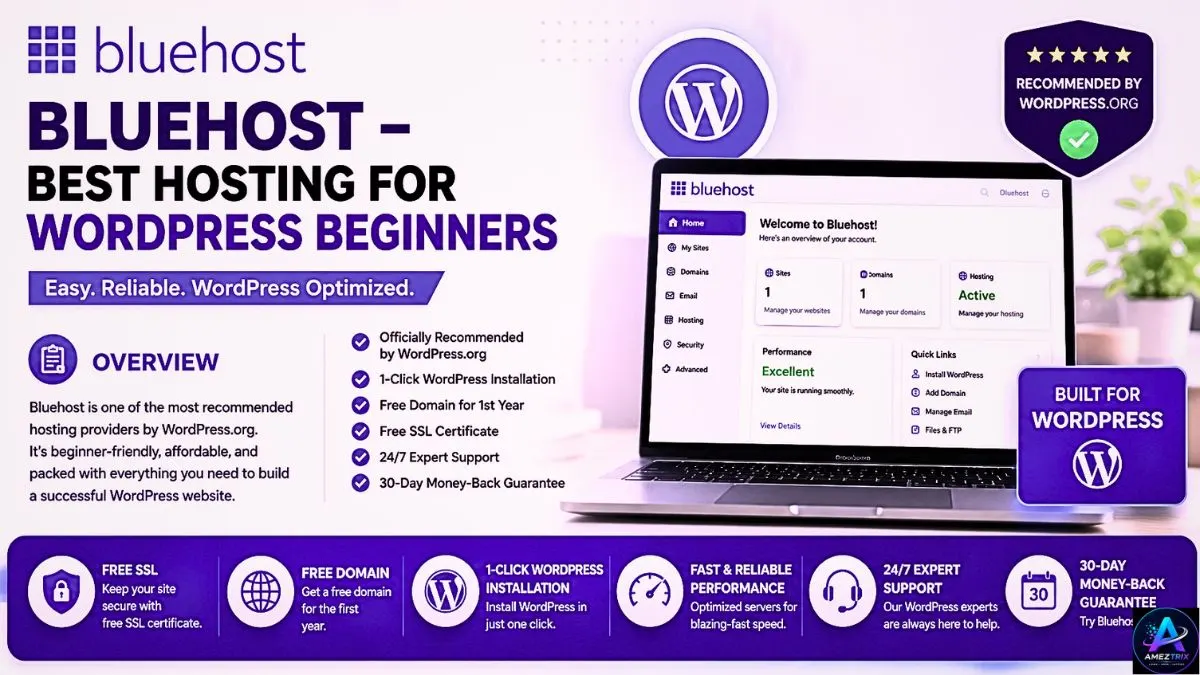
Bluehost remains the go-to for a first-ever website, mostly because it strips away the intimidation factor. The control panel is built around WordPress from the ground up, so you can go from signup to a live site in minutes.
Key Features
- Free Domain (first year)
- Free SSL Certificate
- One-Click WordPress Installation
- Automatic WordPress Updates
- Free CDN
- Marketing Credits
- Email Hosting
- 24/7 Customer Support
Performance
Steady and dependable — a solid foundation for blogs, small business sites, and first-time WordPress users.
Best For
New bloggers, students, freelancers, small businesses, WordPress beginners
Pros
- About as easy to use as hosting gets
- Free domain bundled in
- Reliable uptime
- Budget-friendly starting price
- Tight WordPress integration
Cons
- Renewal rates rise significantly
- Fewer advanced tools for developers
4. Cloudways – Best Cloud Hosting Platform
Cloudways skips shared hosting entirely, letting you deploy on major cloud providers — DigitalOcean, Vultr, Linode, AWS, or Google Cloud — while it handles the management headache for you.
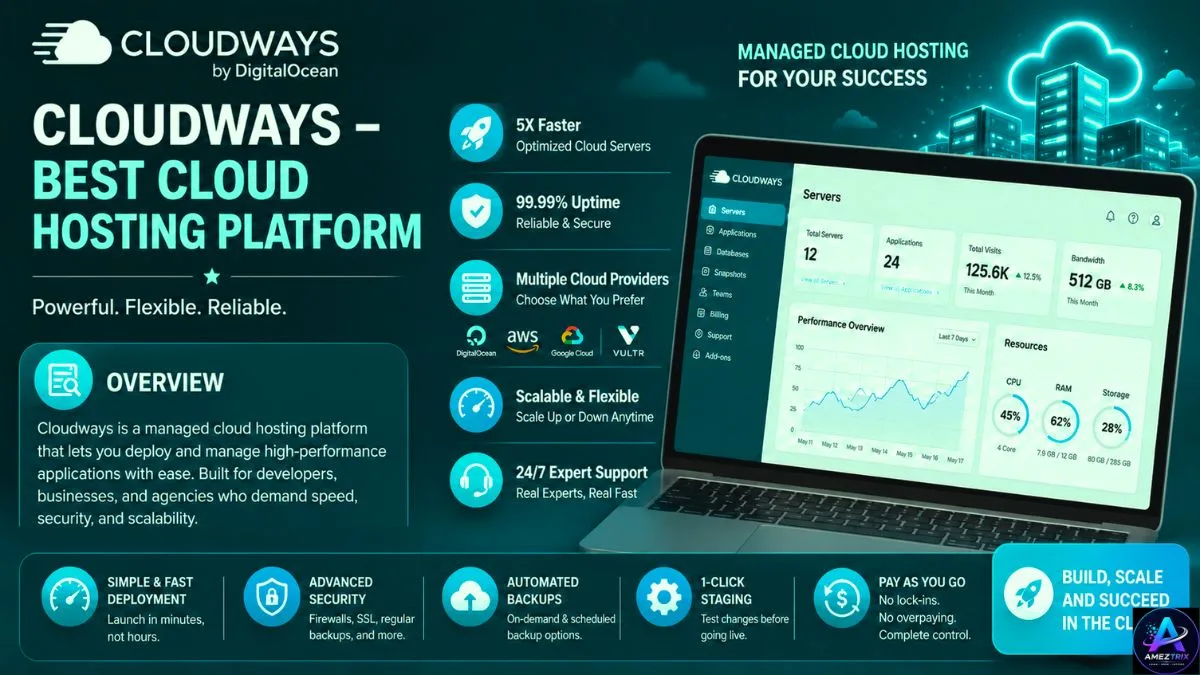
That combination makes it a natural fit for businesses, agencies, developers, and any site outgrowing its current traffic ceiling.
Key Features
- Choice of Multiple Cloud Providers
- Fully Managed Cloud Hosting
- Built-in CDN
- Free SSL
- Automatic Backups
- Vertical Scaling
- Advanced Caching
- Team Collaboration Tools
- Git Deployment
- Staging Environment
Performance
Fast and impressively scalable — built to handle demanding sites and busy stores without breaking a sweat.
Best For
Developers, agencies, SaaS businesses, WooCommerce stores, high-traffic websites
Pros
- Genuinely excellent performance
- Flexibility across cloud providers
- Painless scaling
- Strong security posture
- Developer-friendly toolset
Cons
- No free domain included
- A bit of a learning curve if you’re new to hosting
5. ChemiCloud – Best Customer Support & Reliability
ChemiCloud has climbed the ranks fast, largely on the strength of its support team, dependable infrastructure, and consistent day-to-day performance.

It’s fully managed, generously resourced, and a particularly good match for small businesses and WordPress site owners.
Key Features
- NVMe SSD Storage
- Free Domain
- Free SSL
- Daily Backups
- LiteSpeed Technology
- Free Website Migration
- Managed WordPress
- Malware Protection
- 24/7 Expert Support
Performance
Quick page loads, strong uptime, and consistency across sites of different sizes.
Best For
Bloggers, business websites, agencies, WordPress users, small online stores
Pros
- A support team that genuinely helps
- Free daily backups
- Free domain included
- Solid WordPress optimization
- Dependable uptime
Cons
- Fewer data center locations than some larger competitors
- Costs climb on premium tiers as your site grows
10 Best Web Hosting Companies – Quick Comparison
| Provider | Best For | Speed | Ease of Use | Value for Money |
|---|---|---|---|---|
| Hostinger | Overall Best | ⭐⭐⭐⭐⭐ | ⭐⭐⭐⭐⭐ | ⭐⭐⭐⭐⭐ |
| SiteGround | Premium Hosting | ⭐⭐⭐⭐⭐ | ⭐⭐⭐⭐☆ | ⭐⭐⭐⭐☆ |
| Bluehost | Beginners | ⭐⭐⭐⭐☆ | ⭐⭐⭐⭐⭐ | ⭐⭐⭐⭐☆ |
| Cloudways | Cloud Hosting | ⭐⭐⭐⭐⭐ | ⭐⭐⭐⭐☆ | ⭐⭐⭐⭐⭐ |
| ChemiCloud | Support & Reliability | ⭐⭐⭐⭐☆ | ⭐⭐⭐⭐⭐ | ⭐⭐⭐⭐☆ |
If you want the safest all-around pick, Hostinger is hard to beat on performance-per-dollar. SiteGround makes sense if you’re a business or agency that values premium support over shaving a few dollars off the monthly bill. Bluehost remains the easiest on-ramp for a first WordPress site.
Cloudways is the strongest option for managed cloud infrastructure as your project scales, and ChemiCloud pairs solid reliability with support that actually answers.
6. A2 Hosting – Best Performance Web Hosting
A2 Hosting has built its entire identity around one thing: speed. If load time is your top priority, this is one of the strongest picks on the list.
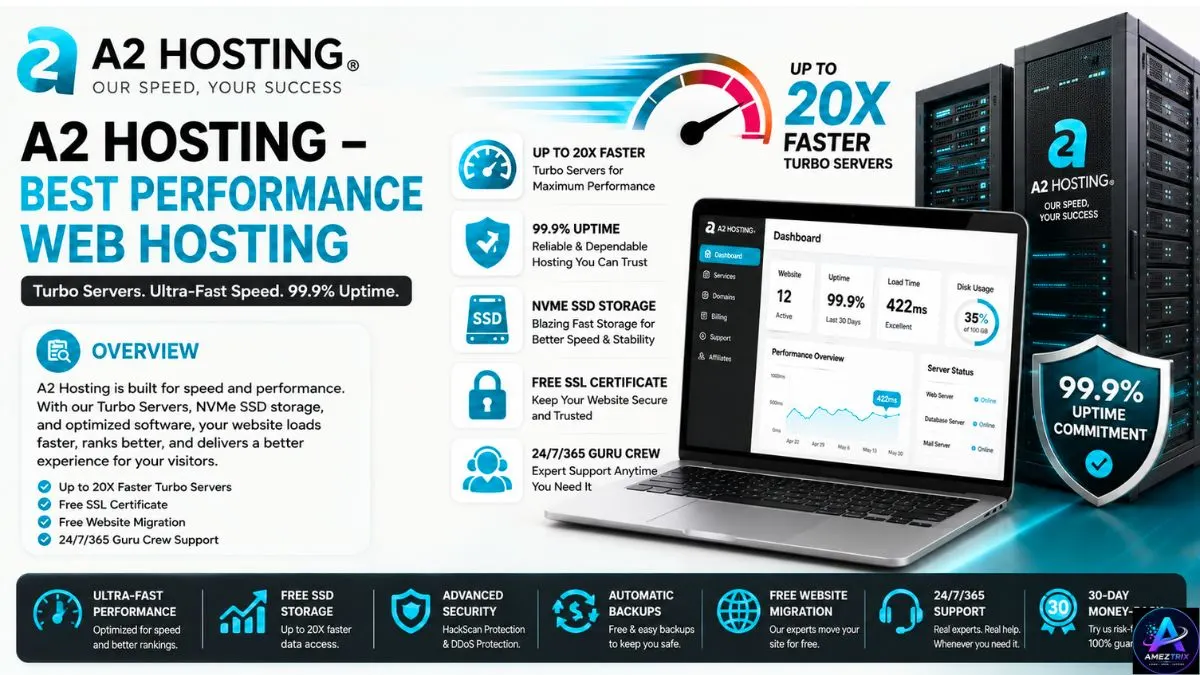
Turbo servers, NVMe SSD storage, and a tightly optimized software stack all work toward the same goal: shaving milliseconds off every single page load. Faster pages don’t just feel nicer — they tend to translate into better SEO and higher conversions too.
Key Features
- Turbo Servers (select plans)
- NVMe SSD Storage
- Free SSL Certificate
- Free Website Migration
- Unlimited Email Accounts
- Automatic Backups
- LiteSpeed Support
- Developer-Friendly Environment
- One-Click WordPress Installation
- 24/7 Expert Support
Performance
Consistently fast — a strong pick anywhere performance is non-negotiable.
Best For
Performance-focused websites, developers, WordPress users, WooCommerce stores, business sites
Pros
- Excellent speed
- Reliable uptime
- Free SSL included
- Solid developer tooling
- Flexible plan options
Cons
- Turbo features reserved for higher-tier plans
- Renewal pricing higher than the intro rate
7. DreamHost – Best Long-Term Value Hosting
DreamHost has been a fixture in hosting for years, known for straightforward pricing, generous storage, and dependable WordPress hosting. If you’re planning to stick with a site long-term, it tends to pay off.
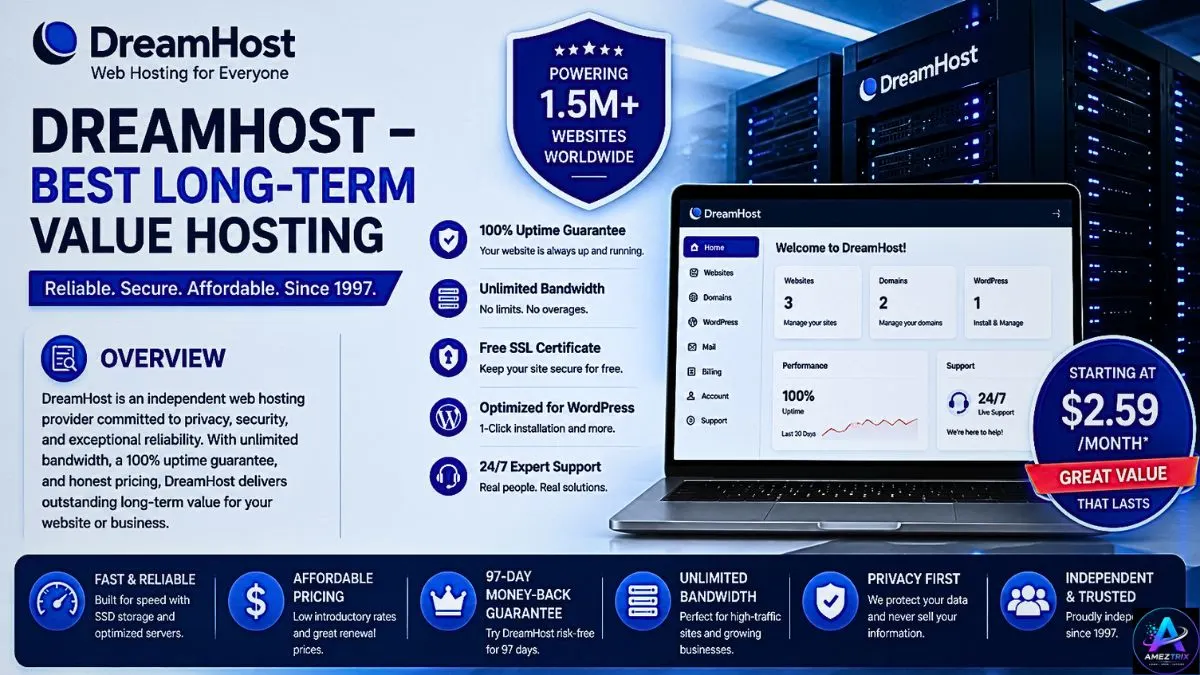
The dashboard stays simple enough for beginners while still leaving room for experienced users to do what they need.
Key Features
- Free Domain (select plans)
- Free SSL Certificate
- SSD Storage
- Unlimited Bandwidth
- Automatic WordPress Updates
- Daily Backups (select plans)
- Built-in Website Builder
- Email Hosting
- AI Website Assistant
- 24/7 Support
Performance
Stable, dependable uptime with smooth WordPress performance.
Best For
Bloggers, freelancers, personal sites, small businesses, WordPress users
Pros
- Pricing that doesn’t hide surprises
- Beginner-friendly
- Solid WordPress performance
- Unlimited traffic on many plans
- Long-standing industry reputation
Cons
- Fewer global data centers than some rivals
- Live chat availability can be inconsistent
8. ScalaHosting – Best VPS Hosting Provider
ScalaHosting has carved out a strong niche by pairing affordability with genuinely capable managed VPS solutions.
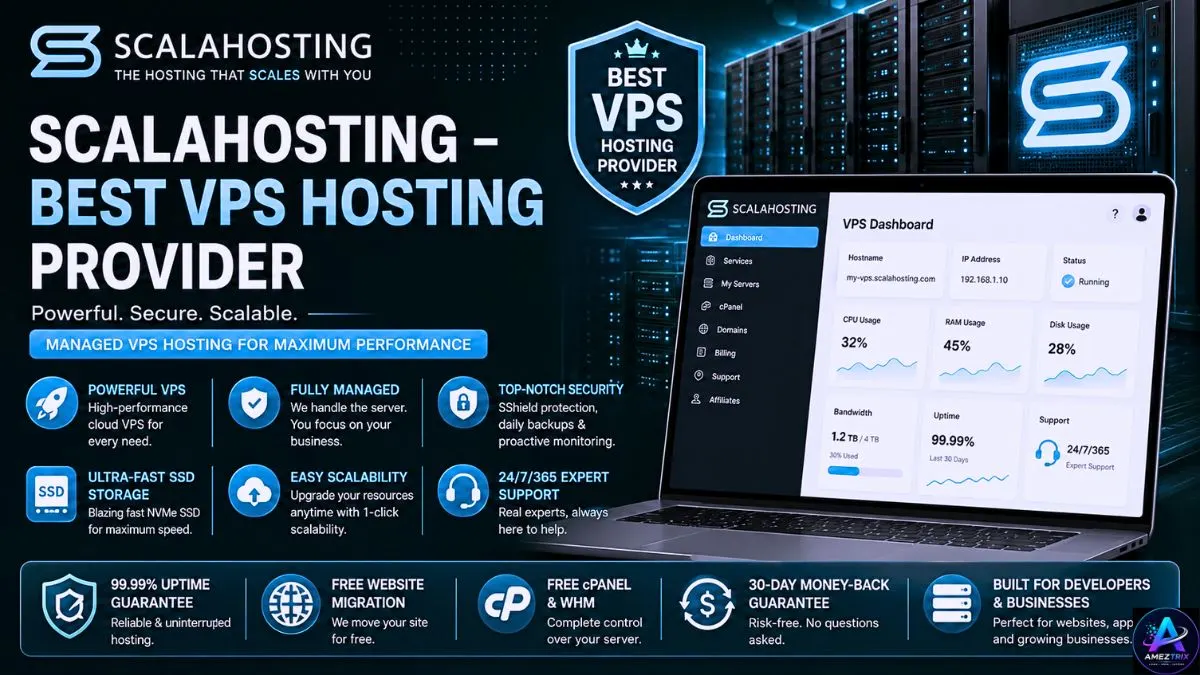
Its own SPanel control panel offers a refreshing alternative to the usual hosting dashboards, simplifying server management without dumbing it down. For businesses that have outgrown shared hosting but aren’t ready for unmanaged VPS complexity, ScalaHosting hits a good middle ground.
Key Features
- Managed VPS Hosting
- SPanel Control Panel
- NVMe SSD Storage
- Free SSL Certificate
- Daily Backups
- Dedicated Resources
- Malware Protection
- One-Click WordPress Installation
- Free Website Migration
- 24/7 Technical Support
Performance
Strong performance for growing sites, thanks to dedicated resources and a well-tuned server setup.
Best For
Growing businesses, agencies, developers, ecommerce stores, medium-to-high traffic sites
Pros
- Excellent VPS performance
- Server management that doesn’t require a degree
- Solid security tooling
- Free migrations
- Reliable uptime
Cons
- Fewer shared hosting options than some competitors
- VPS plans cost more than basic shared hosting
9. HostArmada – Best Managed Cloud Hosting
HostArmada has built momentum fast, offering managed cloud hosting backed by fast infrastructure and support that actually replies quickly.
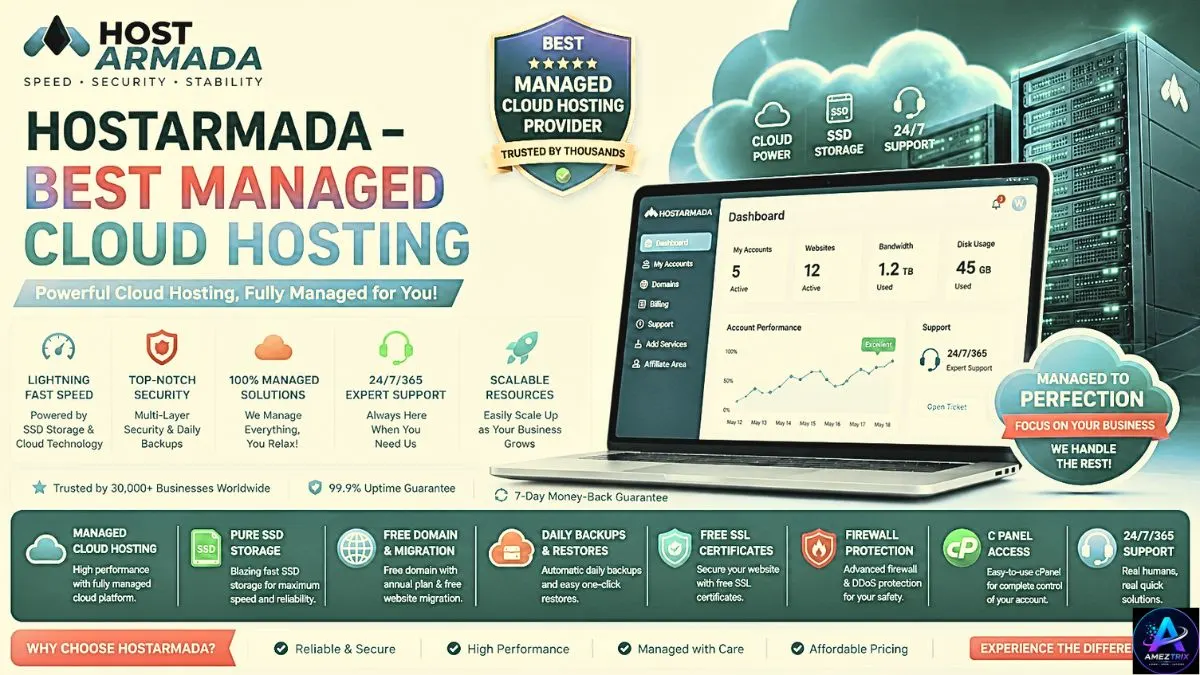
The focus here is reliability, security, and keeping things simple — a good fit if you want solid performance without touching server configuration yourself.
Key Features
- Cloud SSD Hosting
- Free SSL Certificate
- Daily Backups
- Free Website Migration
- Malware Protection
- LiteSpeed Web Server
- Managed WordPress Hosting
- Free Domain (select plans)
- 24/7 Live Support
Performance
Reliable uptime paired with fast performance across blogs, business sites, and ecommerce projects.
Best For
Small businesses, agencies, WordPress websites, online stores, growing blogs
Pros
- Support that stands out
- Strong security features
- Free daily backups
- Easy-to-navigate dashboard
- Solid overall performance
Cons
- Smaller brand recognition than the bigger names
- Fewer advanced enterprise features
10. GreenGeeks – Best Eco-Friendly Hosting Provider
GreenGeeks pairs dependable hosting with a genuine environmental commitment, offsetting its energy usage through renewable initiatives.
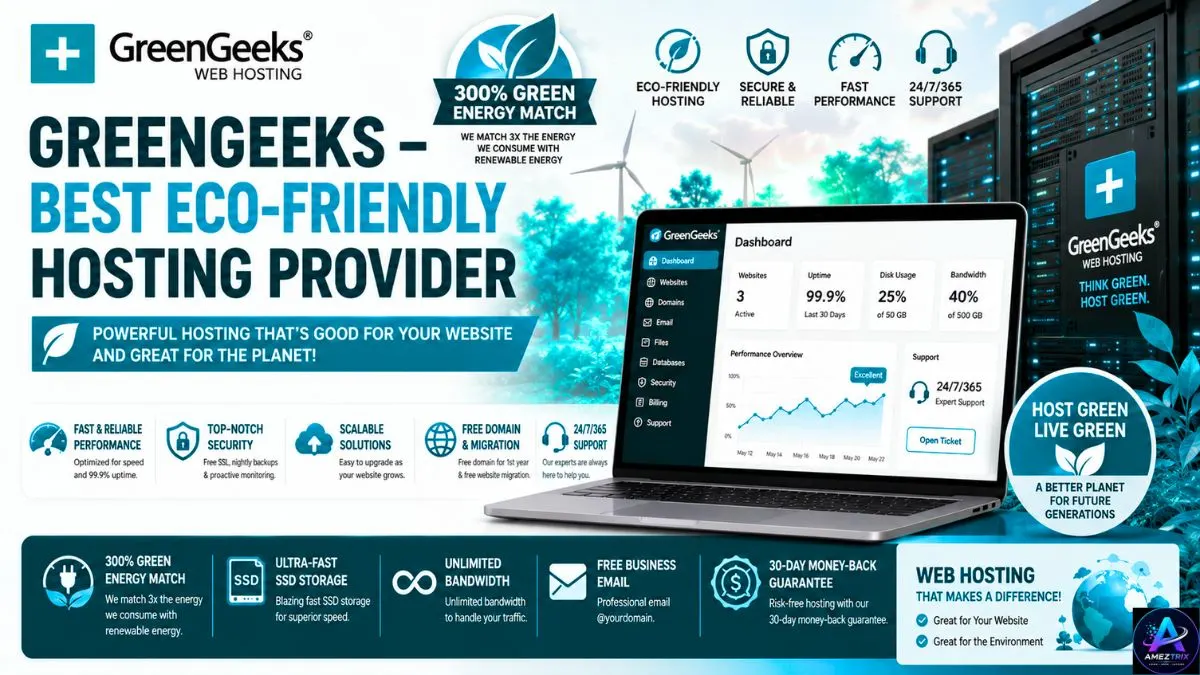
It’s a natural fit for anyone who cares about the sustainability side of their tech stack — and that eco-conscious angle doesn’t come at the cost of performance, security, or reliability.
Key Features
- Green Energy Hosting
- NVMe SSD Storage
- Free SSL Certificate
- Free Domain (select plans)
- Free CDN
- Daily Backups
- Managed WordPress
- Unlimited Bandwidth
- Email Hosting
- 24/7 Customer Support
Performance
Dependable load times and consistent uptime.
Best For
Environmentally conscious businesses, bloggers, small businesses, WordPress sites, portfolios
Pros
- Genuinely eco-friendly infrastructure
- Free SSL and CDN included
- Reliable uptime
- Helpful customer support
- Easy for beginners to get started
Cons
- Renewal pricing higher than the promo rate
- Fewer advanced cloud options than specialized providers
Quick Comparison: Providers 6–10
| Hosting Provider | Best For | Performance | Ease of Use | Overall Rating |
|---|---|---|---|---|
| A2 Hosting | High Performance | ⭐⭐⭐⭐⭐ | ⭐⭐⭐⭐☆ | 9.6/10 |
| DreamHost | Long-Term Value | ⭐⭐⭐⭐☆ | ⭐⭐⭐⭐⭐ | 9.5/10 |
| ScalaHosting | Managed VPS | ⭐⭐⭐⭐⭐ | ⭐⭐⭐⭐☆ | 9.7/10 |
| HostArmada | Managed Cloud | ⭐⭐⭐⭐☆ | ⭐⭐⭐⭐⭐ | 9.6/10 |
| GreenGeeks | Eco-Friendly Hosting | ⭐⭐⭐⭐☆ | ⭐⭐⭐⭐⭐ | 9.5/10 |
Expert Recommendations by Use Case
Your ideal host really comes down to what you’re building, your budget, and how much traffic you’re expecting. Here’s the quick cheat sheet:
Best Overall — Hostinger. The strongest mix of affordable pricing, solid performance, ease of use, and WordPress optimization — a safe default for most users.
Best Premium Hosting — SiteGround. Great for businesses and agencies wanting top-tier support, tighter security, and strong managed WordPress performance.
Best Cloud Hosting — Cloudways. A flexible, scalable managed cloud platform that grows with your site.
Best VPS Hosting — ScalaHosting. Ideal when you need dedicated resources and stronger security without wading into unmanaged VPS complexity.
Best for Beginners — Bluehost. Simple setup, beginner-friendly tools, and smooth WordPress integration.
Best Performance — A2 Hosting. Turbo-charged infrastructure for speed-obsessed site owners.
Best Customer Support — ChemiCloud. Responsive help, solid uptime, genuinely useful managed features.
Best Managed Cloud Hosting — HostArmada. A well-rounded mix of performance, security, and simplicity.
Best Long-Term Value — DreamHost. Transparent pricing that pays off if you’re in it for the long run.
Best Eco-Friendly Hosting — GreenGeeks. Sustainable hosting that doesn’t sacrifice reliability to get there.
Web Hosting Top 10 – Trending FAQs
1. What’s the best web hosting provider in 2026?
Hostinger stands out as one of the strongest overall picks in 2026 — solid performance, fair pricing, good security, and a setup beginners can handle. That said, “best” genuinely depends on your specific needs and budget.
2. Which host is best for beginners?
Bluehost and Hostinger are both strong starting points — easy setup, one-click WordPress installs, intuitive dashboards, and support that’s actually there when you need it.
3. Is cloud hosting better than shared hosting?
Generally yes, on scalability, reliability, and raw performance. Shared hosting still makes sense for small sites and beginners on a tight budget, while cloud hosting suits growing businesses and higher-traffic sites better.
4. Which hosting works best for WordPress?
Managed WordPress hosting from Hostinger, SiteGround, Bluehost, or Cloudways gives you optimized performance, automatic updates, and stronger security built specifically around WordPress.
5. Do I actually need a free SSL certificate?
Yes. SSL encrypts the connection between your site and its visitors, builds trust, and enables HTTPS — which search engines factor into how they rank you.
6. How much storage does my website actually need?
Most new sites are comfortable starting with 10–20 GB of SSD storage. You can upgrade later as content and traffic grow.
7. Can I switch hosts later if I change my mind?
Absolutely. Most reputable hosts offer free migration services or tools that move your site with minimal downtime.
8. What exactly is “uptime”?
The percentage of time your website stays accessible online. A dependable host should guarantee somewhere around 99.9% uptime or better.
9. Are daily backups really necessary?
Yes — they’re your safety net against accidental data loss, malware, and technical failures, letting you restore your site quickly when something goes wrong.
10. Which host is best for an ecommerce store?
Cloudways, SiteGround, ScalaHosting, and Hostinger all bring the performance, security, and scalability online stores need.
11. Which is the cheapest reliable web hosting provider in 2026?
Hostinger and Bluehost consistently offer the lowest realistic entry price without sacrificing core reliability — just watch renewal pricing closely on both.
12. Is free web hosting worth using?
Rarely, for anything beyond a throwaway test site. Free hosting typically means shared IPs, forced ads, weak support, and no real uptime guarantee — not something to build a business on.
How to Choose the Right Hosting Plan
Walk through these factors before you hit “buy”:
Type of Website
Different projects call for different setups: personal blog, business website, ecommerce store, portfolio site, news website, membership site. Match your plan to what you’re actually building.
Expected Traffic
Be realistic about visitor numbers. If you’re expecting heavy traffic, VPS or cloud hosting will handle it far better than basic shared hosting.
Budget
Don’t anchor your decision purely on the cheapest introductory price. Look at renewal costs, what’s actually included, and the long-term value.
Customer Support
Good support saves real time when something goes sideways. Look for 24/7 live chat or ticket-based help.
Security Features
At minimum, look for: free SSL certificate, firewall protection, malware scanning, DDoS protection, automatic backups, and two-factor authentication.
Common Mistakes to Avoid When Choosing a Host
Chasing the cheapest plan available. The lowest price often means the fewest resources — weigh cost against what you’re actually getting.
Ignoring renewal pricing. Promotional rates almost always jump at renewal. Check the long-term cost before committing.
Skipping research on support quality. Fast, competent support matters more than most people realize, especially if you’re new to managing a website.
Skipping backups. Regular backups are what save you when something unexpected happens — prioritize a host that includes them automatically.
Overlooking scalability. Pick a host that lets you grow without a painful migration down the road.
Final Verdict
After putting the Top 10 Best Web Hosting Providers of 2026 side by side, one thing is clear: each one has its own real strength.
- Hostinger brings the best overall mix of affordability, speed, and simplicity.
- SiteGround is the premium pick, with strong managed WordPress features.
- Cloudways suits anyone who needs scalable managed cloud hosting.
- Bluehost remains a dependable choice for a first WordPress site.
- ScalaHosting leads the pack for managed VPS.
- A2 Hosting is built for speed above everything else.
- ChemiCloud pairs reliable performance with genuinely helpful support.
- HostArmada delivers solid managed cloud hosting.
- DreamHost offers strong long-term value.
- GreenGeeks combines reliability with an eco-friendly approach.
At the end of the day, the right host comes down to your specific goals, budget, expected traffic, and technical comfort level. Weigh features, pricing, security, and support side by side — it’s worth the extra half hour before you commit, because the host you pick today is one you’ll likely live with for years.
About Author
Rajendra Parmar is the Founder and Editor of AmezTrix, where he covers Artificial Intelligence, Technology, WordPress, Web Hosting, Digital Marketing, Gadgets, and Software. His mission is to simplify complex technology through practical tutorials, honest reviews, and well-researched guides that help readers make smarter digital decisions.