Electric car price in India start at around ₹6.99 lakh. Compare Tiago, Punch, Nexon, Windsor, Creta Electric & BE 6 prices, BaaS and running costs.

Electric Car Price in India 2026: What You’ll Really Pay and the Best Picks
Quick note for global readers: 1 lakh = 100,000 rupees. Indian cars are right-hand drive, and every price below is an approximate ex-showroom figure from October 2026 listings. Ex-showroom is not what you pay to drive home, and I’ll show you why.
Electric car prices in India start at about ₹6.99 lakh ex-showroom (Tata Tiago EV) and go beyond ₹30 lakh for premium SUVs like the Mahindra XEV 9e. Most buyers shop in the ₹10–20 lakh range, where the Nexon EV, MG Windsor and Hyundai Creta Electric compete.
Electric Car Price in India at a Glance (October 2026)
The market now spans almost every budget. Here is how it breaks down:
| Budget (ex-showroom) | Example Models | Best For |
|---|---|---|
| ₹6–10 lakh | Tata Tiago EV, MG Comet EV, Tata Punch EV (base) | City driving, first EV |
| ₹10–15 lakh | Punch EV (higher trims), Nexon EV (base), MG Windsor (base) | Small families, daily commuters |
| ₹15–20 lakh | Maruti e Vitara, Hyundai Creta Electric, Mahindra BE 6 Sporteq | Families wanting range and space |
| ₹20–30 lakh | Mahindra XEV 9S, XEV 9e, Tata Harrier EV | Premium comfort, 7-seaters, performance |
| ₹30 lakh+ | Top XEV 9e/9S trims, imported luxury EVs | Top-spec buyers |
Read these as moving targets. Brands revise prices and launch variants often, so confirm on the manufacturer’s site before you book.
Why Electric Car Prices Vary So Much in India
Five things set the number on the price tag:
- Battery size: the biggest single cost. A 19 kWh pack and a 79 kWh pack sit in different price worlds.
- Motor and platform: a purpose-built electric platform costs more than an electrified petrol body.
- Features: ADAS, large screens, ventilated seats and 360° cameras add up quickly across trims.
- Ownership model: buying the battery or renting it (Battery-as-a-Service) changes the upfront price by several lakh.
- Your state: road tax, registration and incentives differ by state.
One structural advantage helps every buyer. Electric cars attract 5% GST, which is far lower than the 18% or 40% most petrol cars pay depending on size and engine. That is one reason entry-level EVs now sit close to well-equipped petrol hatchbacks.
Best Electric Cars Under ₹10 Lakh in India
Choices thin out below ₹10 lakh, but they exist. The Tata Tiago EV is the most affordable mainstream option. The Tata Punch EV opens just under the ₹10 lakh mark.
| Model | Ex-Showroom Price (approx.) | Battery | Claimed Range | Best For |
|---|---|---|---|---|
| Tata Tiago EV | ₹6.99–10.09 lakh* | 19.2 / 24 kWh | Roughly 226–285 km | Budget city commuting |
| MG Comet EV | ₹7.63–10 lakh | 17.3 kWh | About 230 km | Tight city streets, parking |
| Tata Punch EV | ₹9.79–12.99 lakh | Up to 40 kWh | Roughly 260–468 km (pack and test cycle dependent) | Compact SUV feel, 5-star Bharat NCAP rating |
*Some listings still show ₹7.99 lakh as the Tiago EV starting price, and different sources show different range figures. Check the exact variant with a dealer.

Who should buy in this bracket?
If you cover 30–50 km a day, can charge at home and rarely take long highway trips, a Tiago EV or Comet EV covers real needs. Don’t buy one as your only car if you regularly drive 300 km between cities.
Best Electric Cars Between ₹10 and ₹20 Lakh
This is where most families end up, and where competition is fiercest. You get 400+ km claimed range, proper boot space and strong safety credentials.
| Model | Ex-Showroom Price (approx.) | Battery | Claimed Range | Best For |
|---|---|---|---|---|
| Tata Nexon EV | ₹12.49–17.89 lakh | 30 / 45 kWh | Up to ~489 km | All-rounder, 5-star safety rating |
| MG Windsor EV | ₹14.10–18.60 lakh (₹9.99 lakh with BaaS) | 38 / 52.9 kWh | Up to ~449 km | Rear-seat comfort and space |
| Maruti Suzuki e Vitara | ₹15.99–20.01 lakh | 49 / 61 kWh | Up to ~543 km | Range, Maruti service reach |
| Hyundai Creta Electric | ₹18.03–24.72 lakh | 42 / 51.4 kWh | Up to ~473 km | Fast DC charging (up to 100 kW), familiar Creta feel |
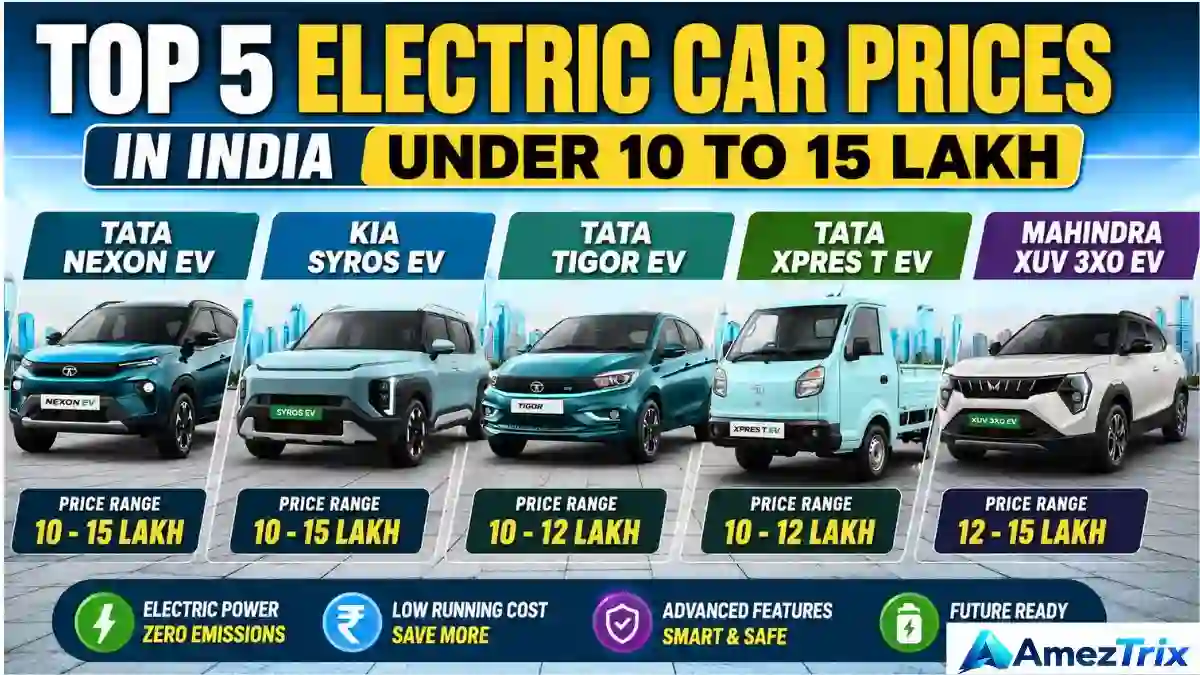
My shortlist logic: choose the Nexon EV for balance and safety. Choose the Windsor if rear-seat comfort matters most. Choose the e Vitara if you want maximum claimed range from a brand with a huge service network. Choose the Creta Electric if you prefer a mainstream SUV and want faster DC charging.
Premium Electric Car Prices (₹20 Lakh and Above)
Past ₹20 lakh you get larger batteries, stronger motors, three-row seating and quicker charging.
| Model | Ex-Showroom Price (approx.) | What Stands Out |
|---|---|---|
| Mahindra BE 6 Sporteq | From ₹19.45 lakh | 59 kWh pack, ~548 km claimed, sporty design |
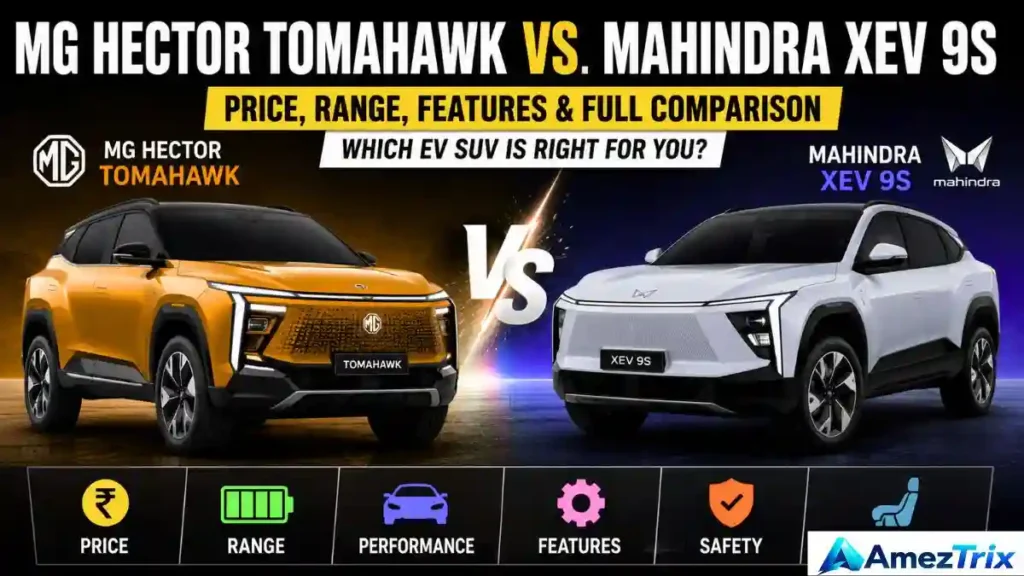
| MG Hector Tomahawk EV | Around ₹19.5 lakh | 69.2 kWh pack, ~517 km claimed |
| Mahindra XEV 9S | About ₹19.95–30.9 lakh | The only 7-seater electric SUV in Mahindra’s range |
| Mahindra XEV 9e | About ₹21.9–30.5 lakh | Flagship coupe-SUV with the biggest battery options |
| Tata Harrier EV | ₹21.69–30.43 lakh | 5-star safety rating, strong highway manners |
Imported luxury EVs sit above this range. For example, the Hyundai Ioniq 5 was listed near ₹55.7 lakh earlier this year. Mahindra has also reported strong demand, with its XEV 9S and XUV 7XO together passing 93,000 bookings.
Curious what is coming next? See our guide to upcoming electric cars before you commit.
Battery-as-a-Service (BaaS): Cheaper Upfront, Not Always Cheaper Overall
BaaS is the biggest change in EV pricing. You buy the car without the battery and pay a per-kilometre rental. It slashes the sticker price but adds a running cost.
| Model | Regular Price | BaaS Upfront Price | Battery Rental |
|---|---|---|---|
| Tata Tiago EV | ₹6.99 lakh | ≈ ₹4.69 lakh | ₹2.6/km |
| MG Comet EV | ₹7.63 lakh+ | ≈ ₹4.99 lakh | ₹3.2/km |
| MG Windsor EV | ₹14.10 lakh+ | ₹9.99 lakh | ₹3.9/km |
| Maruti e Vitara | ₹15.99 lakh+ | ₹10.99 lakh | ₹3.99/km (49 kWh) |
| Hyundai Creta Electric | ₹18.03 lakh | ₹10.99 lakh | ₹3.9/km |
A quick BaaS reality check
Say you drive the MG Windsor 1,500 km a month on BaaS. That is 1,500 × ₹3.9 = ₹5,850 monthly. Over five years (60 months) you pay ₹3.51 lakh in rental, on top of ₹9.99 lakh for the car. The total is about ₹13.5 lakh, only slightly below the ₹14.1 lakh outright price, and you don’t own the battery. Some BaaS plans also assume a minimum monthly distance (reports mention around 1,500 km for MG and 1,800 km for Maruti), so low-mileage drivers can pay for kilometres they never drive.
BaaS makes sense if you want the lowest entry cost or expect to sell early. It makes less sense if you drive heavily and plan to keep the car for many years.
On-Road Price: The Gap Most First-Time Buyers Miss
The ex-showroom figure is not your cheque. On-road price typically adds:
- Insurance (often the biggest add-on for EVs)
- Registration and handling charges
- Road tax, where your state doesn’t waive it
- FASTag and dealer accessories
- Extended warranty and a home charger, if you choose them
The EV advantage here is state policy. Several states waive road tax and registration for electric cars. Reports from mid-2026 list Telangana (waiver through December 31, 2026), Tamil Nadu (through December 31, 2027), Delhi and Maharashtra among them. Policies change, so ask your dealer to show the waiver on the quote in writing.
Subsidies and Incentives: What Actually Exists
Here is the honest picture:
- 5% GST on electric cars is the main national benefit.
- No central cash subsidy for private electric cars. The PM E-DRIVE scheme mainly supports two- and three-wheelers, buses, trucks and charging infrastructure.
- State benefits such as road tax and registration waivers vary widely and have expiry dates.
Don’t build incentives into your budget until the dealer confirms them for your state and the exact variant.

Running Costs: Electric vs Petrol
EVs cost more upfront than similar petrol cars at the top end, but they usually cost far less per kilometre. Here is simple napkin math with illustrative inputs:
- EV: 15 kWh per 100 km × ₹8 per unit = ₹120 per 100 km, or ₹1.20/km.
- Petrol: 15 km/litre at ₹100/litre = about ₹6.67/km.
- Over 12,000 km a year: roughly ₹14,400 for the EV against ₹80,040 for petrol, a gap near ₹65,000.
Your numbers will differ. Electricity tariffs, petrol prices, driving style and charging habits all change the result. Public fast charging costs noticeably more than home charging, which narrows the saving.
What does a full home charge cost?
A 40 kWh battery at ₹8/kWh costs about ₹320 for a full charge before charging losses. Home charging is usually the cheapest option if you have dedicated parking. Living in an apartment? Ask your housing society about charger installation before you buy. For the technology side, read our guide on EV battery and charging technology.
Electric vs Petrol: Side-by-Side
| Factor | Electric Car | Petrol Car |
|---|---|---|
| Purchase price | Often higher | Often lower |
| Running cost per km | Much lower with home charging | Higher |
| Servicing | Fewer moving parts | Engine, oil and exhaust upkeep |
| Refuelling | Overnight at home, or 30–60 min fast charging | Minutes |
| Highway convenience | Improving, needs planning | Easy everywhere |
| Resale value | Still uncertain | Well established |
Real-World Range, Battery Life and Chemistry
Claimed range comes from standardised tests. In daily use, expect noticeably less once you add heavy traffic, full air-conditioning, hills, passengers and highway speeds. A sensible rule is to plan around 60–75% of the claimed figure, then check owner reviews for your exact variant.
On batteries, all of them degrade slowly with time, heat and frequent fast charging. Read the warranty carefully: years, kilometres, and what counts as covered degradation. Two chemistries are common. LFP packs are known for durability and thermal stability. NMC packs usually offer higher energy density. Neither wins outright, since design and cooling matter just as much.
EMI and Financing
A low EMI can hide a high total cost. Compare the interest rate, tenure, processing fees and total interest paid. A longer tenure lowers the monthly figure but raises the overall cost. Check whether the lender treats BaaS cars differently, since the loan covers only the car, not the battery rental.
Pros and Cons of Buying an EV in India
| Pros | Cons |
|---|---|
| Very low running cost with home charging | Higher upfront price in many segments |
| 5% GST and possible state tax waivers | Highway charging still patchy on some routes |
| Quiet, smooth, quick city driving | Resale value is less predictable |
| Less routine maintenance | Home charging may be hard in apartments |
| More models at every budget | Claimed range rarely matches daily reality |
Common Mistakes When Comparing Electric Car Prices
- Comparing ex-showroom prices instead of final on-road quotes
- Choosing BaaS without calculating five-year rental cost
- Buying the biggest battery when daily driving is 30 km
- Ignoring where and how you will charge
- Assuming a subsidy exists without written confirmation
- Skipping insurance quotes, which vary a lot between models
Red Flags at the Dealership
- A price that “includes subsidy” but can’t be shown on paper
- Vague answers on battery warranty terms
- Pressure to buy costly accessories or an extended warranty on the spot
- No clear answer on the nearest authorised EV service centre
- BaaS terms that aren’t explained in writing, including minimum monthly kilometres
Before You Buy: A Practical Checklist
- Set a total budget, not just a sticker price, and include insurance and charger.
- Confirm whether you can install a home charger.
- Get written quotes for outright purchase and BaaS if offered.
- Check the battery warranty (years, km and degradation cover).
- Test drive in your normal traffic with the air-conditioning on.
- Read owner reviews on real-world range for your variant.
- Locate the nearest service centre and fast chargers on your usual routes.
- Confirm any state road-tax waiver on the final invoice.
- Compare EMI offers and total interest, not just the monthly figure.
- Re-check prices on the manufacturer’s website on the day you book.
Key Takeaways
- Entry-level electric car prices in India begin near ₹6.99 lakh; premium SUVs run past ₹30 lakh.
- The ₹10–20 lakh bracket offers the best balance of range, space and safety.
- BaaS cuts the sticker price by ₹4–7 lakh but adds per-km rental costs.
- Home charging is the key to real savings.
- Always compare on-road price and total five-year cost.
Limitations of This Guide
Prices come from public listings and vary by city, variant and date. Several aggregators disagree on some figures, so treat every number as approximate. This guide does not replace an official quotation, test drive or independent financial advice.
Is an Electric Car Worth It in India?
For many city and suburban drivers, yes. It works best if you can charge at home, drive a decent distance each year and keep the car for several years. It works less well if you rely on public charging, drive very little, or regularly cover long routes with sparse charging. In those cases a petrol or hybrid car may still be the safer choice.
Frequently Asked Questions
What is the starting price of an electric car in India?
Electric cars in India start at about ₹6.99 lakh ex-showroom for the Tata Tiago EV. Battery-as-a-Service plans lower the upfront price further, to around ₹4.7–5 lakh, but add a per-kilometre battery rental.
Which is the cheapest electric car in India?
The Tata Tiago EV and MG Comet EV are the most affordable mainstream options. Under BaaS, the Tiago EV starts near ₹4.69 lakh and the Comet EV near ₹4.99 lakh, plus rental per kilometre.
Which is the best electric car under ₹10 lakh in India?
The Tata Punch EV, starting around ₹9.79 lakh, offers the most space, range and safety in this bracket. The Tata Tiago EV is the pick if you want the lowest price and mostly drive in the city.
Which electric car is best under ₹20 lakh in India?
The Tata Nexon EV is a strong all-rounder. The MG Windsor suits comfort, the Maruti e Vitara offers the longest claimed range, and the Hyundai Creta Electric offers fast DC charging. Test drive two or three before deciding.
Is there a government subsidy on electric cars in India?
There is no central cash subsidy for private electric cars. Buyers benefit from 5% GST, and some states waive road tax and registration. State rules change, so confirm with your dealer.
What is the difference between ex-showroom and on-road price?
Ex-showroom is the car’s price before extras. On-road price adds insurance, registration, any road tax, FASTag and accessories. Always compare on-road quotes.
Is an electric car cheaper to run than a petrol car?
Usually yes. With home charging, an EV can cost around ₹1–2 per kilometre against ₹6–7 for petrol under typical assumptions. Public fast charging narrows the gap.
What is Battery-as-a-Service and is it worth it?
BaaS lets you buy the car without the battery and pay a per-kilometre rental. It lowers the upfront price by roughly ₹4–7 lakh, but total cost can end up similar for heavy drivers who keep the car for years.
Final Verdict
The cheapest electric car is not the best one. The right pick balances price, real range, charging access, warranty and five-year cost. For most buyers, the ₹10–20 lakh bracket is the sweet spot. Go for the Tiago EV or Comet EV if you only drive in the city, and for a Nexon EV, Windsor, e Vitara or Creta Electric if the car must do everything. Get on-road quotes, test drive in real traffic, and confirm incentives in writing before you sign.
TL;DR: The electric car price in India starts near ₹6.99 lakh. The ₹10–20 lakh range gives the best value. BaaS lowers the upfront price but adds per-km costs. Compare on-road price and five-year cost, not just the sticker.
About the Author
Rajendra Parmar is the Founder and Editor of AmezTrix, where he covers Artificial Intelligence, Technology, WordPress, Web Hosting, Digital Marketing, Gadgets, and Software. His mission is to simplify complex technology through practical tutorials, honest reviews, and well-researched guides.

Rajendra Parmar
Founder & Editor • AmezTrix
Rajendra Parmar is the Founder and Editor of AmezTrix, a platform covering Artificial Intelligence, Technology, WordPress, Web Hosting, Digital Marketing, Gadgets, Software Reviews, and emerging innovations. His mission is to simplify complex technology through practical tutorials, honest reviews, and well-researched guides that help readers make smarter digital decisions.