Is Claude Sonnet 5 actually worth switching to? We break down pricing, specs, coding performance & real limitations — with real verdict. AmezTrix.

Claude Sonnet 5 Review 2026: Is It Worth Switching To?
If you’ve been hearing developers and businesses talk about Claude Sonnet 5 lately, you’re not imagining things. Anthropic’s mid-tier model has quietly become the everyday workhorse behind a huge chunk of AI coding, research, and automation happening right now. But is it actually good, or just another model release riding the hype wave?
We’re past the point where AI is a “nice to have.” Coding, writing, research, customer support, data analysis — most of it now runs through some AI assistant. The question isn’t whether to use one; it’s which one earns its place in your workflow without draining your budget.
That’s exactly the gap Claude Sonnet 5 was built to fill: strong enough for real agentic and coding work, cheap enough that you’re not rationing every API call.
This review breaks down what Claude Sonnet 5 does, what it costs, how it performs on coding and reasoning, where it fits in Anthropic’s lineup, and whether it deserves a spot in your stack.
Quick Answer: Claude Sonnet 5, launched June 30, 2026, is Anthropic’s current everyday-default model. It runs a 1-million-token context window, caps output at 128,000 tokens, and is priced at $2 per million input tokens and $10 per million output tokens. It sits below Anthropic’s Opus and Mythos-tier models and replaced Claude Sonnet 4.6 as the default Sonnet across Claude’s plans.
Claude Sonnet 5 Pricing and Plans
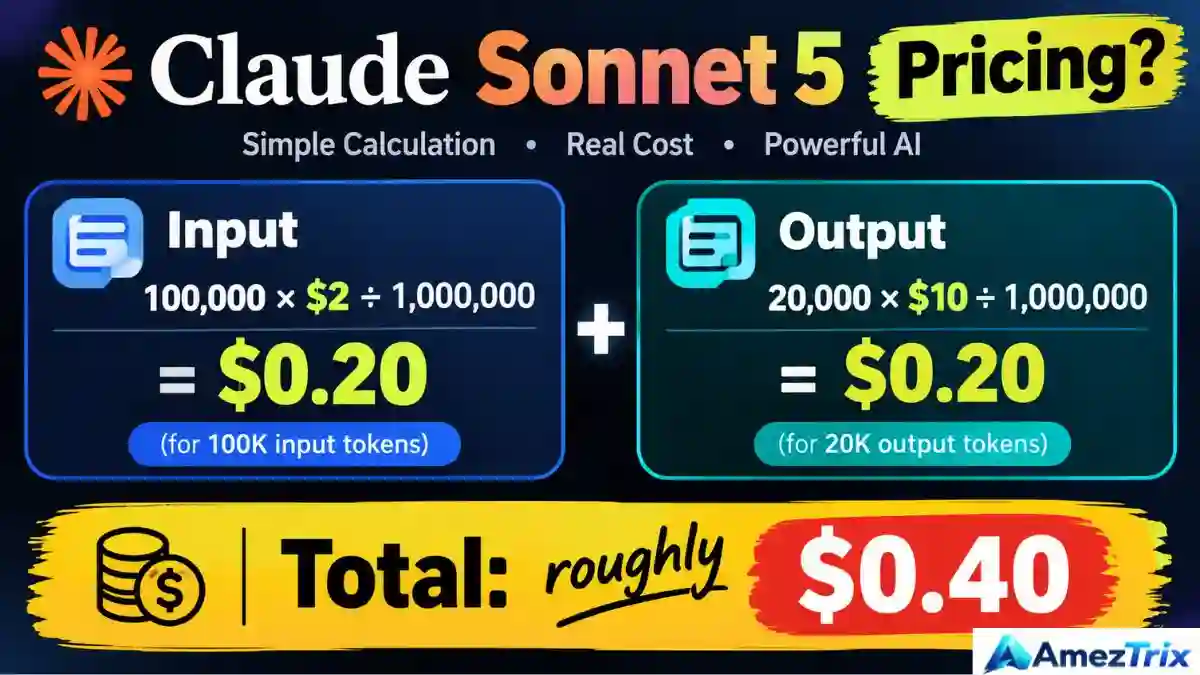
Sonnet 5 shipped at $2 per million input tokens and $10 per million output tokens as “introductory” pricing, with a planned bump to $3/$15 on September 1, 2026. Anthropic later scrapped that increase — so $2/$10 is now the standard, permanent rate, not a limited-time deal.
| Pricing Component | Cost |
|---|---|
| Input tokens | $2.00 per 1 million tokens |
| Output tokens | $10.00 per 1 million tokens |
| Prompt cache write | $2.50 per 1 million tokens |
| Prompt cache write (1-hour) | $4.00 per 1 million tokens |
| Prompt cache read | $0.20 per 1 million tokens |
| Batch API | ~50% discount on input and output |
Real-world example: A request using 100,000 input tokens and 20,000 output tokens breaks down like this:
- Input: 100,000 × $2 ÷ 1,000,000 = $0.20
- Output: 20,000 × $10 ÷ 1,000,000 = $0.20
- Total: roughly $0.40
That’s just a rough guide — caching, batching, and provider-specific fees will move the real number.
One catch worth flagging: Sonnet 5 runs on an updated tokenizer (shared with Anthropic’s Opus 4.7-and-newer models), and it can tokenize the same text into noticeably more tokens than older Claude models. If you’re migrating a workload, don’t assume your old token counts still apply — re-run them.
On Claude’s consumer plans, Sonnet 5 is the default model for Free and Pro users, and it’s also available on Max, Team, Enterprise, Claude Code, and the API. Plan pricing, message caps, and regional pricing shift over time, so check Anthropic’s official pricing page before quoting exact numbers.
Claude Sonnet 5 features at a Glance
| Specification | Claude Sonnet 5 |
|---|---|
| Model name | Claude Sonnet 5 |
| API model ID | claude-sonnet-5 |
| Developer | Anthropic |
| Release date | June 30, 2026 |
| Model status | Current default Sonnet-class model |
| Context window | Up to 1,000,000 tokens |
| Maximum output | 128,000 tokens |
| Input types | Text, images, files (e.g., PDFs) |
| Output type | Text |
| Reasoning | Adaptive thinking, selectable effort: low/medium/high/max/x-high |
| Tool use | Supported (function calling, structured JSON output) |
| Computer use | Supported via compatible workflows |
| Where to access it | Claude API, Claude Platform, AWS, Google Cloud, Microsoft Foundry |
Heads up: a bigger context window doesn’t automatically mean perfect memory of everything inside it. Test retrieval and instruction-following on your own data before betting anything critical on it.
Wait — Is Sonnet 5 Even Anthropic’s Newest Model?
Good question, and the honest answer is: no, but that’s not really the point.
As of September 2026, Anthropic’s lineup roughly stacks up like this, cheapest to most capable:
- Claude Haiku 4.5 — built for speed and volume
- Claude Sonnet 5 — the balanced, default workhorse (what we’re reviewing here)
- Claude Opus 5 — Anthropic’s most capable general-purpose model
- Claude Fable 5.1 / Claude Mythos 5.1 — the newer “Mythos” tier sitting above Opus, with Mythos access currently limited to select organizations under Anthropic’s Project Glasswing
So no, Sonnet 5 isn’t the top of the pyramid. But it’s the model doing the actual heavy lifting for most users — it’s the default on Claude’s free and paid plans, on claude.ai, and inside Claude Code.
Official API model ID: claude-sonnet-5
So What Exactly Is Claude Sonnet 5?
Think of Claude Sonnet 5 as Anthropic’s “does almost everything well” model. It’s a hybrid reasoning system built for software development, research, writing, document analysis, and tool-driven automation — not a narrow specialist.
Anthropic itself describes Sonnet 5 as its most agentic Sonnet-class release yet, one that closes much of the gap with its pricier Opus-class models on coding, tool use and reasoning, while staying at Sonnet-level cost.
Here’s what it’s actually built to handle:
- Writing and reviewing code across multiple files
- Debugging real software, not just toy examples
- Reading documents, spreadsheets and PDFs
- Interpreting screenshots and images
- Drafting structured reports
- Running multi-step, tool-using agent workflows
- Working through layered, multi-part reasoning problems
- Supporting research and professional writing
Anthropic clearly optimized this model for longer agent loops rather than one-shot answers. Ask it to inspect a codebase, isolate a bug, propose a fix, write the tests, and verify the result — it can walk through that whole chain. Whether the final output is production-ready still comes down to your codebase, your tooling, your prompts, and a human checking the work.
[Read more about 15 New Google AI Tools.: Complete Guide | AmezTrix]
Claude Sonnet 5 Features Worth Knowing About
1. Adjustable reasoning depth: Sonnet 5 lets you dial reasoning effort up or down — low, medium, high, max, and x-high — so you’re not paying for deep thinking on a task that doesn’t need it.
2. A genuinely large context window: With 1 million tokens of context, it can hold entire codebases, long contracts, or stacks of research material in one go.
3. Multi-file coding awareness It tracks how files relate to each other across a project, which matters when a fix touches five different places instead of one line.
4. Computer-use support: It can interact with software interfaces through supported tools — useful, but still something you should test carefully before trusting in production.
5. Multimodal input: Text, images, and files like PDFs all go in — handy for screenshot debugging or reviewing scanned documents.
6. Tool calling and structured output: Function calling and JSON-schema structured outputs make it straightforward to wire into real applications and pipelines.
7. Cyber-safety guardrails: Anthropic has built in real-time safeguards meant to block certain high-risk, dual-use technical requests.
What Actually Sets Claude Sonnet 5 Apart?
Anthropic has chased the same balance across every Sonnet release: give people most of the flagship model’s capability without the flagship price tag. Sonnet 5 pushes that further than any Sonnet before it.
What it’s aiming to deliver:
- Performance close to Opus-tier on many agentic and coding tasks
- Long-context handling for big codebases and dense documents
- Dependable tool use for automated pipelines
- Pricing that survives high-volume, production-scale usage
- Solid all-round performance across coding, writing and analysis
This is exactly the equation businesses running heavy workloads care about — sorting thousands of support tickets, reviewing pull requests, or processing document backlogs. Paying flagship rates for every single call rarely makes financial sense. The smarter play most teams land on: route the routine 90% of work to Sonnet 5, and reserve Opus 5 (or higher) for the genuinely hard 10%.
Is Claude Sonnet 5 Actually Good at Coding?
Short answer: yes, and it was built with exactly this kind of agentic coding work in mind.
| Coding Task | What Sonnet 5 Brings to It |
|---|---|
| Code generation | Functions, components, full scripts |
| Debugging | Explains the error, suggests the fix |
| Refactoring | Cleans up structure across multiple files |
| Testing | Writes unit tests and test cases |
| Code review | Catches bugs and questionable design choices |
| Documentation | Explains functions, APIs, and architecture |
| Frontend work | Builds UI components and layouts |
| Backend work | Handles APIs, databases, and business logic |
| Migration | Helps port code between frameworks or versions |
| Project planning | Breaks a big dev task into manageable chunks |
Real bugs are rarely tidy — a single issue might touch a frontend form, a backend endpoint, a database query, a validation check, and an auth rule all at once. Sonnet 5’s context window and cross-file awareness exist specifically so it can see those connections before touching anything, instead of blindly patching one line.
Can it build you a full website? It can get you most of the way there — HTML, CSS, JavaScript, React components, backend logic, API wiring — but nothing it produces should go live without a security, accessibility, and performance check first. Staging environment, always.
Claude Sonnet 5 as an AI Agent
An AI agent doesn’t just answer a question — it works toward a goal through multiple steps. The loop usually looks like this:
- Take in the objective
- Break it into smaller steps
- Pick the right tool for each step
- Execute the action
- Read back the result
- Catch and correct mistakes
- Keep going until the job’s done
Sonnet 5 was clearly built with this loop in mind, and Anthropic calls out agentic performance — reasoning, tool use, and actually following through — as one of the biggest jumps over Sonnet 4.6.
Where this shows up in practice: coding assistants, support-ticket automation, document pipelines, research assistants, CRM workflow automation, data analysis tools, internal knowledge bots.
Should you trust an agent completely? No — not yet, not fully. Agents still misread instructions, grab the wrong tool, or take an action nobody actually wanted. Any agent running in production needs restricted permissions, human sign-off on sensitive actions, logging, error handling, and a hard stop condition. The more autonomy you hand it, the more of these guardrails you need.
Reasoning and Research: Where Sonnet 5 Holds Up
Because Sonnet 5’s thinking effort scales to the task, it’s genuinely useful for:
- Multi-step problems that need actual working through, not a guess
- Weighing alternatives against each other
- Making sense of dense documents
- Business and technical analysis
- Planning and decision support
Pair that with the 1-million-token window, and you’ve got a model that can summarize a pile of reports, flag where two sources disagree, or pull together a comparison table from scattered material.
That said — a bigger context window is not the same as flawless accuracy. Double-check names, dates, figures, citations, and anything legal or financial. And remember: Sonnet 5’s knowledge has a cutoff date, so don’t expect it to know this week’s news unless it’s actually searching the web for you.
Handling Long Documents: Where the 1M Context Window Pays Off
Any time your task involves more material than fits in a normal chat message, that million-token window starts earning its keep — long contracts, huge codebases, entire research libraries.
Where this actually helps:
- Legal and business docs — summarizing clauses, comparing contract versions, flagging what a lawyer should look at
- Codebases — explaining architecture or hunting bugs across dozens of files
- Research papers — pulling together findings and drafting a literature review outline
- Financial reports — extracting figures and building preliminary comparisons
- Content libraries — spotting overlapping topics and internal linking opportunities
The workflow that actually works: hand over the material, ask for a structured summary, verify the extracted facts, then push for deeper analysis. Skipping the verification step and jumping straight to conclusions is where things go wrong.
Content Creation With Claude Sonnet 5
Bloggers, marketers, and technical writers use Sonnet 5 for:
- Blog outlines and full drafts
- Product comparisons and FAQ sections
- Meta descriptions and social copy
- Technical documentation
- Editing, proofreading, repurposing existing content
Will AI-written content actually rank? No promises there. Google cares about usefulness and genuine reader value, not just polished sentences. The safer play: let Sonnet 5 handle the research and first draft, then layer in human fact-checking, original perspective, and real examples before you hit publish.
Claude Sonnet 5 vs. the Rest of the Field
AI moves fast enough that quoting today’s benchmark numbers for competing models can be stale by the time you read this. Instead of guessing at figures that might already be outdated, here’s a fair way to think about where Sonnet 5 stands:
| Factor | Claude Sonnet 5 | Competing Models |
|---|---|---|
| Positioning | Anthropic’s balanced, default pick | Varies by vendor — check current lineups |
| Context window | 1,000,000 tokens | Often similar; verify current specs |
| Coding & agentic work | Strong, near-Opus per Anthropic | Strong across most current frontier models |
| Tool use/function calling | Supported | Supported by most current models |
| Computer use | Supported | Varies by vendor |
| Pricing | $2 input / $10 output per million | Varies widely — always check current rates |
The honest takeaway: there’s no crown here. Pick based on your task, your existing tools, your budget, and — ideally — your own side-by-side test. Not on whichever headline benchmark looks best this month.
Claude Sonnet 5 vs Opus 5: Which One Should You Actually Use?
Same family, different jobs.
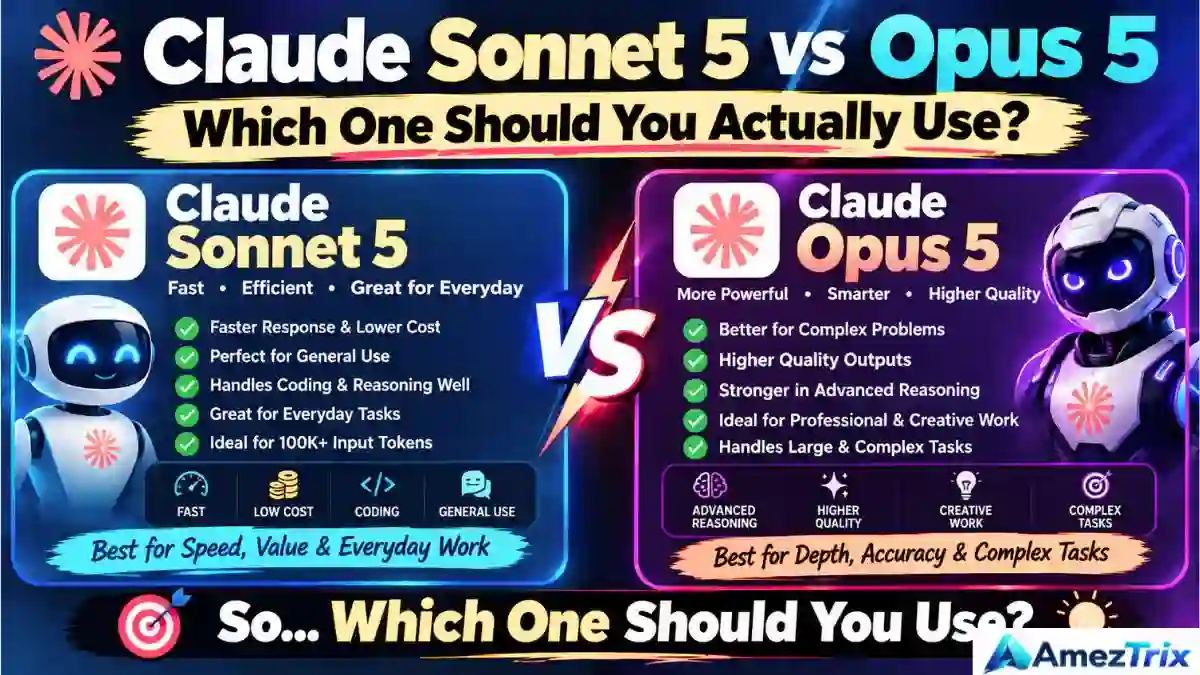
| Category | Claude Sonnet 5 | Claude Opus 5 |
|---|---|---|
| Positioning | Balanced, everyday default | Anthropic’s most capable general-purpose model |
| Pricing | $2 input / $10 output per million | Higher — check current Claude Platform pricing |
| Context window | 1,000,000 tokens | Check current documentation |
| Best for | High-volume coding, agents, daily tasks | The hardest reasoning and engineering problems |
Most teams don’t pick one over the other — they use both. Sonnet 5 handles the bulk of everyday requests; Opus 5 gets called in for the small percentage of tasks that genuinely demand it. That combo keeps quality high without your API bill exploding.
How to Actually Test Claude Sonnet 5 Yourself
Skip the marketing copy and the cherry-picked benchmarks. Run it through work that looks like your real job.
| Test | Success Criteria | What to Track |
|---|---|---|
| Coding | Code runs and solves the problem | Pass/fail plus corrections needed |
| Reasoning | Conclusion is accurate and logical | Accuracy and explanation clarity |
| Document analysis | Facts extracted correctly | Missing or incorrect details |
| Agent workflow | Task completes safely | Completion rate and error handling |
| Content writing | Draft is accurate and usable | How much human editing it needs |
Only claim a model “won” if you actually ran the test and can show the results.
Advantages of Claude Sonnet 5
- Serious agentic coding chops — built for multi-step, tool-heavy development work
- A genuinely huge context window — 1M tokens covers large codebases and long documents
- Sonnet pricing, near-Opus results — a real cost advantage
- Handles text, images, and files — not locked to plain text
- Reasoning you can tune — dial effort up or down as the task demands
- Available almost everywhere — Claude API, Claude Platform, AWS, Google Cloud, Microsoft Foundry
Where Claude Sonnet 5 Falls Short
- Not Anthropic’s top model — Opus 5 and the newer Fable/Mythos tier outrank it on the hardest problems.
- Generated code still needs review — bugs happen; always test before shipping.
- Big context ≠ perfect memory — verify critical details buried in long inputs.
- Output tokens cost more than input tokens — long responses add up fast.
- Computer use needs a safety net — sensitive actions should require a human okay.
- Knowledge has an expiry date — recent events need a web-search tool, not guesswork.
- New tokenizer changes your math — expect different token counts than older Claude models on the same text; re-check before estimating migration costs.
Who Should Actually Be Using Claude Sonnet 5?
- Developers and engineering teams — agentic coding, debugging, refactoring, code review at scale
- Businesses — document processing, research, automation, high-volume work where Opus pricing doesn’t pencil out
- Content creators — drafting and editing, with human fact-checking before anything gets published
- Students and researchers — explanations and study help, always cross-checked for accuracy
When Should You Reach for a Higher Tier Instead?
If you’re up against the toughest reasoning problems or frontier-level coding challenges where cost genuinely isn’t the deciding factor, it’s worth benchmarking Claude Opus 5 (or the Fable/Mythos tier, where available) against Sonnet 5 before you commit. For everyday, high-volume work, Sonnet 5 remains the smarter starting point.
Frequently Asked Questions
What is Claude Sonnet 5?
It’s Anthropic’s current everyday-default AI model, released June 30, 2026, built for coding, agentic workflows, tool use, document analysis, and general professional work.
How much does the Claude Sonnet 5 API cost?
$2 per million input tokens and $10 per million output tokens — launched as an introductory rate, now made permanent.
What’s the context window on Claude Sonnet 5?
Up to 1,000,000 tokens in, with a maximum output of 128,000 tokens.
Is Claude Sonnet 5 good for programming?
Yes — built specifically for agentic coding across multiple files, debugging, refactoring, testing, and review. Always test the output before deploying it.
Can Claude Sonnet 5 handle AI agent workflows?
Yes, that’s a core focus of this release — but real-world reliability still comes down to your tools, prompts, and safety controls.
Is Claude Sonnet 5 better than Claude Opus 5?
Not universally. Sonnet 5 gives you strong results at a much lower price; Opus 5 is for the hardest tasks. Most teams use both, routed by difficulty.
Is Claude Sonnet 5 better than GPT or Gemini models?
No universal winner exists — it comes down to your specific task, your existing tools, and your budget. Run your own comparison rather than trusting a single benchmark.
Does Claude Sonnet 5 know current events?
No. Its training data has a cutoff, so anything recent needs a web-search tool rather than the model’s built-in knowledge.
Can Claude Sonnet 5 read PDFs?
Yes — it accepts files like PDFs as input, within the limits of whichever product or API you’re using.
Final Verdict: Should You Actually Use Claude Sonnet 5?
If you’re doing serious coding, agentic automation, or document-heavy work and don’t want to pay flagship-model prices for it, Claude Sonnet 5 earns its place. The combination of a 1-million-token context window, genuinely agentic behavior, and $2/$10 pricing makes it a practical default whether you’re a solo developer or running high-volume business workflows.
It’s not Anthropic’s most powerful model — Opus 5 and the Fable/Mythos tier exist above it for a reason — but for the overwhelming majority of everyday coding, writing, research, and automation work, Sonnet 5 is exactly what most people should be reaching for first.
Our Practical Recommendation
| User Type | Recommendation |
|---|---|
| Developer building agents | Start with Sonnet 5; escalate hard cases to Opus 5 |
| New to Claude | Use Sonnet 5 as your default |
| Learning to code | Great for explanations and hands-on practice |
| Content creator | Draft and edit with it, fact-check before publishing |
| Business/enterprise | Test cost, accuracy, and security on your own workload |
| Researcher | Use it to organize material; verify every fact yourself |
Bottom line: the best AI model isn’t the newest or the priciest one — it’s the one that actually delivers for your specific task without wrecking your budget.
Key Takeaways
- Claude Sonnet 5 launched on June 30, 2026.
- Official model ID:
claude-sonnet-5. - 1-million-token context window, 128,000-token maximum output.
- Standard pricing: $2 per million input tokens, $10 per million output tokens.
- Supports coding, agentic tool use, computer use, multimodal input, and adjustable reasoning effort.
- Sits below Opus 5 and the Fable/Mythos tier, above Haiku 4.5, in Anthropic’s lineup.
- Replaced Claude Sonnet 4.6 as the default across Claude’s plans, claude.ai, and Claude Code.
- Always test and independently verify AI-generated code and research.
- Your own real-world testing beats any single benchmark score.
Model availability and pricing can change — always confirm current details on Anthropic’s official documentation and pricing page before publishing or making a purchasing decision.
About Author
Rajendra Parmar is the Founder and Editor of AmezTrix, where he covers Artificial Intelligence, Technology, WordPress, Web Hosting, Digital Marketing, Gadgets, and Software. His mission is to simplify complex technology through practical tutorials, honest reviews, and well-researched guides that help readers make smarter digital decisions.