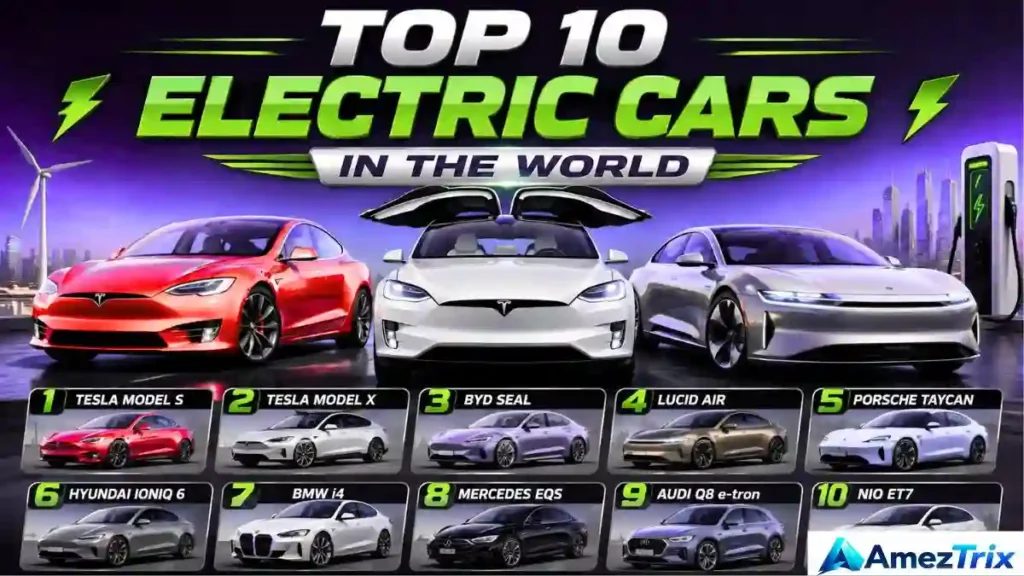
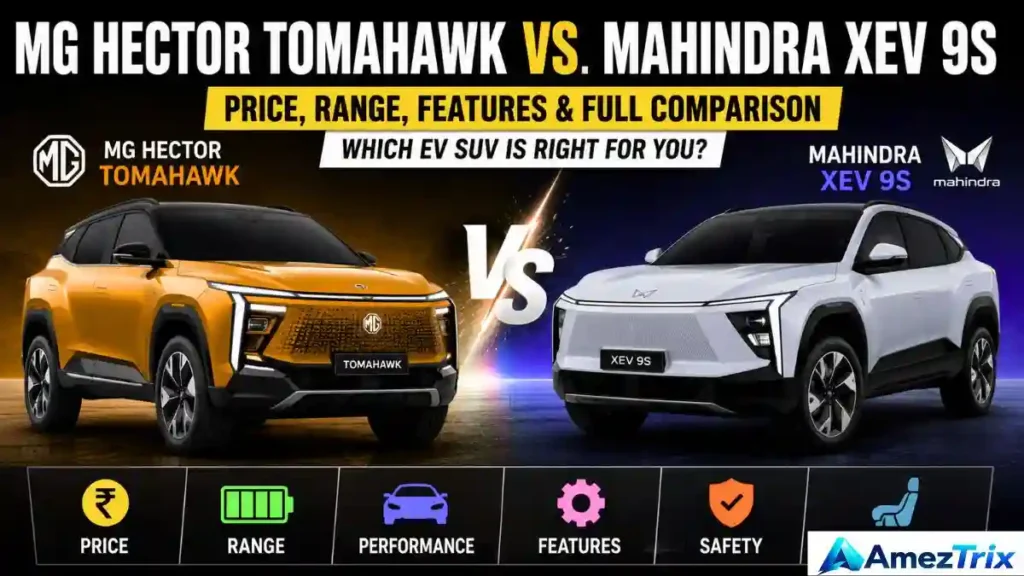
Compare upcoming electric cars for 2026: new EV launches and top 10 lists for India, the USA and China, with range, charging and buying tips.
Upcoming Electric Cars 2026: Key Takeaways
- The International Energy Agency (IEA) says global electric car sales passed 20 million in 2025, about one in four new cars.
- The IEA expects around 23 million sales in 2026, roughly 28% of all new cars.
- An “announced” EV is not a buyable EV. Concept, reveal, launch and delivery are four different stages.
- Charging speed, battery warranty and service network often matter more than the biggest range figure.
- Prices move quickly, so confirm every number with the manufacturer or dealer before buying.
What Are Upcoming Electric Cars? Concept vs Launch vs Delivery
Upcoming electric cars in 2026 include new models from Tata, Maruti Suzuki, Mahindra, Chevrolet, Hyundai, BYD and Xiaomi. Launches span budget hatchbacks to long-range SUVs. The smartest buyers compare real-world range, charging speed, battery warranty and local service support rather than headline numbers or launch hype.
Electric cars used to be a niche. Now the upcoming electric cars list is long enough that choosing between them is the hard part. This guide covers what is actually launching, how the market is moving, and the top 10 electric cars in India, the USA and China. It ends with a simple way to decide whether to buy now or wait.
It is any battery-powered vehicle that a manufacturer has teased, officially revealed or confirmed for a future date. That can mean a hatchback, SUV, sedan, MPV or pickup.
The catch is that these stages are very different:
- Concept: a show car. It may never be built.
- Official reveal: the production design is shown, but you cannot buy it yet.
- Market launch: prices and variants are announced.
- Deliveries: cars actually reach customers, often weeks or months later.
When you read about a new Upcoming electric cars, check which stage it is in. Dates in this article marked “expected” are reported timelines, not guarantees.
EV Sales in 2026: Global Numbers and Regional Trends
According to the IEA’s Global EV Outlook 2026, electric car sales grew 20% in 2025 to more than 20 million. The agency forecasts about 23 million in 2026. The year has not been a straight line, though: global sales fell 8% in the first quarter of 2026 compared with a year earlier, after policy changes in China and the United States.
| Region | What the IEA reported |
|---|---|
| Global | 20 million+ EVs sold in 2025 (about 25% of new cars); about 23 million expected in 2026 |
| China | Electric cars were nearly 55% of car sales in 2025 and could approach 60% in 2026; Chinese automakers supplied 60% of global EV sales |
| Europe | Sales rose more than 30% in 2025, reaching about 28% of the market, helped by stricter CO2 rules |
| USA | EVs stayed just under 10% of car sales; the end of the federal tax credit coincided with a late-2025 sales drop |
The takeaway for buyers is that the market is growing, but not evenly. A car that is a bestseller in Shenzhen may never reach your local showroom.
Why Are There So Many New EV Launches in 2026?
- Lower costs: cheaper battery chemistries and simpler platforms are making entry-level EVs viable.
- Policy pressure: emissions rules in Europe and incentives in several Asian markets push automakers to launch more electric models.
- Competition from China: Chinese brands also supply more than 80% of global battery cell production, which gives them a cost advantage.
- Software: cars are increasingly sold on connected features, driver assistance and over-the-air updates, not just engines.
EV Battery Types Compared: LFP vs Nickel vs Sodium-Ion vs Solid-State
| Battery type | Strengths | Trade-offs |
|---|---|---|
| LFP (lithium iron phosphate) | Durable, safer, cheaper; common in budget EVs | Lower energy density, weaker in the cold |
| Nickel-based (NMC) | High energy density, good for long range and performance | Costlier, more complex supply chain |
| Sodium-ion | Cheap, good cold-weather behaviour, less reliance on lithium | Still early in passenger cars |
| Solid-state | Promises faster charging and higher density | Mass production at a sensible price is unproven |
If a brand announces solid-state technology, ask two questions: can it build it at scale, and at what price? Until both are answered, treat it as a promise.
Fast Charging vs Range: What Matters More in a New EV?
A huge battery is less useful if a road-trip stop takes an hour. Compare these four things:
- Peak charging power (kW)
- 10–80% charging time
- How long the car holds high speed (the charging curve)
- Compatibility with the charging networks near you
Spec-sheet charging times are best-case numbers. Battery temperature, state of charge, charger output and grid conditions all change the result.
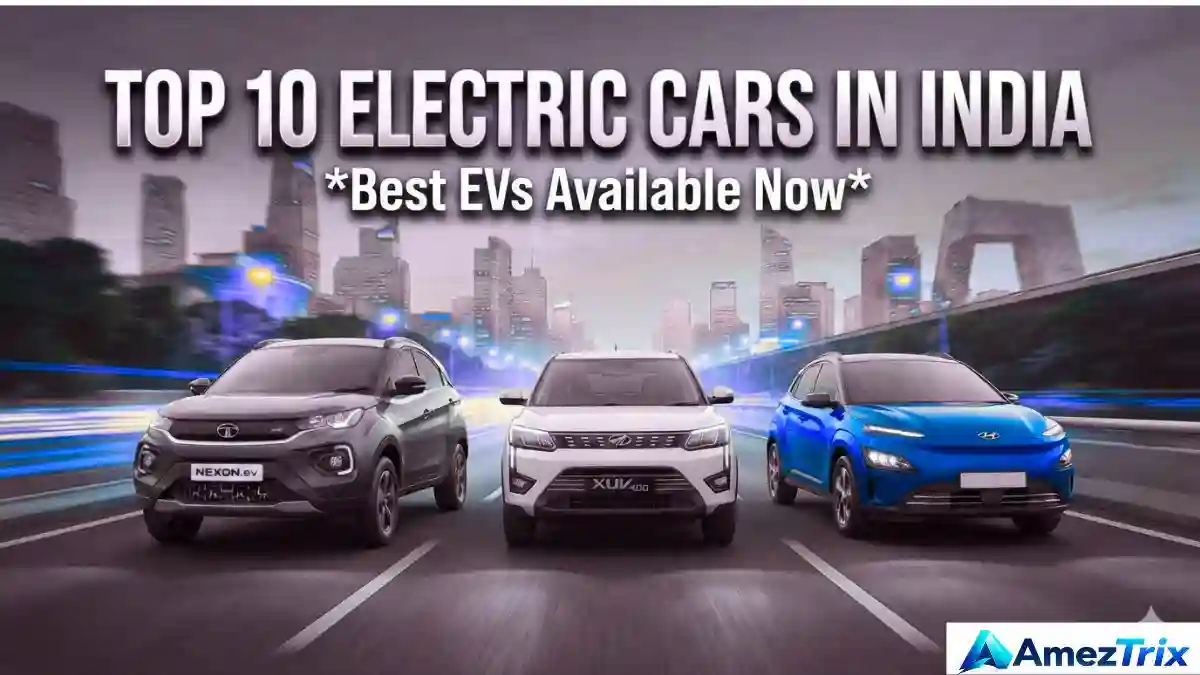
Top 10 electric cars in India 2026: New Launches and Best Buys
Indian buyers care about price, real range, charger availability, ground clearance, battery warranty and service reach. The market now mixes cars that are already on sale with fresh or expected 2026 launches. Prices change often with variants and battery packs, so this table shows status and positioning instead of fixed prices. Confirm current ex-showroom prices with the brand.
| # | Model | Status | Best for / what to know |
|---|---|---|---|
| 1 | Tata Tiago EV | On sale (facelift reported for 2026) | Cheapest way into EV ownership; city driving |
| 2 | Tata Punch EV | On sale (facelift expected mid-2026) | Compact SUV looks, strong safety reputation |
| 3 | Tata Nexon EV | On sale | Proven all-rounder with multiple battery choices |
| 4 | MG Windsor EV | On sale | Roomy cabin; battery-rental option lowers upfront cost |
| 5 | Maruti Suzuki e Vitara | Launched in 2026 | Maruti’s first EV; 49 kWh and 61 kWh packs; 5-star Bharat NCAP rating |
| 6 | Tata Sierra EV | Reported launch on 30 June 2026 | Lifestyle electric SUV positioned below the Harrier EV |
| 7 | Hyundai Creta Electric | On sale | Feature-rich, familiar badge, wide service network |
| 8 | Kia Carens Clavis EV | On sale | Family buyers needing three rows |
| 9 | Mahindra BE 6 / XEV 9e | On sale | Born-electric platform, performance-focused design |
| 10 | Toyota Urban Cruiser EV | Expected shortly after e Vitara | Badge-engineered cousin of the e Vitara |
Also on the radar: the Tata Avinya (expected by end-2026), a Maruti electric MPV (expected late 2026), VinFast’s expanding India range, and the Mahindra BE 07 (reported for 2027). Treat all of these as “expected” until a price is announced.
How to choose in India
- Under 100 km daily city use: a Tiago EV or Punch EV is usually enough.
- Family and highway use: look at Nexon EV, Creta Electric, e Vitara or Sierra EV.
- Seven seats: Carens Clavis EV is the practical electric option.
- Performance and tech: Mahindra’s BE 6 and XEV 9e lead this group.
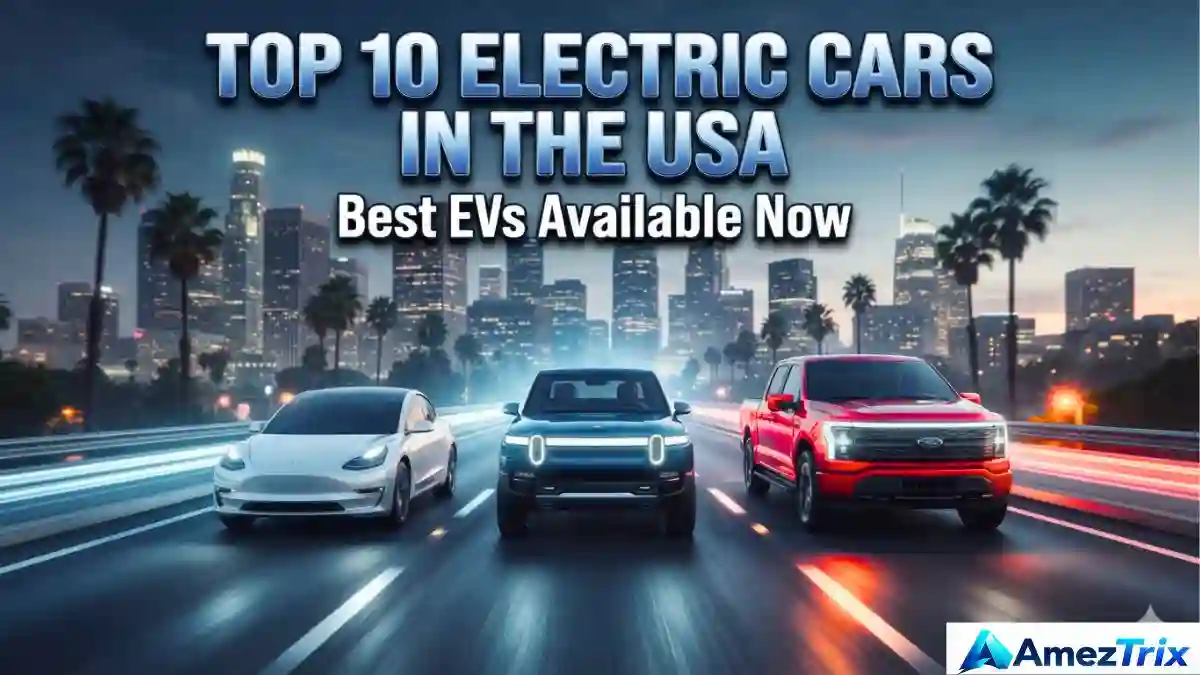
Top 10 Electric Cars in the USA 2026: Price, Range and Value
The US federal EV tax credit has ended, and automakers are responding with price cuts and incentives. More than 30 new EVs were expected to arrive in 2026. The table is ordered by starting price, not by quality. Prices are approximate MSRPs from recent buying guides and may include destination fees.
| Model | Approx. starting price | Range (EPA est.) | Why it stands out |
|---|---|---|---|
| Chevrolet Bolt (2027) | ~$28,995 | ~255-262 miles | Most affordable new EV in the US; supports 150 kW fast charging |
| Nissan Leaf (2026) | ~$31,495 | 256-303 miles | Budget pick with a wide trim range |
| Chevrolet Equinox EV | ~$36,795 | Up to 319 miles | Family-friendly SUV; best-selling non-Tesla EV in 2025 |
| Hyundai Ioniq 5 | ~$36,600 | Up to ~318 miles | 800-volt fast charging; Hyundai cut prices after the tax credit ended |
| Tesla Model 3 | ~$38,630 | Varies by trim | Large Supercharger network |
| Hyundai Ioniq 6 | ~$39,095 | Long-range trims exceed 300 miles | Aerodynamic sedan built for efficiency |
| Kia EV9 | ~$56,545 | Varies by trim | Three-row electric SUV; NACS port for 2026 |
| Cadillac Lyriq | ~$60,995 | Varies by trim | Premium comfort and design |
| Ford F-150 Lightning | From ~$63,345 | Up to ~290 miles (STX, 123 kWh) | Electric pickup that can also power tools and appliances |
| Rivian R1T | ~$74,885 | Varies by trim | Adventure-focused electric truck |
US buying notes
- Check which charging standard the car uses (NACS or CCS) and whether you need an adapter.
- Ask about dealer or manufacturer incentives, since they now matter more than federal credits.
- Towing and cold weather can cut range sharply, especially on trucks.
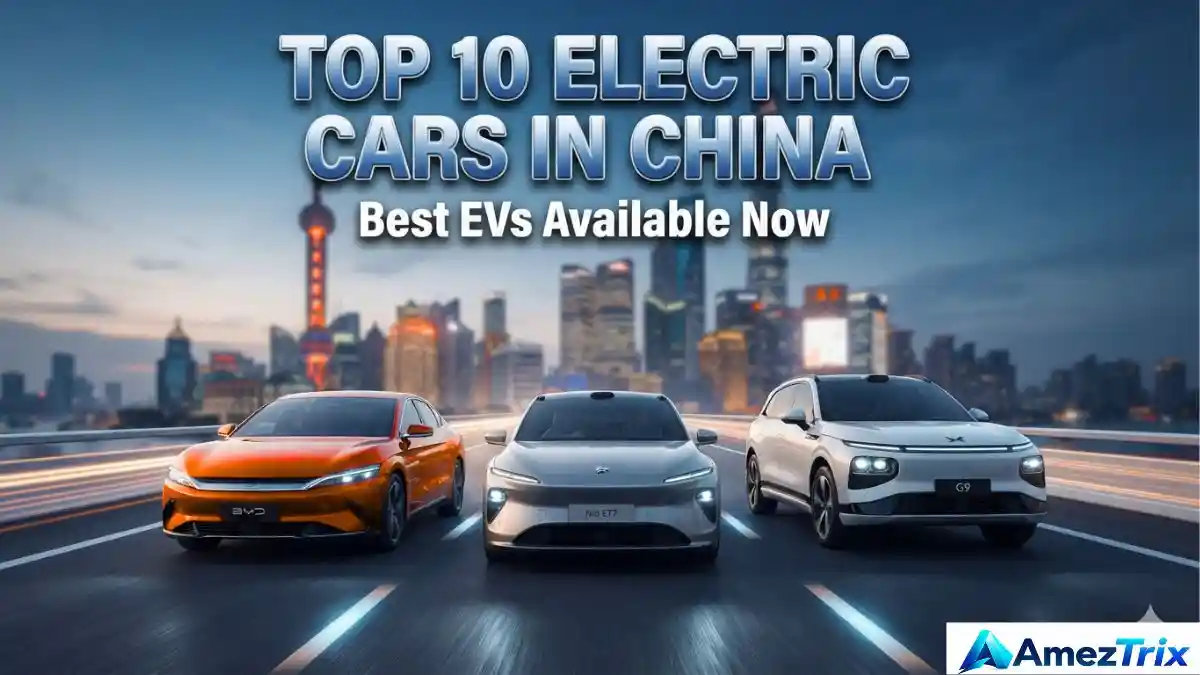
Top 10 Electric Cars in China 2026: BYD, Xiaomi, Xpeng and More
China sets the pace on Upcoming electric car prices and technology. The IEA reports that electric cars were nearly 55% of Chinese car sales in 2025 and that Chinese EV exports doubled to more than 2.5 million. Chinese range figures use the CLTC test, which is more generous than WLTP or EPA, so real-world range will be lower. Prices change quickly, so the table gives positioning rather than exact numbers.
| # | Model | Segment | What it is known for |
|---|---|---|---|
| 1 | Wuling Hongguang Mini EV | Micro city car | One of China’s cheapest EVs, built for short urban trips |
| 2 | BYD Seagull | Small hatchback | Very low price, solid build for the money |
| 3 | BYD Yuan Plus (Atto 3) | Compact SUV | Export-friendly SUV with Blade Battery tech |
| 4 | BYD Seal | Sedan | Efficient sedan competing with the Tesla Model 3 |
| 5 | BYD Sealion 7 | Mid-size SUV | Value-focused family SUV |
| 6 | Xiaomi SU7 | Performance sedan | Strong smartphone-ecosystem integration |
| 7 | Xiaomi YU7 | Performance SUV | Xiaomi’s SUV follow-up, aimed at Model Y buyers |
| 8 | Xpeng G6 | Mid-size SUV | 800V architecture and very fast charging |
| 9 | Zeekr 001 | Shooting-brake wagon | Distinctive design with strong performance |
| 10 | NIO ET7 | Luxury sedan | Battery-swap network and long-range pack options |
Most of these cars are sold in China first. Availability, pricing and software features in other countries can differ a lot, so check local launch plans before getting excited.
What About Europe?
Europe is one of the most competitive EV markets. Sales rose more than 30% in 2025 and the segment now includes compact city cars, premium SUVs and more Chinese brands. The result is a price and software fight, not a horsepower race.
EV Specs That Matter More Than the Range Number
| Spec | Why it matters |
|---|---|
| Real-world range | Lab figures rarely match daily driving |
| Charging curve | Shows whether peak speed lasts |
| Battery warranty | Protects the most expensive component |
| Battery chemistry | Affects cost, lifespan and cold-weather behaviour |
| Thermal management | Keeps performance steady in heat and cold |
| Software and updates | Shapes the day-to-day experience |
| Service network | Critical outside big cities |
AI in Electric Cars: What Software-Defined EVs Mean for Buyers
Modern EVs run on a central computer that controls driver assistance, navigation, energy use and infotainment. The IEA’s 2026 outlook even added a section on automotive software and AI. For buyers, that means three practical checks:
- Does the car get over-the-air updates, and for how long?
- Are key features locked behind subscriptions?
- Does driver assistance work well on the roads where you actually drive?
Upcoming electric cars in 2026: Pros and Cons
| Pros | Cons |
|---|---|
| Lower running cost per km or mile | Higher upfront price in many markets |
| Quiet, smooth, instant torque | Public charging can be patchy |
| Fewer moving parts to service | Resale values are still uncertain |
| Rapidly improving models and choice | Early-production cars may have software bugs |
Buy Now or Wait for New EV Launches?
Buy now if: the model you want already has a track record, you can charge at home or work, the price feels fair and you need a car soon.
Wait if: you specifically want newer battery tech or faster charging, a model you like is launching within a few months, or you can live without a car change until prices settle.
Keep in mind that first-year cars sometimes launch with software issues or thin service coverage. A short wait for the first batch of owner reviews can save headaches.
How to Choose an Upcoming Electric Car in 7 Steps
- Set your budget, including insurance, charger installation and electricity.
- Check your charging access at home, work and along your usual routes.
- Confirm the launch stage: concept, reveal, launch or deliveries.
- Compare real-world range from owner reports and independent tests, not only brochures.
- Read the battery warranty for years, distance and capacity guarantees.
- Test drive and check service-centre distance.
- Get the final price in writing including incentives and fees.
Common EV Buying Mistakes and Red Flags to Avoid
- Buying on range alone and ignoring charging speed.
- Treating a concept car or teaser as a confirmed launch.
- Skipping the battery warranty details.
- Ignoring service coverage in your city.
- Trusting unofficial price leaks.
- Red flag: a seller who cannot show a clear delivery date or refuses to put the price in writing.
Limitations: What This Guide Can’t Promise
EV prices, incentives and launch dates change quickly. Regional tables here are simplified, claimed ranges differ between test standards, and some launch dates are reported timelines rather than official confirmations. Always check the manufacturer’s website before you buy.
Upcoming Electric Cars FAQs
Which new EV launches are most anticipated in 2026?
In India, the Maruti Suzuki e Vitara and Tata Sierra EV are the headline launches. In the US, the new Chevrolet Bolt and updated Nissan Leaf are the affordable stories. In China, Xiaomi, BYD and Xpeng keep pushing price and charging speed.
What is the cheapest upcoming electric car?
It depends on the country. In the US, the 2027 Chevrolet Bolt starts at about $28,995. In India, the Tata Tiago EV is the entry point. In China, micro cars like the Wuling Hongguang Mini EV are cheaper still.
Will electric car range improve in 2026?
Gradually. Most gains come from efficiency, better chemistry and software rather than just bigger batteries.
Is EV fast charging getting faster?
Yes. 800-volt cars such as the Hyundai Ioniq 5 and Xpeng G6 can add a large share of charge in roughly 20 minutes or less under ideal conditions, but real speeds vary.
Are electric cars getting cheaper in 2026?
In many segments, yes. The IEA notes that in China, 70% of battery-electric cars sold in 2025 were already cheaper than the average conventional car.
Which country leads in electric car sales?
China, by a wide margin. Chinese automakers supplied about 60% of global EV sales in 2025, per the IEA.
Are electric SUVs better than electric sedans?
Not automatically. SUVs offer space and ride height, while sedans usually win on efficiency and range per kWh.
Should I buy an EV now or wait for upcoming launches?
Buy now if a proven model fits your budget and charging access. Wait if a specific launch is only months away or you want newer battery tech.
Final Verdict: Which Upcoming Electric Cars Are Right for You?
The best upcoming electric car is the one that fits your charging access, budget and local service network, not the one with the biggest launch event. Shortlist two or three models, check real owner feedback, and confirm prices with the manufacturer. The market is more competitive than ever, which usually works in the buyer’s favour.
TL;DR
EV sales are heading for about 23 million in 2026. New launches are many but uneven by region. Compare real range, charging speed, warranty and service support, confirm launch stages, and verify prices before buying.
About Author
Rajendra Parmar is the Founder and Editor of AmezTrix, where he covers Artificial Intelligence, Technology, WordPress, Web Hosting, Digital Marketing, Gadgets, and Software. His mission is to simplify complex technology through practical tutorials, honest reviews, and well-researched guides that help readers make smarter digital decisions.

Rajendra Parmar
Founder & Editor • AmezTrix
Rajendra Parmar is the Founder and Editor of AmezTrix, a platform covering Artificial Intelligence, Technology, WordPress, Web Hosting, Digital Marketing, Gadgets, Software Reviews, and emerging innovations. His mission is to simplify complex technology through practical tutorials, honest reviews, and well-researched guides that help readers make smarter digital decisions.