Right now, Waymo leads on scale with 500,000+ paid rides a week. The Tesla Cybercab is the cheapest, boldest design and already carries paying riders in Austin, though federal regulators are reviewing it. Zoox has the firmest federal approval for a wheel-free car. No one has won yet.
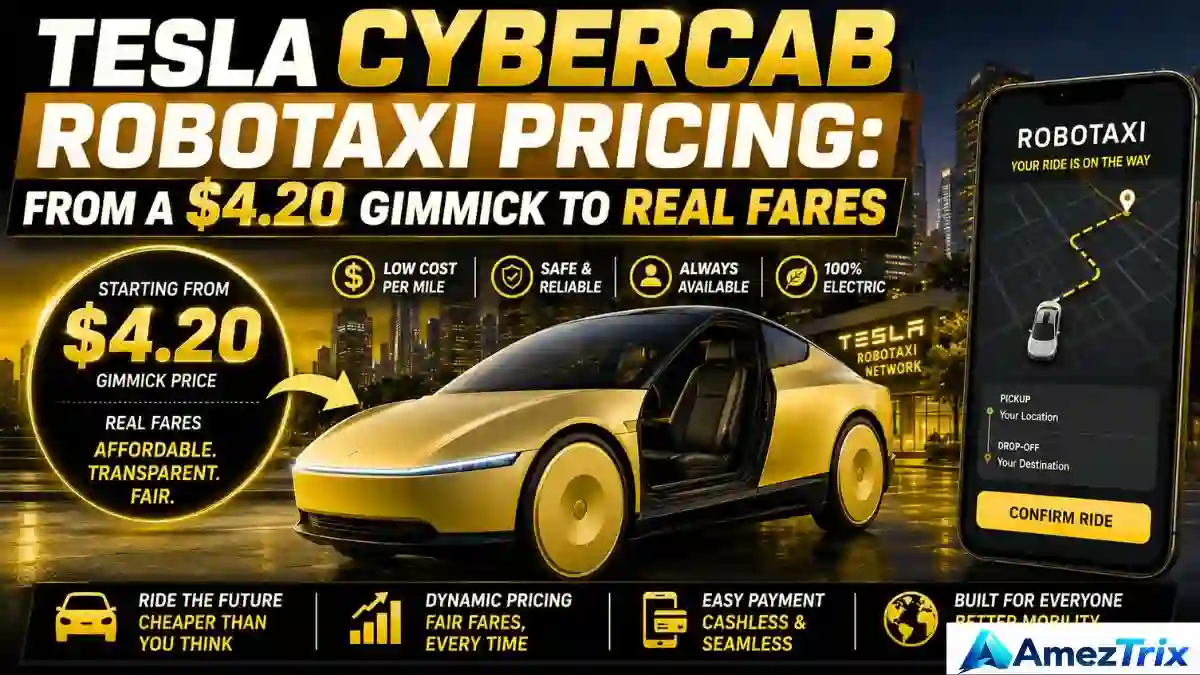
Tesla Cybercab Austin Rides: Fares, Safety & Rivals
Something new happened on September 3, 2026. The Tesla Cybercab, a car with no steering wheel, no pedals and no mirrors, began giving paid rides in Austin, Texas. Federal safety regulators opened an audit that very day.
So who’s really winning the driverless race? This guide puts Tesla, Waymo and Zoox side by side on design, safety, fares and scale, and it keeps confirmed facts apart from marketing noise. All details were checked in October 2026.
Key Takeaways (TL;DR)
- Tesla Cybercab: two seats, no wheel or pedals, paid rides in Austin since September 3, 2026.
- Waymo: the clear leader on scale, with 500,000+ paid weekly rides and 4,000+ vehicles, per recent reports.
- Zoox: Amazon’s four-seat pod and the first to win a federal exemption for a car without human controls. Paid rides run in Las Vegas.
- Fares: Tesla looks cheapest on short trips, Zoox is priced as a “comfort” ride, and Waymo uses live quotes.
- Biggest risk: Tesla’s regulatory path. Federal regulators are still reviewing how the Cybercab was certified.
The Tesla Cybercab, Explained Simply
Picture a regular taxi. It has a driver’s seat, a wheel, pedals and mirrors, because a person needs them. Now take the driver away, and every part built for that person goes with them.
What remains is the Cybercab: a compact gold two-seater that drives itself. You request it in an app, it arrives, and you ride. That’s the whole idea.
What People Want to Know About the Tesla Cybercab
Most searches come down to four questions:
- Can I actually ride it? They saw the 2024 reveal and want to know if it’s real yet.
- What will it cost? Ride fares and the planned car price get mixed up constantly.
- Is it safe and legal? A car with no wheel naturally raises eyebrows.
- Who’s ahead? They want a straight comparison with Waymo and Zoox.
The intent is largely informational, with a commercial angle for riders and investors weighing their options.
Tesla Cybercab Specs at a Glance
| Feature | Tesla Cybercab |
|---|---|
| Seats | Two passengers |
| Driver controls | None: no steering wheel, pedals or mirrors |
| Powertrain | Fully electric |
| Battery | About 48 kWh (reported) |
| Range | One outlet citing federal filings reports around 293 miles. Treat as unconfirmed |
| Sensors | Cameras only, with no lidar or radar |
| Doors | Gull-wing |
| Connectivity | Built-in Starlink, according to Tesla-focused reporting |
| Where it runs | Austin, Texas (Cybercab only) |
| Sold to individuals? | Not yet |
The satellite link is a nice touch. To understand how that technology works, read our Starlink India price and plans guide.
Tesla Cybercab Timeline: From Reveal to Real Rides
| Date | What happened |
|---|---|
| October 2024 | Elon Musk reveals the Cybercab concept |
| June 2025 | Tesla’s Robotaxi service starts in Austin with Model Y vehicles |
| Spring 2026 | Cybercab production begins at Giga Texas (Tesla reported Q2 2026) |
| September 3, 2026 | Austin launch event, and paid rides start the same day |
| September 3, 2026 | Federal regulators open an audit of Tesla’s certification |
Tesla’s Robotaxi service also runs Model Y vehicles in Dallas, Houston, Miami, Orlando and Tampa. For now, Cybercabs stay in Austin.

How a Cybercab Ride Works, Step by Step
Step 1: Open the Tesla Robotaxi app
According to Tesla-focused reporting, the app now lets you pick between a Cybercab and a four-seat Model Y.
Step 2: Book inside the service area
Cybercabs can reportedly be hailed across Tesla’s Austin zone of roughly 264 square miles. Coverage can change, so check the app first.
Step 3: Spot your car
A light bar on the front glows the color shown in your app, which tells you which Cybercab is yours.
Step 4: Hop in and confirm
No driver greets you. You sit, confirm the trip, and the car takes over.
Step 5: Keep the human backup in mind
Tesla’s operations can involve remote human support for unusual situations. Nobody rides with you, but the system isn’t fully hands-off behind the scenes.
Cameras Only: Tesla’s Biggest Gamble
This is where Tesla breaks from the pack. Waymo and Zoox blend cameras, lidar and radar. Tesla relies on cameras alone.
The reasoning is straightforward. People drive using eyes and a brain, so a strong enough camera system should be able to do the same, without getting tired or distracted. It also keeps hardware costs down.
Skeptics worry about glare, heavy rain and fog, where extra sensors provide a safety net. Whether cameras alone are enough at large scale is still an open question.
Is the Tesla Cybercab Legal? What Most Articles Skip
This is the part that matters most, and it’s often buried.
U.S. federal safety rules were written with steering wheels and pedals in mind. A carmaker can self-certify that its vehicle meets them, or it can apply for an exemption. Tesla chose to self-certify. Zoox applied for an exemption.
Texas also allows higher-level self-driving vehicles to run without a wheel and pedals, which helps explain why Austin came first.
On September 3, 2026, the National Highway Traffic Safety Administration (NHTSA) opened audit query AQ26002 into how Tesla certified the Cybercab. The agency hasn’t called the car unsafe or said Tesla broke the law. It wants to see the data behind the decision.
Outcomes could range from quiet acceptance to a pause until Tesla secures an exemption. Nobody outside the agency can say which.
Tesla Cybercab vs Waymo vs Zoox: Side-by-Side Comparison
| Feature | Tesla Cybercab | Waymo | Zoox |
|---|---|---|---|
| Parent company | Tesla | Alphabet | Amazon |
| Vehicle | Purpose-built two-seater | Adapted cars plus newer purpose-designed vehicles | Purpose-built carriage-style pod |
| Steering wheel and pedals | None | Present in most vehicles | None |
| Passenger seats | 2 | Varies by vehicle | 4, in two inward-facing rows |
| Sensors | Cameras only | Cameras, lidar, radar | Cameras, lidar, radar |
| Federal approach | Self-certified, under NHTSA audit | Standard vehicles | Temporary NHTSA exemption (up to 2,500 vehicles a year for two years) |
| Paid service | Austin (Cybercab); Model Y in other cities | About 14 U.S. cities, per recent reports | Las Vegas since August 10, 2026 |
| Scale | Early stage | 500,000+ paid rides a week, 4,000+ vehicles | Small but growing |
| Biggest strength | Low cost | Proven experience | Federal approval and roomy cabin |
| Biggest challenge | Regulatory validation | Cost of expansion | Scaling operations |
Tesla Cybercab: A Bet on Low Cost and Simplicity
Tesla’s approach is to strip a robotaxi down to the essentials. Two seats, cameras only, no driver gear. Simpler hardware should cost less to build and be quicker to scale.
The flip side is risk. Fewer sensors, a brand-new design and an open federal audit all add uncertainty.
Waymo: The One With the Track Record
Waymo isn’t the flashiest name here, but it has real results. Recent reports show more than 500,000 paid rides a week, over 4,000 vehicles and service in roughly 14 U.S. cities. Its goal is one million weekly rides by the end of 2026.
That history is hard to copy. The challenge is cost, because lidar, radar and rapid expansion are expensive. Waymo has also issued software recalls of its own, so even the leader isn’t perfect.
Zoox: Amazon’s Wildcard
Zoox looks the least like a normal car. It has no real front or back, and its two rows of seats face each other, with room for four people.
On July 30, 2026, NHTSA granted it a temporary exemption covering up to 2,500 vehicles a year for two years, with added reporting rules. Paid rides began in Las Vegas on August 10. Zoox has also issued several software recalls in the past two years.
Tesla Cybercab Price and Ride Fares
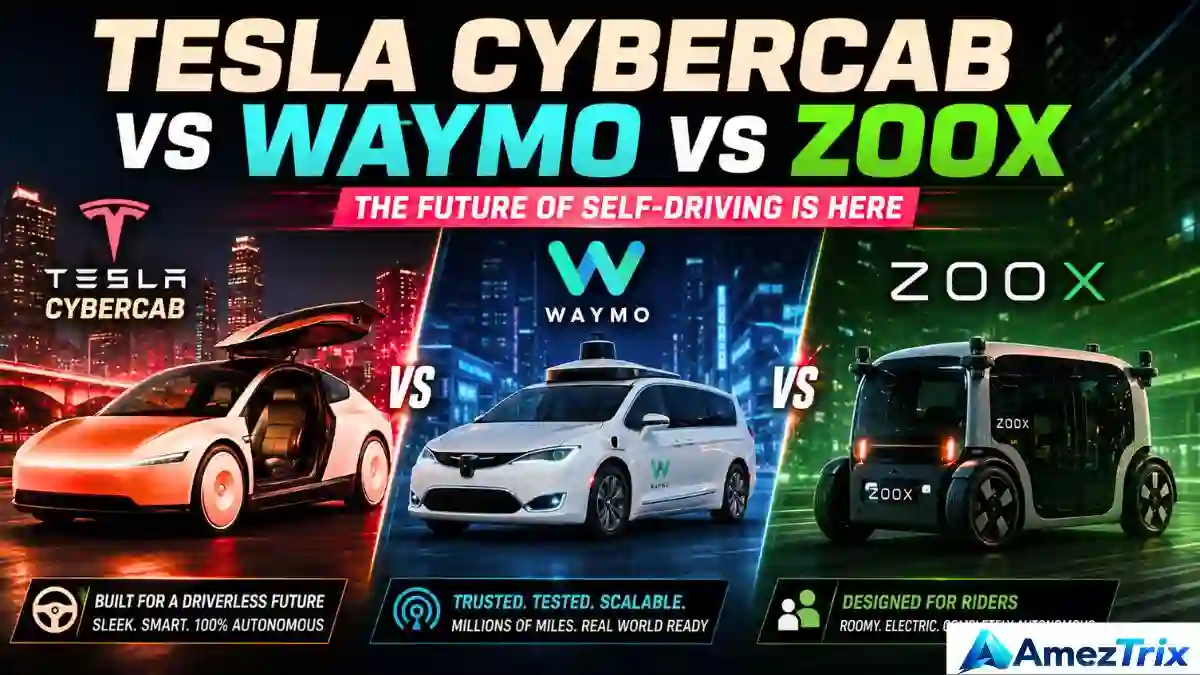
Four very different numbers float around online, and people blend them together. Here’s each one on its own.
| Number | What it really is | Status |
|---|---|---|
| About $3 plus $1.40 per mile | Tesla Robotaxi fare in Austin, reported in March 2026 | Observed, can change |
| $7.77 vs $12.10 | One rider’s Cybercab and Model Y fares for the same Austin trip | Single example, not a rate card |
| Under $30,000 | Musk’s planned price for private buyers | Not on sale, not confirmed |
| $0.20 per mile | Musk’s operating-cost goal at large scale | Future target, not a fare |
In short, Tesla looks inexpensive today, especially on short trips, but it hasn’t published an official Cybercab rate card.
How Waymo and Zoox Charge
Waymo shows a live quote in its app, based on distance, time and demand, and it doesn’t publish per-mile rates. Zoox says its Las Vegas prices are close to the “comfort” tier of other ride-hailing services, using a base fare plus distance and time.
| Tesla | Waymo | Zoox | |
|---|---|---|---|
| Pricing style | Base fee plus per-mile | Dynamic in-app quote | Base fare plus distance and time |
| Public rate card | No official Cybercab card | No | No |
| Positioning | Budget-friendly | Mid to premium | “Comfort” tier |
| Tipping | No driver to tip | No driver to tip | No driver to tip |
Before any ride, compare the live fare in each app. Prices move with demand and city.
So Who’s Really Ahead?
| If you care about | Best pick | Why |
|---|---|---|
| Real-world experience | Waymo | Hundreds of thousands of paid weekly rides |
| Federal approval for a wheel-free car | Zoox | Holds a formal NHTSA exemption |
| Lowest potential cost | Tesla Cybercab | Small, cameras-only, cheap-to-build design |
| Roomiest cabin | Zoox | Four seats facing each other |
| Boldest ambition | Tesla | Aggressive rollout and pricing |
My honest take: Waymo wins on trust, Zoox wins on paperwork, and Tesla wins on boldness. Safety data and regulators will decide the race, not marketing.
What the Cybercab Could Mean for Ride-Hailing
If driverless rides become cheap and dependable, taxis and ride-hailing apps feel the pressure. There’s no driver pay, and the cars can work nearly around the clock instead of sitting in a driveway.
New costs show up too: remote support teams, sensor upkeep, charging logistics and insurance for a category with little legal history. To see the technology behind electric fleets, read about the latest EV technology.
Your Checklist for Judging Any Robotaxi
- I know which city and zone is actually live.
- I’m comparing live app fares, not old screenshots.
- I can tell ride fares apart from vehicle prices.
- I’ve checked who has federal approval and who is under review.
- I know how each car senses the road (cameras only, or cameras plus lidar and radar).
- I treat CEO promises as goals, not facts.
Common Mistakes With the Tesla Cybercab
- Mixing up ride price and car price. A $30,000 purchase goal says nothing about a $10 ride.
- Reading $0.20 per mile as a fare. It’s an operating-cost goal, not what riders pay.
- Assuming “driverless” means zero people involved. Remote support can still exist.
- Expecting it everywhere. Cybercabs run in Austin only for now.
- Naming a winner too soon. Scale, safety data and regulators will decide.
Red Flags to Avoid
- Articles with exact range, price and fleet numbers and no source.
- Posts calling the Cybercab “fully approved.” The federal audit is still open.
- “Buy a Cybercab now” offers. Tesla isn’t selling them to individuals yet.
- Fake booking sites or apps. Stick to the official Tesla Robotaxi, Waymo and Zoox apps.
The Devil’s Advocate: Where the Cybercab Falls Short
- Cameras only. It lacks the lidar and radar backup that rivals carry.
- An open federal audit. A negative finding could slow or pause service.
- A tiny footprint. Cybercabs run only in Austin so far, while Waymo covers a dozen-plus cities.
- Just two seats. Families and groups won’t fit.
- Thin public data. Independent safety numbers for the Cybercab itself are limited.
- Fast-moving rules. Prices, zones and regulations can all change quickly.
None of this means the Cybercab will fail. It means the early hype is running ahead of the evidence.
Frequently Asked Questions
Does the Tesla Cybercab have a steering wheel?
No. The Tesla Cybercab has no steering wheel, no pedals and no mirrors. It was built from day one as a fully driverless two-seat robotaxi. That design is why U.S. federal regulators are reviewing its certification, which is a first for a mass-market car.
Where can you ride a Tesla Cybercab right now?
Only in Austin, Texas, through the Tesla Robotaxi app. Paid Cybercab rides began on September 3, 2026. Tesla also runs Model Y robotaxis in other cities, but those are different vehicles. Service zones change, so check the app for current coverage.
How much does a Tesla Cybercab ride cost?
Tesla hasn’t published a Cybercab rate card. Austin Robotaxi fares were reported at about $3 plus $1.40 per mile in March 2026, and one rider saw $7.77 for a trip that cost $12.10 in a Model Y. Treat those as examples, not guarantees.
What is the Tesla Cybercab price to buy?
You can’t buy one yet. Elon Musk has said private buyers could get a Cybercab for under $30,000, but that’s a target, not a confirmed price. For now, Tesla uses Cybercabs only inside its own Robotaxi service, not for individual sale.
Is the Tesla Cybercab safe and legal?
It operates in Texas, which permits such vehicles. However, on September 3, 2026, NHTSA opened an audit of Tesla’s federal certification. The agency hasn’t declared the car unsafe. Independent safety data on the Cybercab is limited, so its track record is still being built.
How is the Cybercab different from Waymo?
The Cybercab has two seats, no driver controls and cameras only. Waymo uses cameras, lidar and radar and runs a far larger paid service across roughly 14 U.S. cities. Waymo has more real-world experience, while Tesla is betting on lower cost and simpler hardware.
What makes Zoox different from the Cybercab?
Zoox seats four in two inward-facing rows and uses cameras, lidar and radar. It also holds a formal NHTSA exemption for running without human controls, which Tesla hasn’t sought. Zoox’s paid rides are limited to Las Vegas, and its pricing sits in the “comfort” tier.
Will the Tesla Cybercab come to India?
Nothing is confirmed. Dense traffic, many two-wheelers and mixed lane discipline make Indian roads a very different challenge, and rules for driverless vehicles would need to change too. Treat any India launch date or price you see as speculation.
Final Verdict: Tesla Cybercab vs Waymo vs Zoox
Nobody has won yet, and anyone claiming otherwise is guessing. Waymo has proven it can run a large driverless service. Zoox has the federal paperwork for a wheel-free car. The Tesla Cybercab brings the cheapest, boldest design and the most unanswered questions.
If you live in Austin, the Cybercab is worth a try. If you’re comparing companies, watch three things: the NHTSA audit, independent safety data and how fast each fleet grows. They’ll matter more than any launch event.
Want more on the vehicles shaping the road ahead? Explore our guide to the top electric cars in the world or our explainer on AI agents vs AI chatbots.
Last updated: October 19, 2026. Robotaxi fares, cities and regulatory status change quickly, so confirm details on Tesla’s Robotaxi page and NHTSA’s website.
About Author
Rajendra Parmar is the Founder and Editor of AmezTrix, where he covers Artificial Intelligence, Technology, WordPress, Web Hosting, Digital Marketing, Gadgets, and Software. His mission is to simplify complex technology through practical tutorials, honest reviews, and well-researched guides that help readers make smarter digital decisions.

Rajendra Parmar
Founder & Editor • AmezTrix
Rajendra Parmar is the Founder and Editor of AmezTrix, a platform covering Artificial Intelligence, Technology, WordPress, Web Hosting, Digital Marketing, Gadgets, Software Reviews, and emerging innovations. His mission is to simplify complex technology through practical tutorials, honest reviews, and well-researched guides that help readers make smarter digital decisions.