
Discover the best AI agents for businesses to automate workflows, boost productivity, improve customer support, and streamline daily operations.
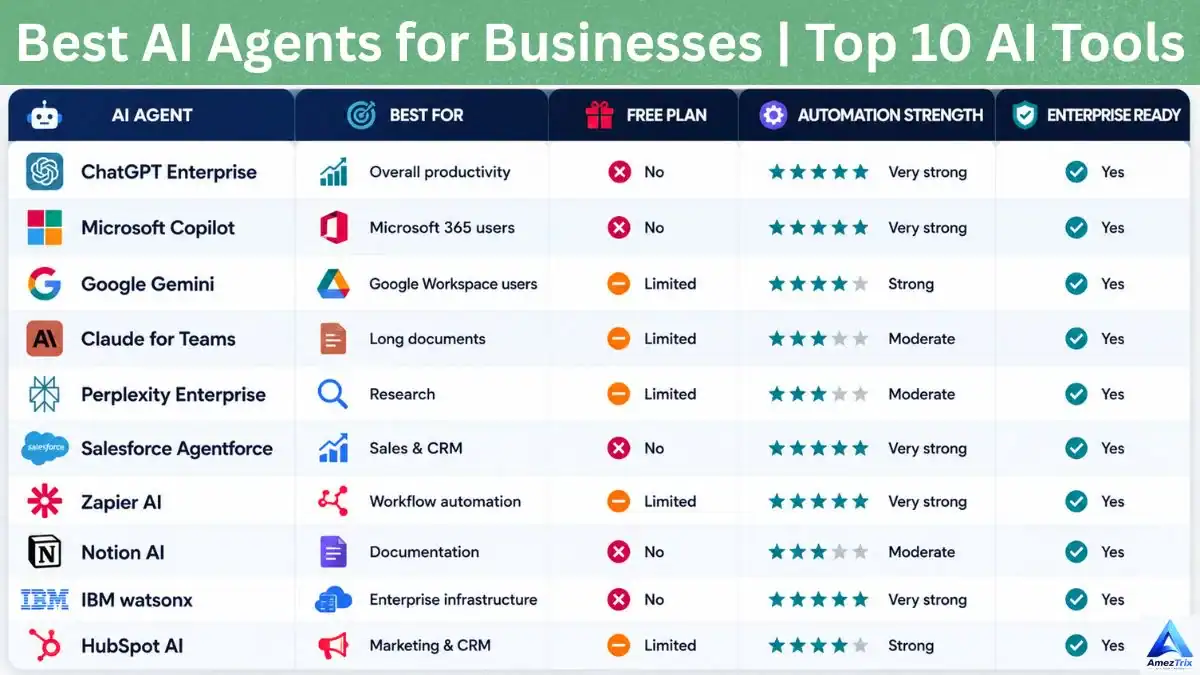
Best AI Agents for Businesses in 2026: Top Tools to Automate Work, Cut Costs, and Boost Productivity
Running a business today means competing against companies that have already figured out how to do more with fewer people. That’s not a scare tactic it’s just where things stand. AI agents have quietly become the difference between teams that spend their week buried in repetitive admin work and teams that spend it on the stuff that actually moves revenue.
If you’ve been putting off exploring best AI agents for businesses because the market feels crowded and confusing, you’re not alone. There are dozens of platforms, each claiming to be the “best,” and most comparison articles just repeat the same marketing copy.
This guide takes a more practical approach: what these tools actually do, which ones are worth your budget, and how to pick the right one for your specific business not just the most popular name on the list.
What Exactly Is an AI Agent?
Let’s clear up the confusion first, because “best AI agents for businesses” gets thrown around loosely.
A basic chatbot answers questions. An AI agent goes further — it can understand a goal, break it into steps, pull information from multiple sources, take actions inside other software, and adjust based on what it finds along the way. It doesn’t just respond; it does things.
Picture handing a task to a new hire who never sleeps, never needs a coffee break, and gets better at the job the more you work with them. That’s roughly the promise of a modern best AI agents for businesses — reading documents, drafting emails, updating spreadsheets, summarizing meetings, answering customer questions, and connecting to the tools your team already uses.
The key difference from old-school automation (think basic “if this, then that” scripts) is flexibility. Traditional automation breaks the moment something unexpected happens. AI agents can interpret nuance, handle ambiguity, and make reasonable judgment calls — which is exactly why businesses are adopting them so fast.
How AI Agents Actually Work Behind the Scenes
You don’t need a computer science degree to use these tools, but understanding the moving parts helps you evaluate them properly.
Natural language understanding is the foundation it’s what lets you type “summarize last week’s support tickets” instead of writing code. Large language models (the engines behind ChatGPT, Claude, Gemini, and similar tools) handle the reasoning, writing, and analysis.
Machine learning allows the system to improve as it processes more of your data and feedback. And integrations are what turn a smart chatbot into a genuine business tool connections to Gmail, Slack, Microsoft Teams, your CRM, project boards, and internal databases.
Put those four pieces together and you get software that can, say, read an incoming customer email, check your order database, draft a reply, and flag it for your review all without a human touching five different apps to get there.
Why More Businesses Are Adopting AI Agents Right Now
The pressure on businesses hasn’t eased costs are up, customer expectations are higher, and teams are often leaner than they’d like to be. best AI agents for businesses address several of these pain points directly.
They give time back. Email replies, data entry, meeting notes, scheduling, and report drafting eat hours every week. Offloading that work frees people for tasks that actually require judgment and creativity.
They lower operating costs. Automating customer support, document processing, and routine admin reduces the need to keep expanding headcount just to keep up with volume.
They run around the clock. Unlike a human team, an AI agent doesn’t clock out questions get answered and tasks get processed at 2 a.m. just as reliably as at 2 p.m.
They sharpen customer support. Instant responses, multilingual capability, and consistent service quality translate directly into better satisfaction scores.
They improve decision-making. AI agents can dig through datasets that would take a person days to review and surface patterns for forecasting, budgeting, and planning.
They keep teams aligned. Meeting summaries, task tracking, and shared documentation cut down on the miscommunication that slows cross-department projects.
What to Look for Before You Buy
Not every AI agent fits every business, and the wrong pick can waste both money and momentum. Before signing up, check for these essentials:
- Genuine language understanding not just keyword matching, but the ability to grasp context and nuance
- End-to-end workflow automation, not just isolated one-off tasks
- Integrations with the tools you already rely on: Slack, Salesforce, HubSpot, Microsoft 365, Google Workspace, Zoom, Notion, Jira, Zapier
- Real security credentials encryption, access controls, and certifications like SOC 2 or ISO 27001, especially if you’re handling customer data
- Room to scale as your team and needs grow
- Built-in analytics so you can actually measure whether the tool is paying for itself
The Top AI Agents for Business in 2026
Here’s an honest look at the platforms worth your consideration, based on their real-world capabilities, integration depth, security posture, and value for money.
1. ChatGPT Enterprise — Best Overall for Productivity
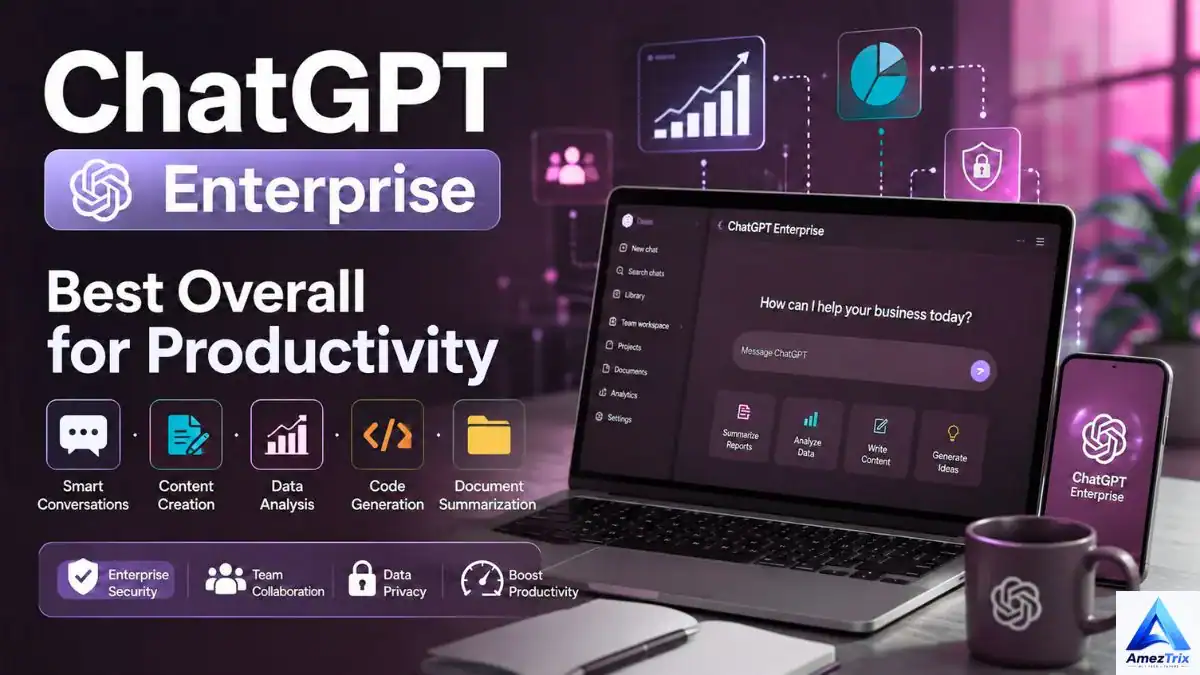
ChatGPT Enterprise remains one of the most versatile options on the market, blending strong reasoning, writing, coding assistance, and data analysis inside a secure workspace built for teams.
Strengths: polished writing output, a capable coding assistant, broad file-format support, and enough flexibility to serve nearly every department marketing, HR, sales, engineering, and content teams alike.
Trade-offs: the more advanced capabilities sit behind a paid tier, and larger teams may need a short onboarding period to get everyone using it well.
Good fit for: businesses that want one flexible tool covering writing, coding, research, and reporting without juggling multiple subscriptions.
Content Creation Strength: One of the best AI platforms for marketing agencies, helping teams create SEO articles, ad copy, landing pages, social media content, client reports, email campaigns, and branded content faster with enterprise-grade security
2. Microsoft Copilot — Best for Microsoft 365 Teams
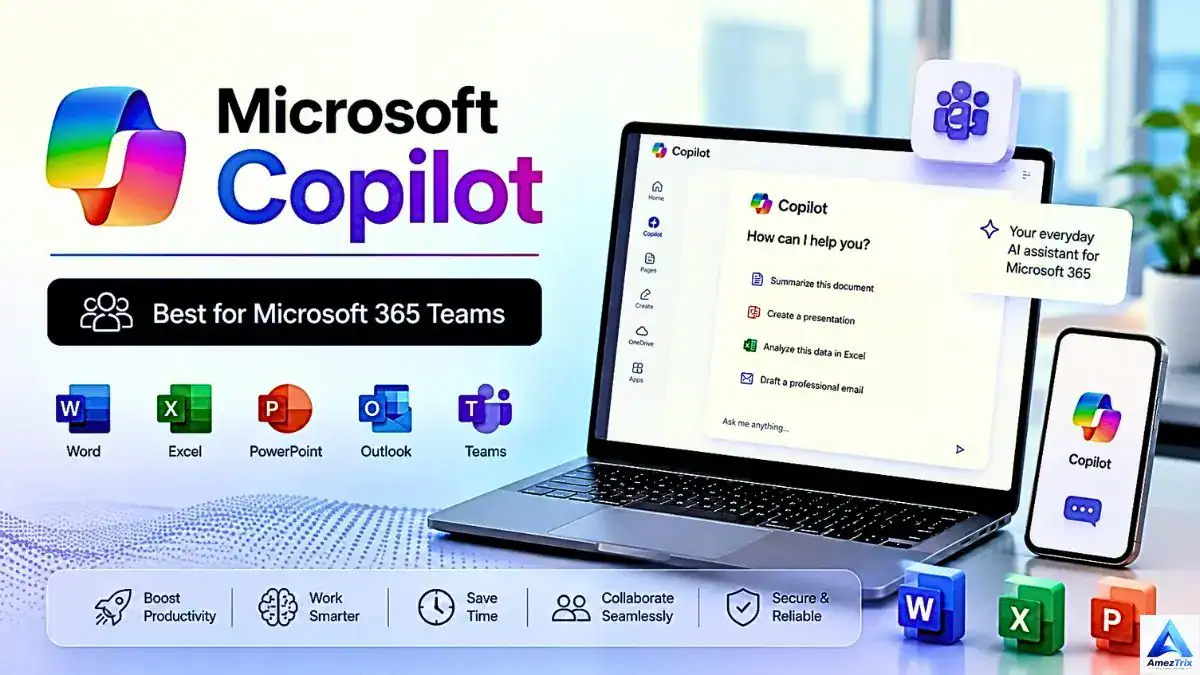
If your company already lives inside Word, Excel, Outlook, and Teams, Copilot slots in almost invisibly. It drafts documents, digs through spreadsheet data, writes email replies, and summarizes meetings all inside the apps your staff already open every day.
Strengths: deep native integration, dependable enterprise-grade security, and minimal learning curve for existing Microsoft users.
Trade-offs: its value drops sharply outside the Microsoft ecosystem, and some features require specific 365 licensing tiers.
Good fit for: corporate offices, finance departments, and larger enterprises already standardized on Microsoft tools.
3. Google Gemini for Workspace — Best for Google-Native Teams
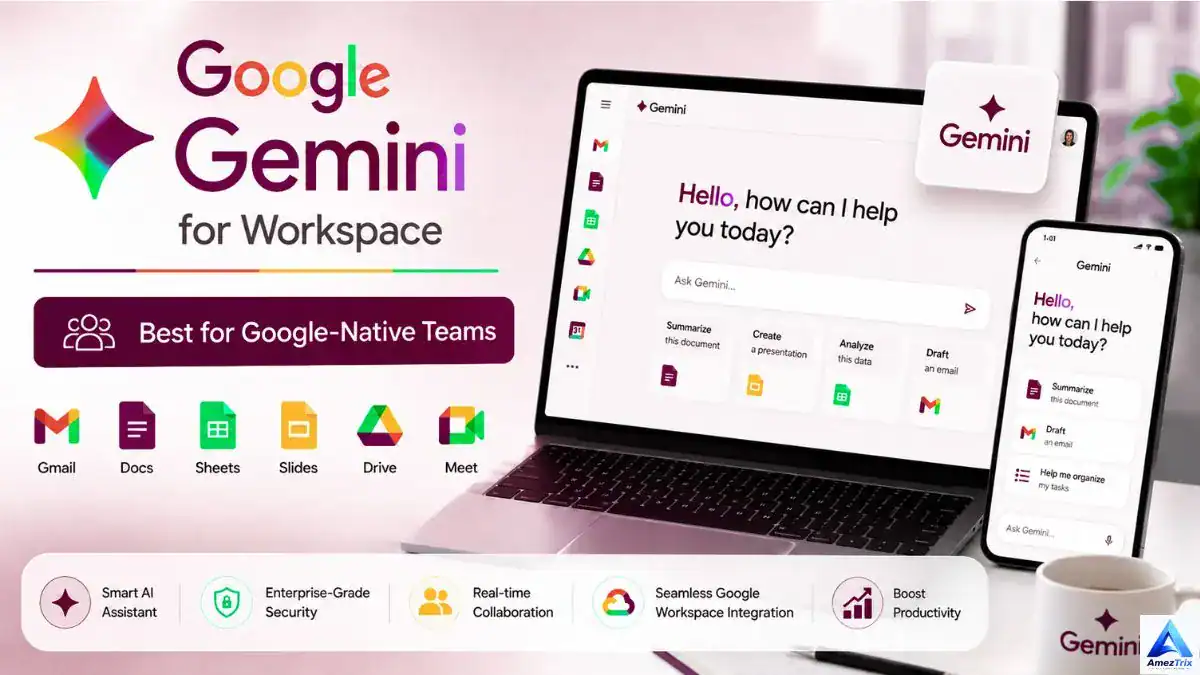
Gemini brings AI assistance directly into Gmail, Docs, Sheets, Slides, and Meet, making it a natural companion for teams that run their business on Google Workspace.
Strengths: fast responses, smooth collaboration features, and strong support for distributed or remote teams.
Trade-offs: it delivers the most value within Google’s ecosystem, and certain features need higher-tier Workspace plans.
Good fit for: small businesses, agencies, schools, and remote-first companies already on Google Workspace.
4. Claude for Teams — Best for Long-Document Work
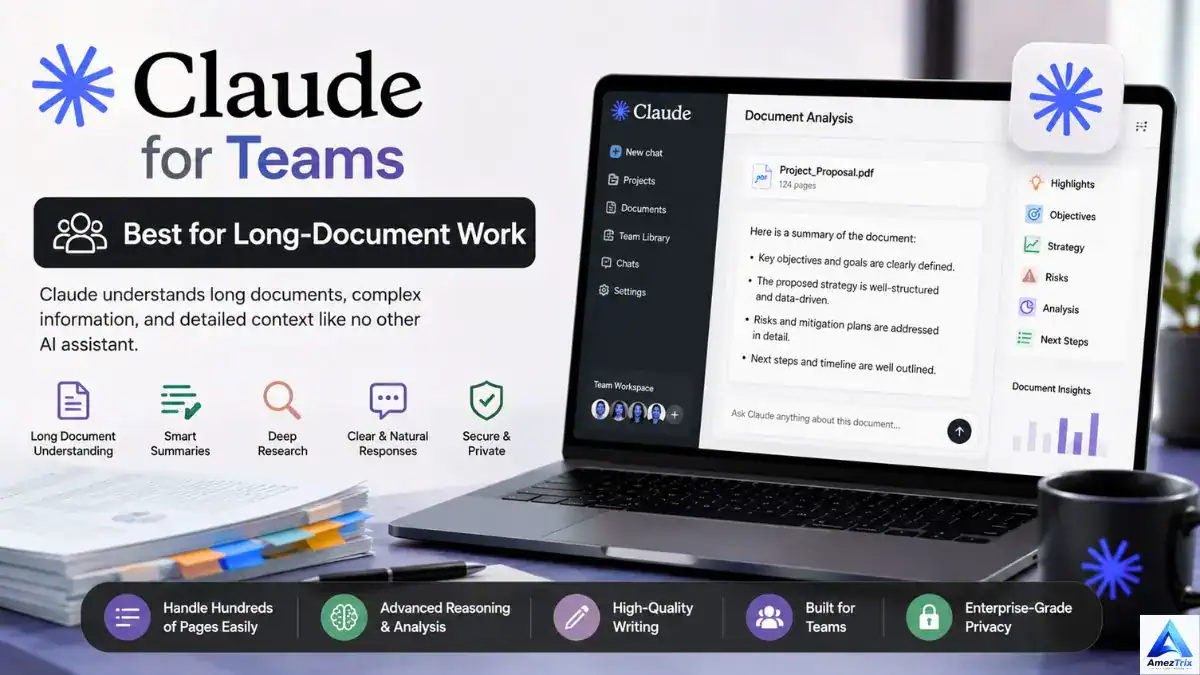
Claude has built a reputation for handling lengthy, complex documents with a level of depth and clarity that shorter-context tools struggle to match think contracts, research papers, and policy documents.
Strengths: exceptional comprehension of long material, natural and readable writing output, and strong analytical reasoning for research-heavy work.
Trade-offs: it offers fewer out-of-the-box business integrations than some rivals, and feature availability can vary by plan.
Good fit for: legal teams, researchers, consultants, and knowledge-heavy enterprise roles.
5. Perplexity Enterprise — Best Ai Tools for Business Research
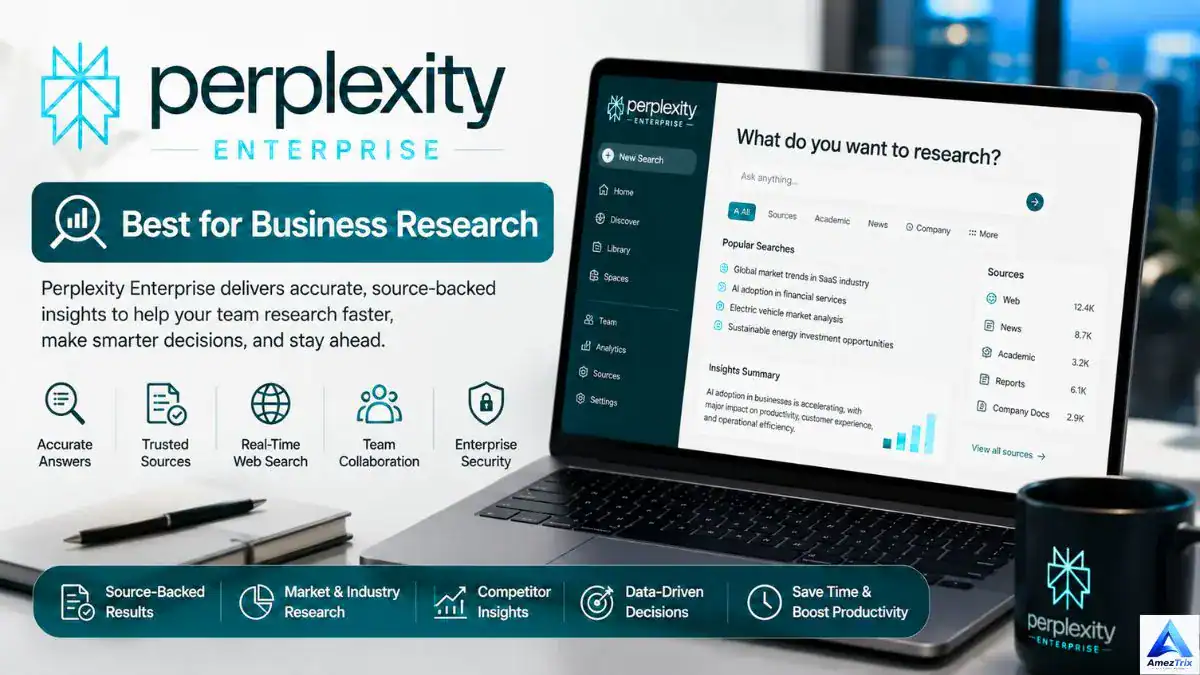
Perplexity is built specifically for fast, source-backed research pulling from the web and internal documents while showing exactly where each answer came from.
Strengths: quick, citation-backed answers, strong competitive-analysis capability, and real time savings for research-heavy roles.
Trade-offs: it leans toward research rather than full workflow automation, and its deeper enterprise features sit behind higher pricing tiers.
Good fit for: analysts, executives, marketing teams, and strategy consultants who need reliable answers fast.
6. Salesforce Agentforce — Best for Sales and CRM Automation
Agentforce brings AI directly into the sales pipeline qualifying leads, forecasting deals, tracking the customer journey, and automating the busywork that eats into a sales rep’s day.
Strengths: tight CRM integration, genuinely useful sales forecasting, and enterprise-level security.
Trade-offs: pricing can be steep for smaller companies, and it works best when you’re already inside the Salesforce ecosystem.
Good fit for: large enterprises, B2B sales teams, and customer success organizations.
7. Zapier AI — Best for No-Code Workflow Automation
Zapier connects thousands of apps and lets you build AI-driven workflows across Gmail, Slack, HubSpot, Notion, Google Sheets, Shopify, and more no developer required.
Strengths: genuinely easy to set up, an enormous integration library, and fast payback in hours saved.
Trade-offs: complex multi-step workflows may need a premium plan, and costs can climb as usage scales.
Good fit for: startups, agencies, e-commerce brands, and marketing or HR teams looking to stitch tools together.
8. Notion AI — Best for Documentation and Knowledge Management
Notion AI turns scattered notes into organized business documentation writing drafts, summarizing meetings, and keeping a team’s collective knowledge searchable in one place.
Strengths: clean, intuitive interface, strong collaboration features, and solid writing assistance.
Trade-offs: automation capability is limited compared to dedicated workflow tools, and it shines most within the Notion environment itself.
Good fit for: startups, product teams, HR, and marketing departments that live and breathe documentation.
9. IBM watsonx — Best for Enterprise-Grade AI Infrastructure
Watsonx is built for organizations that need serious governance, compliance, and customization — not just a chat interface, but a full AI development and deployment platform.
Strengths: enterprise-grade security, strong compliance tooling, and the scalability to support large, regulated organizations.
Trade-offs: it comes with a steeper learning curve and is generally better suited to companies with technical teams in-house.
Good fit for: financial institutions, healthcare organizations, manufacturers, and government bodies.
10. HubSpot AI — Best for Marketing and CRM
HubSpot AI automates content creation, email marketing, lead management, and customer communication, all tied directly into HubSpot’s CRM.
Strengths: strong fit for inbound marketing, straightforward CRM integration, and a genuinely user-friendly interface.
Trade-offs: some advanced features are locked to higher-tier plans, and it delivers the most value for businesses already using HubSpot.
Good fit for: marketing agencies, SaaS companies, sales teams, and small businesses building an inbound strategy.
Top 10 Best Ai Tools Comparison at a Glance
| AI Agent | Best For | Free Plan | Automation Strength | Enterprise Ready |
|---|---|---|---|---|
| ChatGPT Enterprise | Overall productivity | No | Very strong | Yes |
| Microsoft Copilot | Microsoft 365 users | No | Very strong | Yes |
| Google Gemini | Google Workspace users | Limited | Strong | Yes |
| Claude for Teams | Long documents | Limited | Moderate | Yes |
| Perplexity Enterprise | Research | Limited | Moderate | Yes |
| Salesforce Agentforce | Sales & CRM | No | Very strong | Yes |
| Zapier AI | Workflow automation | Limited | Very strong | Yes |
| Notion AI | Documentation | No | Moderate | Yes |
| IBM watsonx | Enterprise infrastructure | No | Very strong | Yes |
| HubSpot AI | Marketing & CRM | Limited | Strong | Yes |
Pricing and features change frequently — always confirm current details on the provider’s official site before purchasing.
Matching the Right Tool to Your Business Type
Small businesses tend to get the fastest wins from ChatGPT, Google Gemini, Claude AI, Zapier AI, and HubSpot AI — all relatively affordable and quick to set up without a dedicated IT team.
Startups benefit from tools that stretch a lean team further: ChatGPT Enterprise, Notion AI, Zapier AI, and Claude cover documentation, communication, and automation without heavy overhead.
Marketing agencies lean on HubSpot AI, ChatGPT Enterprise, Google Gemini, and Perplexity Enterprise for content production, campaign planning, research, and reporting.
Sales teams get the most value from Salesforce Agentforce, Microsoft Copilot, and HubSpot AI — all built around lead management, forecasting, and follow-up automation.
Developers typically reach for ChatGPT Enterprise, Microsoft Copilot, and Claude for coding help, debugging, and technical documentation.
Large enterprises usually need the compliance and scale of IBM watsonx, Salesforce Agentforce, Microsoft Copilot, and ChatGPT Enterprise.
Rolling Out AI Agents Without the Chaos
Buying the software is the easy part. Getting real value from it takes a plan.
Start by identifying repetitive work. Look at what eats hours but adds little strategic value answering common customer questions, scheduling, routine emails, report generation, data entry, invoice processing, and meeting notes are usually the low-hanging fruit.
Set concrete goals before you buy. Are you trying to cut support response times? Boost sales conversions? Reduce operating costs? Vague goals make it impossible to know if the investment is working.
Pick the tool that fits the job, not the one with the flashiest demo. Content creation points toward ChatGPT Enterprise; office-heavy teams do better with Copilot; sales-driven businesses should look at Agentforce; workflow-heavy operations should test Zapier.
Pilot with one department first. Rolling AI out company-wide on day one is a recipe for confusion. Pick a single team marketing, support, or finance measure the results, then expand.
Train your people properly. The output quality of any AI agent depends heavily on how well your team writes prompts, reviews outputs, and understands the tool’s limitations. Skipping this step is the single biggest reason AI rollouts underperform.
Track the numbers that matter time saved, cost reduction, customer satisfaction scores, revenue impact, and adoption rates — and revisit them monthly.
Best Practices That Separate Successful Rollouts From Wasted Budget
Keep humans in the loop for anything customer-facing or high-stakes; AI should support decisions, not replace judgment on things that matter. Never upload sensitive company or customer data to a platform that can’t demonstrate real security and compliance credentials.
Focus AI on genuinely repetitive tasks rather than trying to automate everything at once — that’s usually where the ROI actually lives. Treat your prompts as a living document; refine them as you learn what works. And review performance on a regular cadence rather than assuming the tool is working just because nobody’s complained.
Mistakes That Quietly Sink AI Adoption
A surprising number of businesses buy AI tools without a clear strategy, then wonder why adoption stalls. Skipping employee training is another common culprit a powerful tool used badly produces mediocre results. Some leaders expect best AI agents for businesses to replace people outright, which misreads what these tools are actually good at; they’re built to assist, not eliminate expertise.
Overlooking security when handling financial or customer data is a risk many companies don’t consider until it’s too late. And trying to automate literally everything, instead of focusing on the highest-volume repetitive tasks first, tends to spread resources thin without delivering real returns.
Where AI Agents Are Making the Biggest Impact
Healthcare organizations use AI agents for appointment scheduling, documentation, administrative support, and patient communication.
Finance teams rely on them for fraud detection, risk analysis, and reporting. E-commerce businesses use AI for product recommendations, inventory management, and customer service.
Education institutions apply it to personalized learning, lesson planning, and student support.
Marketing departments lean on AI for SEO, content writing, email campaigns, and analytics.
HR teams use it for resume screening, onboarding, and policy support.
What’s Coming Next for AI Agents
The next few years will likely bring a shift from single, general-purpose assistants toward multiple specialized agents working together a marketing agent handling campaigns, a sales agent qualifying leads, a finance agent generating reports, and an HR agent managing recruitment, all coordinating behind the scenes.
Expect more autonomous decision-making within clearly defined guardrails, deeper integration with robotics in manufacturing and logistics, sharper hyper-personalization for customers, and stronger predictive intelligence for forecasting demand, revenue, and risk. Businesses that start building AI fluency now will have a real head start once these capabilities mature.
Frequently Asked Questions
What is the best AI agent for businesses?
There’s no single universal answer it depends on what you’re already using and what problem you’re solving. ChatGPT Enterprise is a strong all-around pick, Microsoft Copilot suits Microsoft 365 shops, Google Gemini fits Workspace users, and Salesforce Agentforce leads for CRM and sales automation.
Are AI agents worth it for small businesses?
Yes. They automate routine work, improve customer support, and cut costs letting a small team compete with much larger ones without the equivalent headcount.
Can AI agents replace employees?
No. They’re built to handle repetitive tasks and support decisions, not to replace the judgment, creativity, and relationship-building that human employees bring.
Which AI agent is best for workflow automation?
Zapier AI is generally the strongest choice for connecting different apps and automating multi-step processes without writing code.
Are AI agents secure enough for business data?
Enterprise-grade platforms typically offer encryption, access controls, and recognized compliance certifications — but you should always verify a vendor’s specific security practices before sharing anything sensitive.
Final Thoughts
The best AI agents for businesses market isn’t slowing down, and businesses that treat these tools as a real operational upgrade rather than a novelty are already pulling ahead on cost, speed, and customer experience.
There’s no one-size-fits-all winner here: ChatGPT Enterprise covers the broadest range of use cases, Microsoft Copilot and Google Gemini make sense if you’re already locked into their ecosystems, Salesforce Agentforce dominates for sales-heavy organizations, and Zapier AI remains the go-to for stitching workflows together without a development team.
Whichever platform you choose, the businesses that get the most out of the best AI agents for businesses share a common pattern: clear goals before purchase, a focused pilot before a full rollout, real employee training, and consistent tracking of results. Start there, and the technology tends to take care of the rest.
About the Author
Rajendra Parmar is the founder of AmezTrix and a passionate AI & technology writer. He shares expert guides, honest reviews, and practical tutorials on AI tools, WordPress, web hosting, SEO, digital marketing, gadgets, and emerging technologies. His mission is to help readers make smarter tech decisions with accurate, up-to-date, and easy-to-understand content.